The pursuit of safety in the automotive industry has produced some of the most creative, unconventional vehicles ever built. Known as experimental safety cars, these prototypes were testbeds for new ideas that often looked strange but helped shape the features we take for granted today. Many were too costly or complex for production, but their innovations set the stage for modern crash protection and driver-assistance systems.
Revolutionary Designs: Ahead of Their Time

During the late 1960s and 1970s, global safety programs — including the U.S. Department of Transportation’s Experimental Safety Vehicle (ESV) initiative and Mercedes-Benz’s ESF series — pushed design boundaries. Cars such as the 1971 Mercedes ESF 05 and 1972 ESF 13 featured massive crumple zones, energy-absorbing bumpers, and reinforced safety cages that would later inspire modern crash structures.
Other automakers experimented with unusual body shapes aimed at improving crash energy distribution. Volvo’s early safety prototypes tested rounded bodywork and deformable materials that absorbed impact energy instead of transferring it to occupants. These ideas were decades ahead of their time but proved difficult to mass-produce using conventional manufacturing tools.
Innovative Safety Technologies That Fell Short
The 1970s and 1980s saw rapid progress in electronic safety aids — with plenty of early failures along the way. Early versions of anti-lock braking systems (ABS) and automatic braking concepts were tested by Mercedes-Benz, Bosch, and General Motors. However, the sensors available at the time often triggered false alarms or failed in poor weather conditions, limiting public trust.
Manufacturers also explored infrared crash detection sensors and radar-based distance monitoring. These systems could, in theory, detect obstacles before impact, but their accuracy was inconsistent in rain or fog. Despite these setbacks, the groundwork laid by these prototypes directly influenced today’s ADAS technologies like automatic emergency braking and collision avoidance.
Environmental Considerations and Safety Balance
By the late 1980s, safety research began intersecting with environmental responsibility. Automakers like Volvo and Toyota tested lightweight composite panels and recyclable interior materials designed to minimize environmental impact after a crash. Some even experimented with limited-production electric safety testbeds, which used battery-electric drivetrains to study crash behavior in low-noise, zero-emission vehicles.
While these efforts produced valuable data, the limited range and high cost of electric and composite prototypes prevented them from becoming mainstream at the time. Today, those same ideas underpin sustainable safety design in modern EVs and hybrid vehicles.
Cost vs. Benefit: The Economic Hurdle
The biggest obstacle for experimental safety cars wasn’t innovation — it was economics. Adding new structural reinforcements, airbags, and early electronic systems often tripled production costs. Consumers in the 1970s and ’80s were not yet willing to pay premiums for safety features that were unproven or invisible.
Maintenance and insurance also posed challenges. Insurers hesitated to underwrite vehicles equipped with new, untested technologies, and repairs were costly because parts were unique to each prototype. Most experimental safety cars remained one-offs or limited-run vehicles used solely for research.
Lessons Learned and the Path Forward

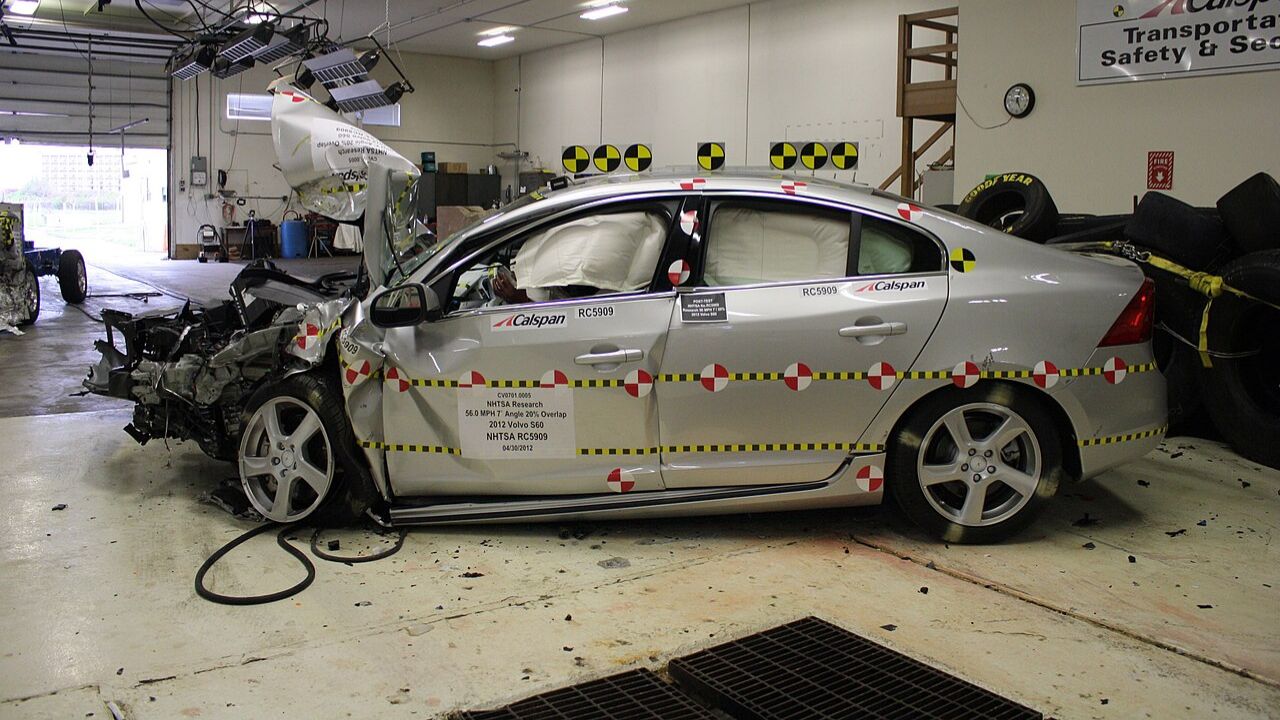
Though few experimental safety cars ever reached the public, their impact on the industry is undeniable. Technologies first tested in those prototypes — airbags, seatbelt pre-tensioners, crumple zones, collapsible steering columns, and reinforced passenger cells — are now mandatory in modern vehicles.
The lessons learned from those decades of experimentation taught engineers to balance innovation with practicality. Today’s automakers continue that legacy through digital crash modeling, pedestrian airbags, and autonomous safety systems that trace their lineage directly back to those bold early experiments.
Experimental safety cars proved that even failed ideas can drive progress — one prototype at a time.
Like Fast Lane Only’s content? Be sure to follow us.
Here’s more from us:
*Created with AI assistance and editor review.