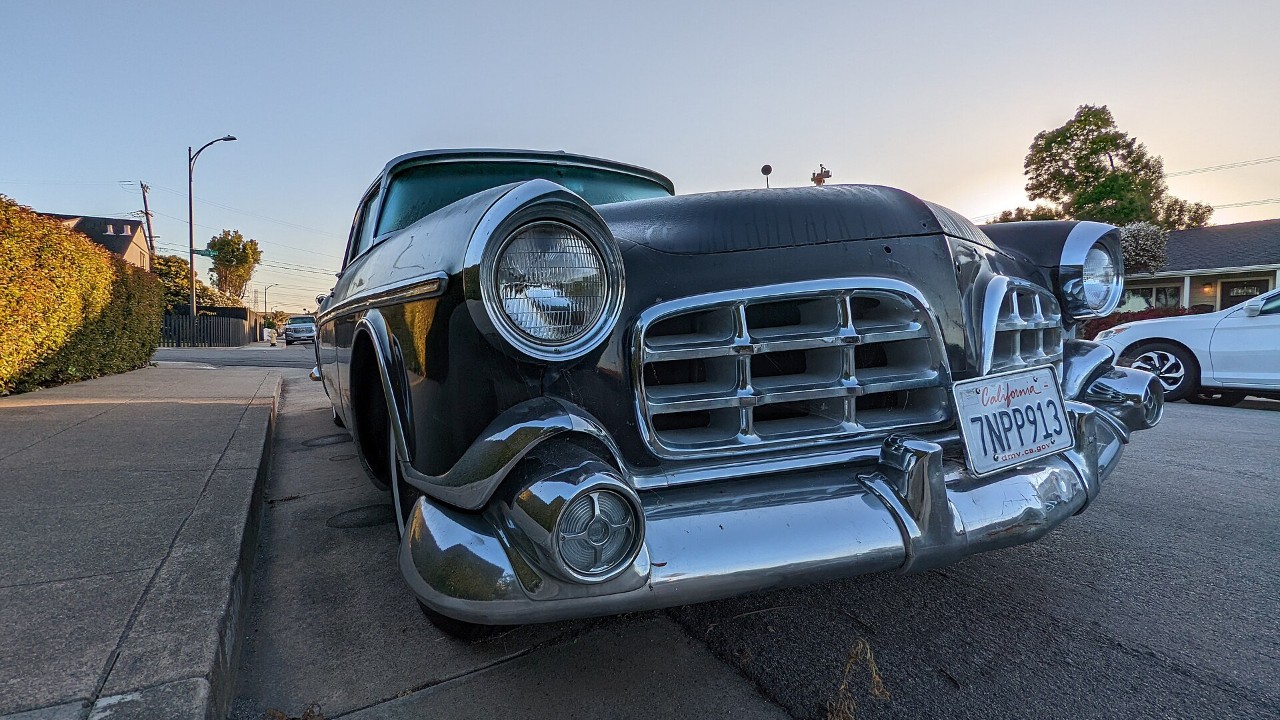
In 1950, Rover won Britain’s Dewar Trophy for the Rover JET1, a car that ran on a gas turbine instead of pistons. It was the first time the trophy had been handed out since 1929. Two years later, the same car set a speed record for turbine cars. Then it went to a museum, and most people forgot it ever ran. Across the Atlantic, Chrysler’s Crown Imperial had already put disc brakes on an American limousine.
That pattern repeats all through the 1950s. Big Detroit brands and small independents alike tried ideas that wouldn’t become normal for years. Disc brakes, power steering, self-leveling suspension and push-button controls all showed up early. However, being early rarely paid. Some of these cars sold poorly, and a few helped sink the companies that built them.
These are our picks, twelve cars from the 1950s that we think were years ahead of the competition. That verdict is our opinion. Still, every engine, feature and production figure below comes from a source we checked, and we’ve left out the numbers we couldn’t confirm.
1. 1950 Chrysler Crown Imperial limousine
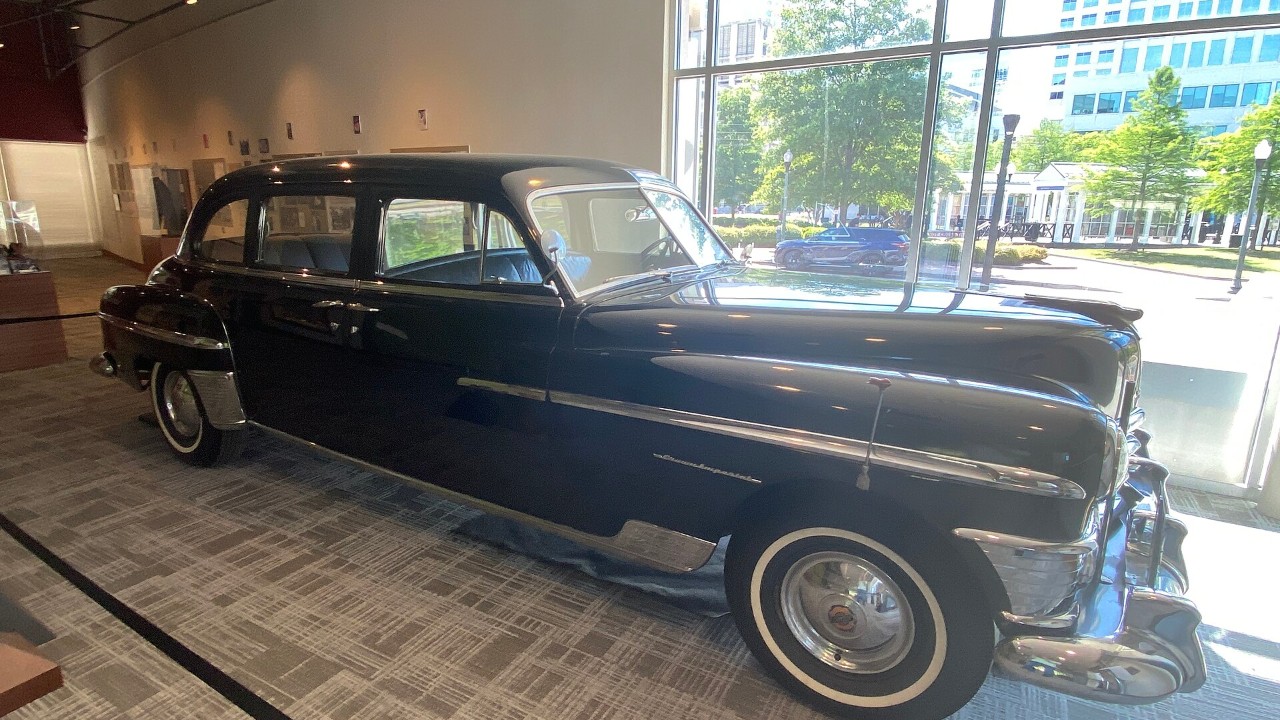
Long before disc brakes became a selling point, Chrysler fitted them to its biggest car. The Crown Imperial got them as standard equipment at the start of the 1949 model year, and the 1950 limousine kept them. The Crosley Hot Shot often gets the credit for the first production discs. Even so, Chrysler had them on the Crown from the first day of the season.
The design was unusual, too. Instead of calipers pinching a rotor, the Ausco-Lambert system used two expanding discs that pressed against the inside of a cast-iron drum. As a result, it worked a bit like a disc brake hidden inside a drum. Chrysler kept the setup standard on the Crown through 1954, and it also became standard on the 1950 Town and Country Newport.
In our view, this is the definition of a car ahead of its time. The Crown Imperial, however, was a hand-finished limousine, so very few people ever experienced the brakes at all. For perspective, Chrysler’s records show just 85 Crown Imperial limousines built in 1949. That’s exactly why the Crown Imperial belongs on a forgotten list.
2. 1950 Rover JET1
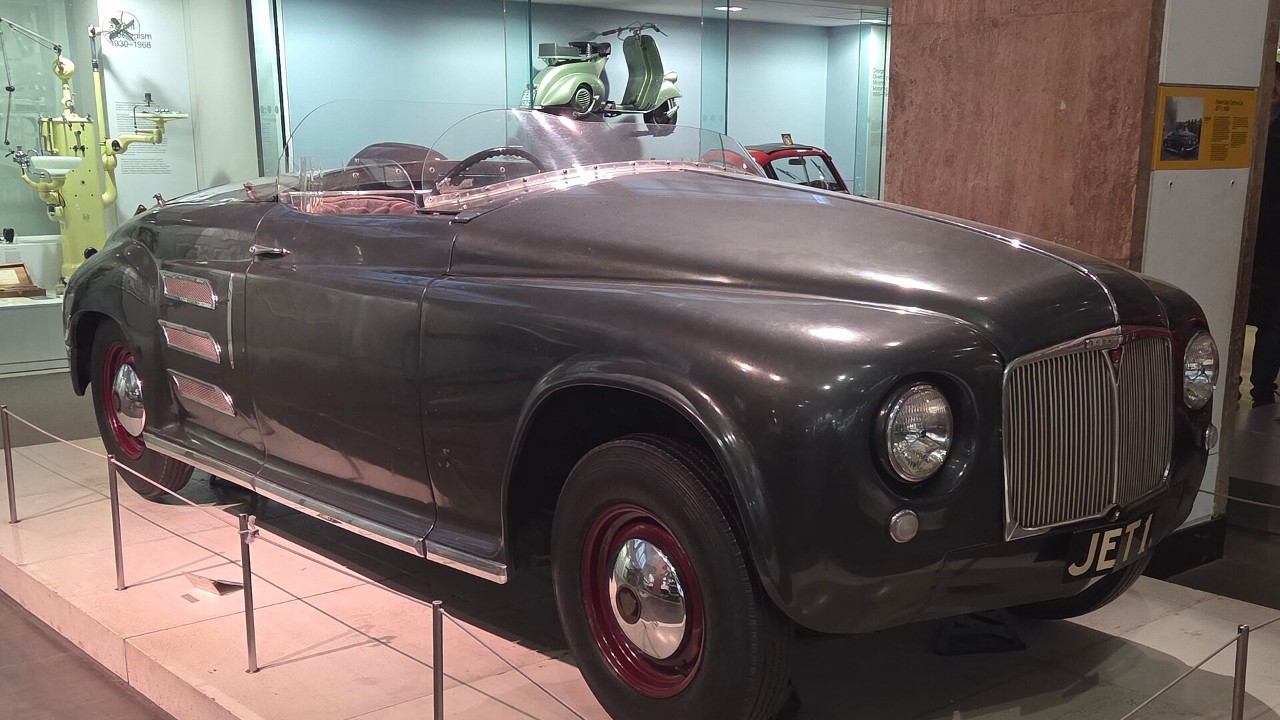
Rover started work on a small gas turbine for road cars in 1946. The company had wartime experience with the Whittle jet engine, and it wanted to see whether the idea could move a car. The result, the Rover JET1, appeared in public in 1950. Its turbine sat behind the seats, with air intakes on each side and exhaust outlets on top of the tail.
The Science Museum Group’s record for JET1 calls it the world’s first gas-turbine-powered motor car. After Rover uprated the engine, the car reached 152.691 mph on the Jabbeke highway in Belgium in June 1952, a world record for turbine cars. The museum also notes the catch. Test drives showed poor fuel economy and slow response to the throttle.
We’d still call the Rover JET1 one of the boldest cars of the decade. Rover kept working on turbine cars until 1965, and the idea later moved into trucks. Today, the car belongs to the Science Museum in London, where the museum asks visitors to check ahead that it is on display. Its catalog entry lists the car’s weight at 1,270 kg.
3. 1951 Chrysler New Yorker convertible
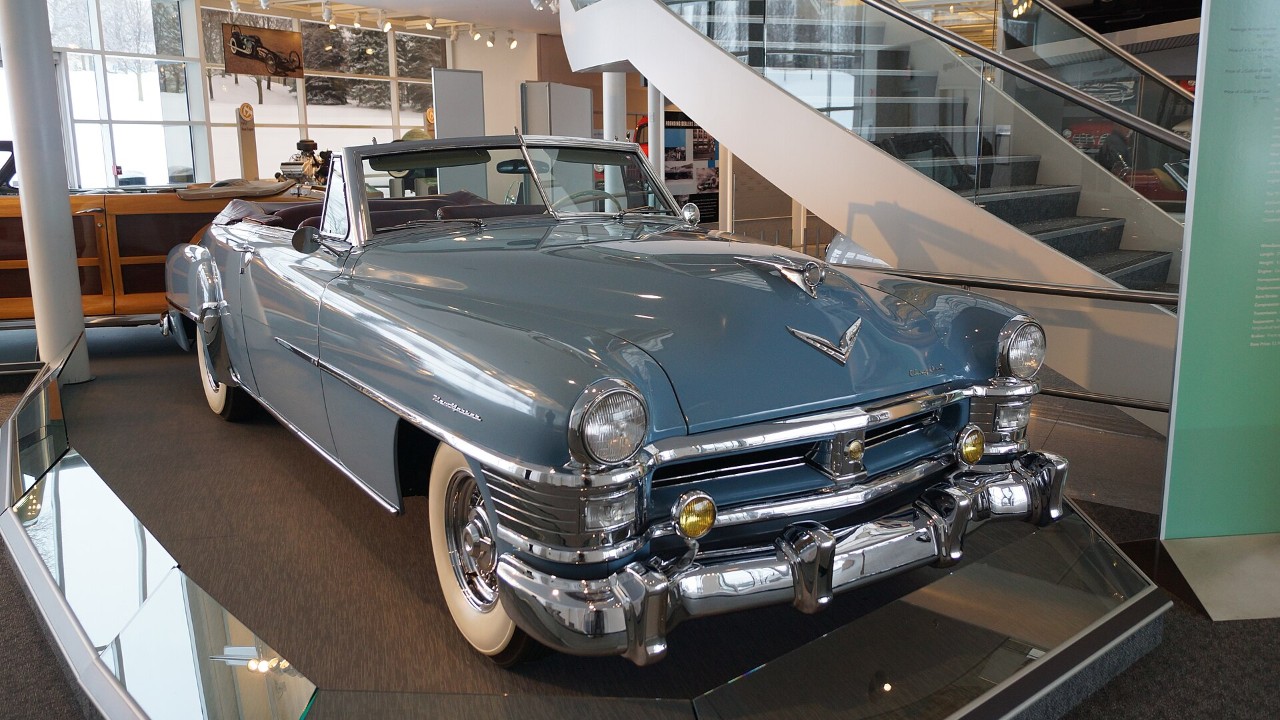
For 1951, Chrysler gave the New Yorker its new FirePower V8. The engine had hemispherical combustion chambers, displaced 331 cubic inches and made 180 horsepower. That was enough to reach 60 mph in about 10 seconds, which was quick for a heavy luxury car of the time. The convertible added open-air style to that muscle, and the same engine also went into the 1951 Saratoga.
The bigger surprise was in the steering column. Chrysler offered Hydraguide power steering as an option on its Hemi-powered cars, and it was an industry first. Before that, parking a big American car took real effort. After 1951, rivals had to catch up. We covered the earlier car in our look at the 1950 Chrysler New Yorker’s engineering, and the 1951 update took that thinking further.
Our take: the Hemi gets all the fame now, but the power steering may have changed daily driving even more. A 1951 New Yorker convertible combines both firsts in one car. For a buyer who wants an early Hemi with a top that goes down, it’s a strong place to start.
4. 1953 Studebaker Champion Starliner
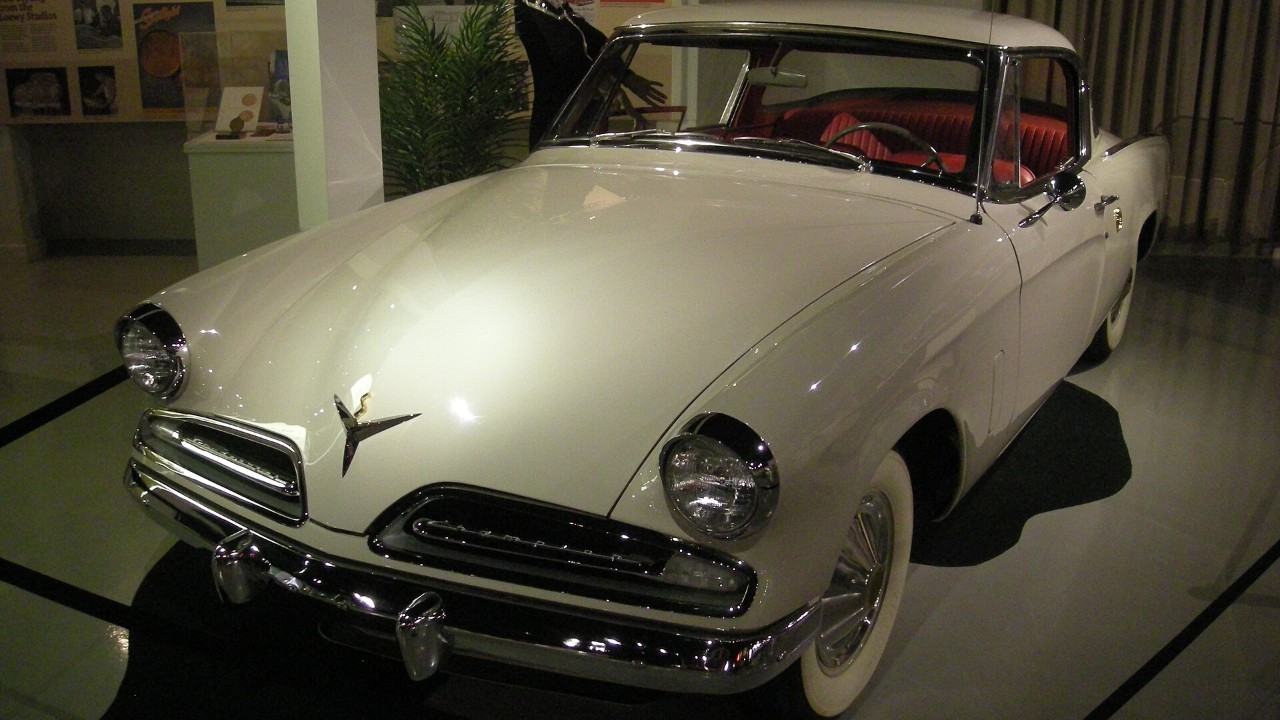
Robert Bourke, working in Raymond Loewy’s design studio, redrew the Studebaker for 1953. The coupes became known as the “Loewy Coupe” or “Low Boy,” and the pillarless hardtop version wore the Starliner name. Its nose sat lower than anything else from Detroit that year. In fact, the shape has drawn comparisons with the later Citroën DS.
Under the hood, the Champion kept things modest. It used an L-head six of 185.6 cubic inches, so nobody bought one for speed. Instead, the draw was a low, clean, European-looking body at a time when American cars were getting taller and heavier. Later, land-speed racers liked these streamlined coupes because they cut through the air so well.
We think the Starliner shows how far ahead styling could get. American design spent the rest of the decade adding chrome and fins, while this Studebaker took them away. Today, the Loewy coupes are much more collectible than the two-door sedans built on the same platform. If you want one, look for the hardtop Starliner rather than the pillared Starlight.
5. 1953 Buick Roadmaster Riviera sedan
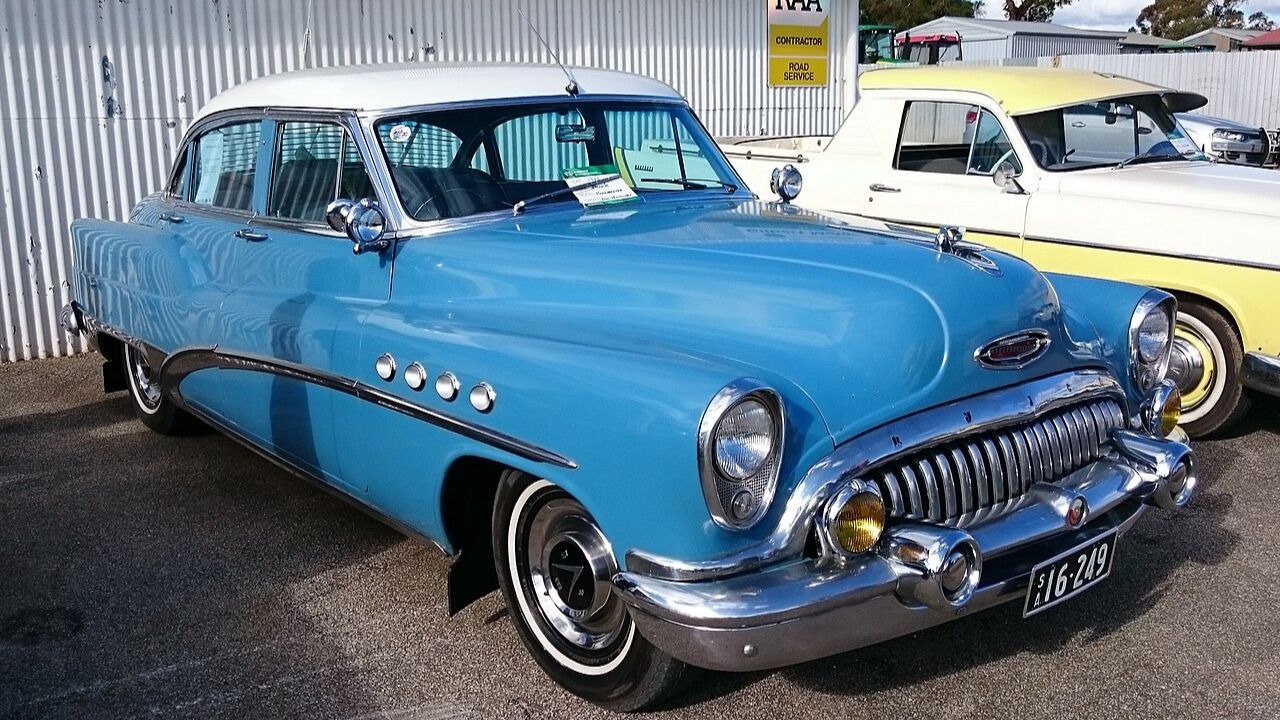
Buick celebrated its Golden Anniversary in 1953, and the Roadmaster got the biggest present. It traded the old straight-eight for Buick’s first V8, the 322-cubic-inch engine fans call the Nailhead. Output reached 188 horsepower, an 11% jump over the outgoing eight. Because the old engine displaced 320 cubic inches, nearly all of that gain came from the new design rather than extra size. Buick also introduced a Twin-Turbine Dynaflow automatic to go with it.
The engine wasn’t the only advance. Buick switched the Roadmaster to a 12-volt electrical system, years before many other makes did the same. Power steering and power brakes became standard, too. As a result, the Riviera sedan, riding a 125.5-inch wheelbase, felt modern in ways that a car buyer could notice every day.
In our opinion, the four-door Riviera is the overlooked way into this year. The Skylark convertible took the headlines, but Buick built only 1,690 of those at $5,000 each. The sedan shares the V8, the 12-volt system and the power assists. Consequently, it gives you the 1953 engineering without the Skylark price.
6. 1955 Packard Four Hundred coupe
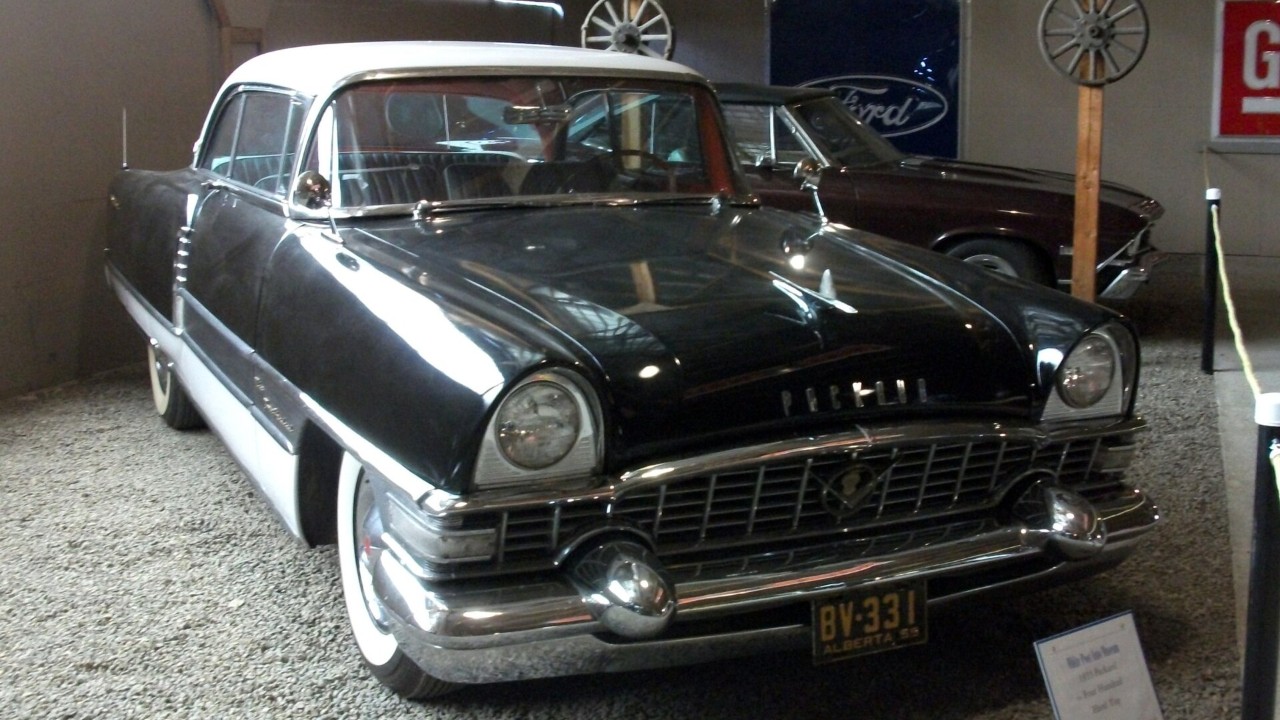
Packard couldn’t afford a new body for 1955, so Richard Teague restyled the existing shell. Underneath, though, the company went all in. The Four Hundred hardtop received Packard’s new 352-cubic-inch V8, replacing the straight-eight it had used for years. Packard built 7,206 Four Hundreds that season.
The real headline was Torsion-Level suspension. According to Mac’s Motor City Garage, long torsion bars ran the length of the chassis and linked the front and rear wheels. An electric motor then adjusted the system to level the car for passengers and luggage, taking about seven seconds. Hudson engineer William D. Allison conceived the idea, and Packard developed it from 1947. It became standard on senior Packards for 1955 and 1956. Packard also offered power steering, power brakes, air conditioning and power windows that year.
We’d put the Four Hundred near the top of this list. Load-leveling suspension became a luxury feature decades later, and Packard had it in 1955. Sadly, the company ran out of time. Curbside Classic’s history of the 1955 Packard notes that the Packard name faded after 1958.
7. 1958 Edsel Citation
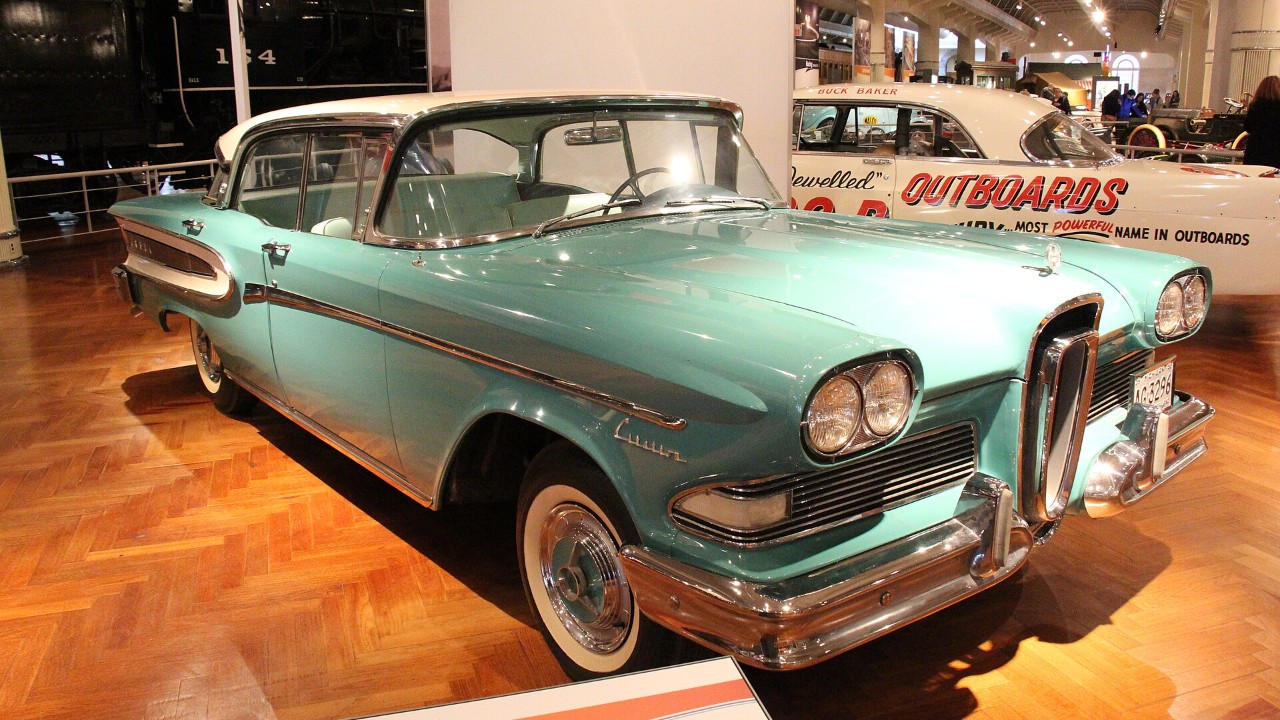
Ford’s new Edsel brand put its most futuristic idea right in the middle of the steering wheel. The Citation, the 1958 flagship, came with Teletouch as standard. Push buttons in the wheel hub selected the gears, so the driver’s hands never had to leave the rim. Power came from a 410-cubic-inch V8 rated at 345 horsepower.
Edsel added other clever touches as well. Warning lights watched several vehicle systems, and the speedometer could warn the driver past a preset speed. There were inside releases for the hood and trunk. Buyers could even order the Edsel Lubricator, which greased the chassis at the push of a dashboard button. However, sales never took off. Edsel built just 8,574 Citations, split among 930 convertibles, 2,532 two-door hardtops and 5,112 four-door hardtops.
In our view, the Citation’s failure had more to do with timing and marketing than with engineering. Speed warnings and system monitors are ordinary today. Back then, they were one more thing for buyers to puzzle over. The Citation lasted only the 1958 model year, which makes a survivor a genuine find.
8. 1956 Chrysler New Yorker
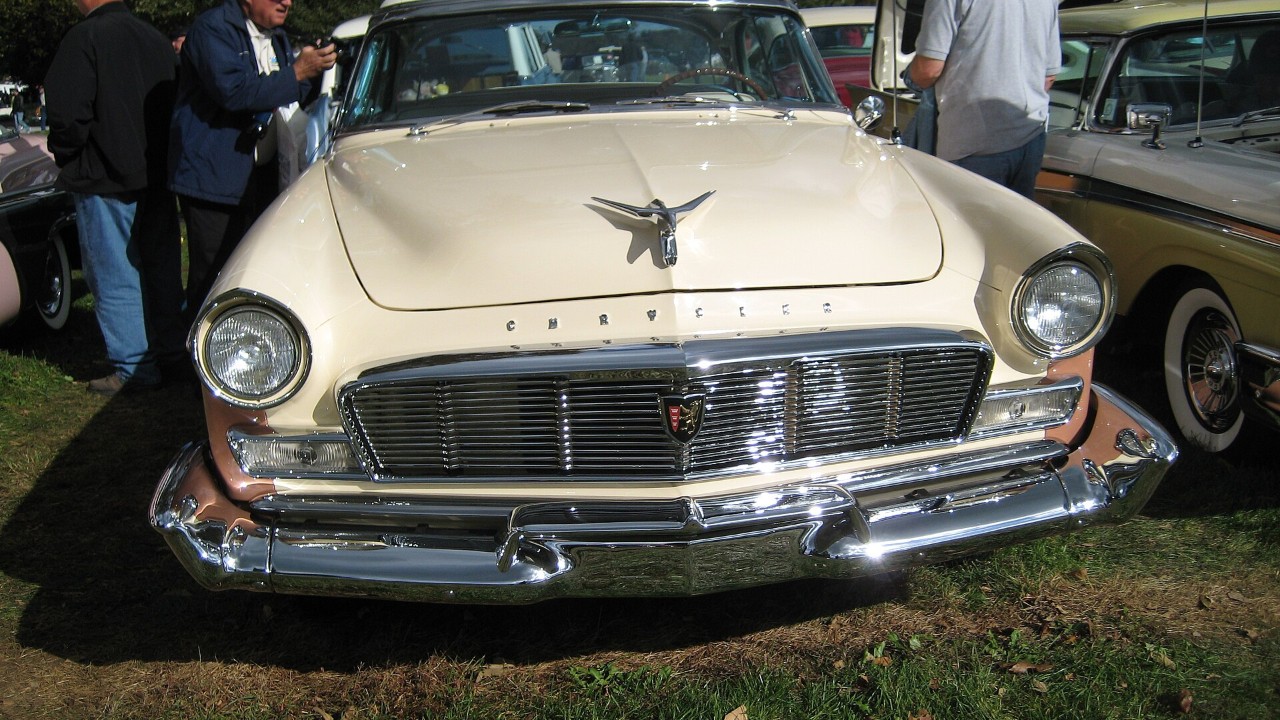
Chrysler’s 1956 New Yorker carried a bigger Hemi, now 354 cubic inches and 280 horsepower. A new mesh grille and leather seats dressed it up, and the same 354 engine powered that year’s Imperial. For 1956, the line also added its first four-door pillarless hardtop. Shifting moved to a push-button selector on the dashboard.
The most surprising option, though, played music. Chrysler offered the Highway Hi-Fi, an under-dash record player that spun special discs at 16 2/3 rpm. CBS Electronics built it. Long before tape decks and CD players, a New Yorker owner could choose the records he wanted to hear on the road. It was an early answer to a question carmakers kept asking for decades.
We’d argue the 1956 New Yorker shows Chrysler at its most inventive. The record player was fussy, and few buyers ordered it. Even so, the idea of in-car music on demand was right on target. For collectors, a 1956 New Yorker with the Hi-Fi still fitted makes a great conversation piece at any show.
9. 1954 Hudson Jet sedan
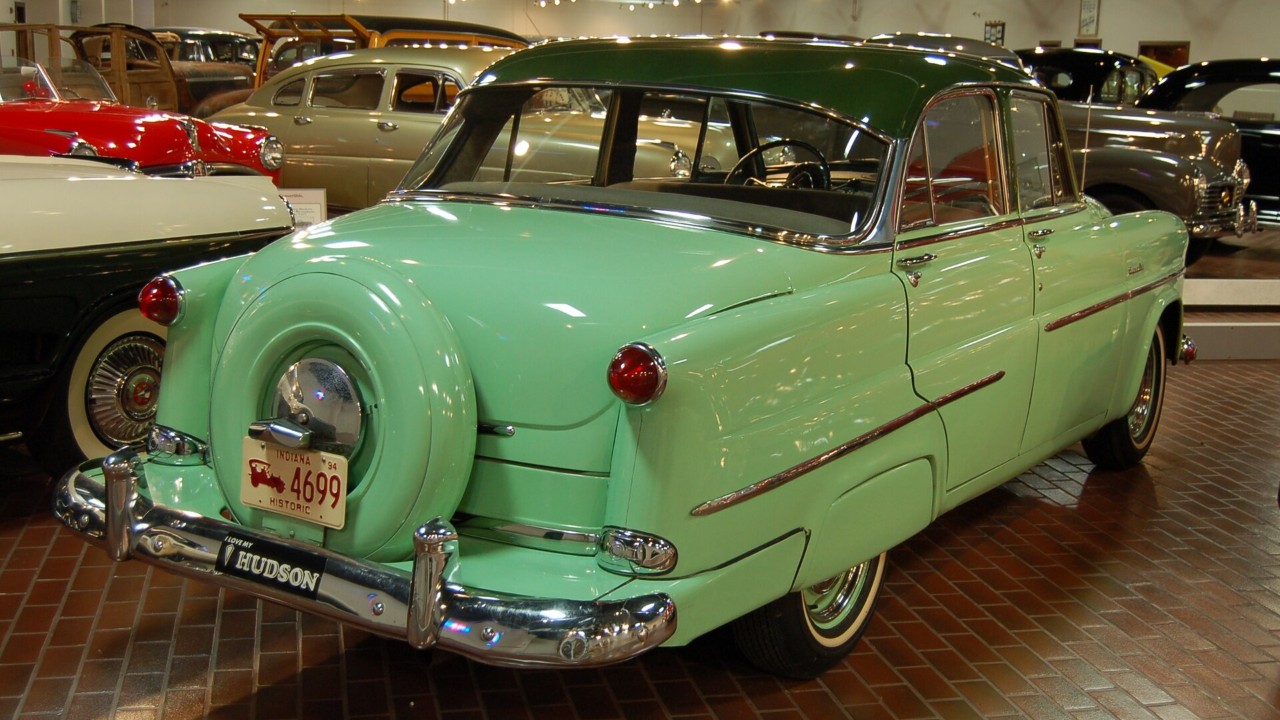
Hudson built the Jet for 1953 and 1954 as its answer to the Nash Rambler. It was a compact car with a solid welded unibody, which Murray Corporation of America built for Hudson. Power came from a 202-cubic-inch six making 104 horsepower. With the optional Twin H-Power setup, two carburetors and an aluminum head lifted that to 114 horsepower.
The Jet also had some speed. Jets ran in the 1953 Carrera Panamericana, where Malcolm Eckart finished 53rd of 182 starters. Yet the price worked against it. In 1953, a base Jet cost $1,858, while a full-size Chevrolet started at $1,613 and a Ford at $1,734. Production fell to 14,224 in 1954, and historian Richard M. Langworth called it “the car that torpedoed Hudson.”
So why is it here? In our opinion, the idea was right and the timing was wrong. A small, solid, quick family car would sell in huge numbers a few years later. Hudson simply asked buyers to pay big-car money for it too soon. If you find a 1954 Jet, a Twin H-Power car is the one to chase.
10. 1956 Packard Clipper Custom
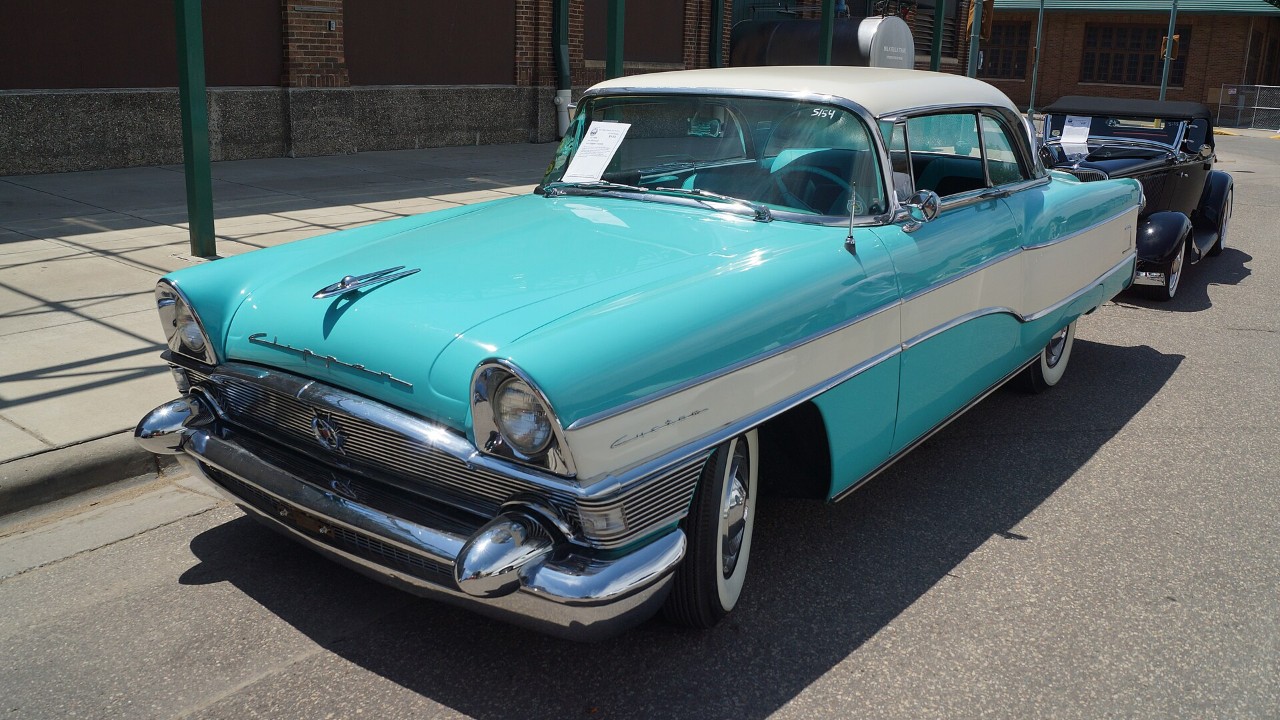
For 1956, Studebaker-Packard turned the Clipper into a make of its own. A separate Packard Clipper division handled the cars. The Clipper Custom sat at the top of that range. Its Packard-built V8 grew from 320 to 352 cubic inches that year.
The Custom also borrowed the senior Packard’s best trick. The 1955 Clipper Custom had offered torsion-bar suspension when other Clippers didn’t, and the linked torsion system stayed available in 1956. That gave a mid-priced car a level, flat ride that rivals couldn’t match. Total Clipper output reached 18,572 for 1956, not counting exports. Of those, the Custom line accounted for 2,219 four-door sedans and 1,466 Constellation hardtops.
Our take: the Clipper Custom is the bargain route into Packard’s last great engineering, and it pairs well with the hardtops in our earlier look at forgotten 1950s Packard coupes. It shares the big V8 and the clever suspension, yet in our view it draws less attention than the senior Packards. Buyer advice: if the car has torsion bars, make sure the leveling motor still works before you hand over the money.
11. 1950 Nash Airflyte Ambassador Super
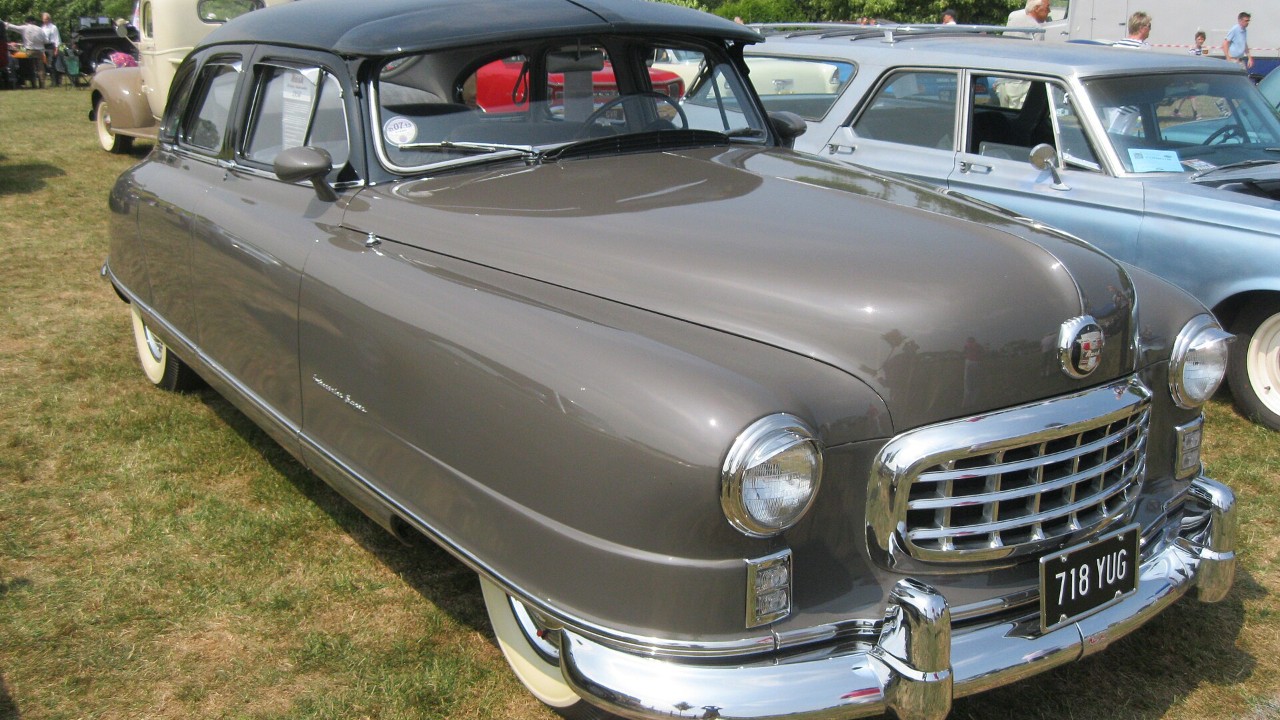
Nash dropped the separate frame for its 1949 models and built the Ambassador as a unibody car. The company claimed 8,000 welds made the structure 1 1/2 to 2 1/2 times as rigid as a conventional car. It also sat 6 inches lower than earlier Nash designs. Nash called the shape “the most streamlined form on the road.”
Engineering vice president Nils Eric Wahlberg favored aerodynamics, and the “bathtub” Airflyte body showed it. Company president George Mason pushed for enclosed front wheels as a bold feature. Inside, the seats reclined all the way, so the car could sleep three adults. For the 1950 Ambassador buyer, that meant a road trip and a campsite in one car.
We think the Airflyte gets mocked for its looks and overlooked for its structure. Unibody construction later became the standard way to build a car. Nash was doing it on a full-size model at the end of the 1940s. Buyer advice: on any unibody car of this age, check the floors and sills closely, because rust there affects the whole structure.
12. 1955 Chrysler C-300
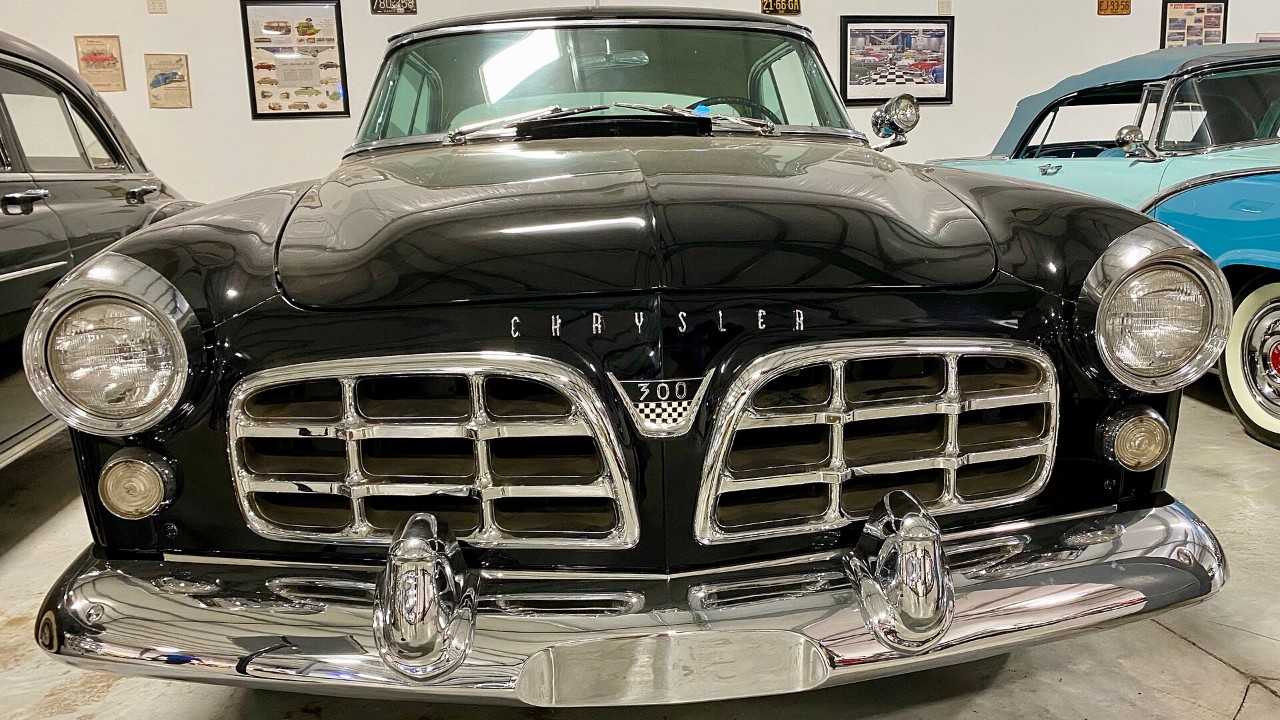
Chrysler built the C-300 by raiding its own parts bins. The front clip and grille came from the 1955 Imperial. The midsection was a New Yorker hardtop, while the rear quarters came from a Windsor. Under the hood sat the 331-cubic-inch FirePower Hemi with two Carter four-barrel carburetors, rated at 300 horsepower.
That rating set the C-300 apart from the 180-horsepower Hemis of earlier years. Racers noticed right away. The cars ran with very little modification and won several times at Watkins Glen. Still, with a listed price of $4,100, the C-300 was never going to be a big seller. Chrysler built 1,725 of them in 1955. Adjusted for inflation, that sticker works out to roughly $49,000 in 2025 money.
In our view, the C-300 invented a formula that American carmakers would chase for the next two decades. Take a luxury car, add the biggest engine and sell it to people who want comfort and speed. The “letter cars” that followed kept that recipe going for years. A 1955 original remains the one to own.
More from Fast Lane Only