In the 1960s, Detroit’s horsepower race created a new kind of performance car that blended everyday practicality with drag-strip aggression. Those machines still shape how enthusiasts define speed and style, and the most significant examples have become essential targets for serious collectors. I want to look at the muscle cars from that decade that no one building a meaningful collection can afford to overlook, and why their influence and scarcity keep driving values higher.
The Pontiac GTO and the birth of the muscle era
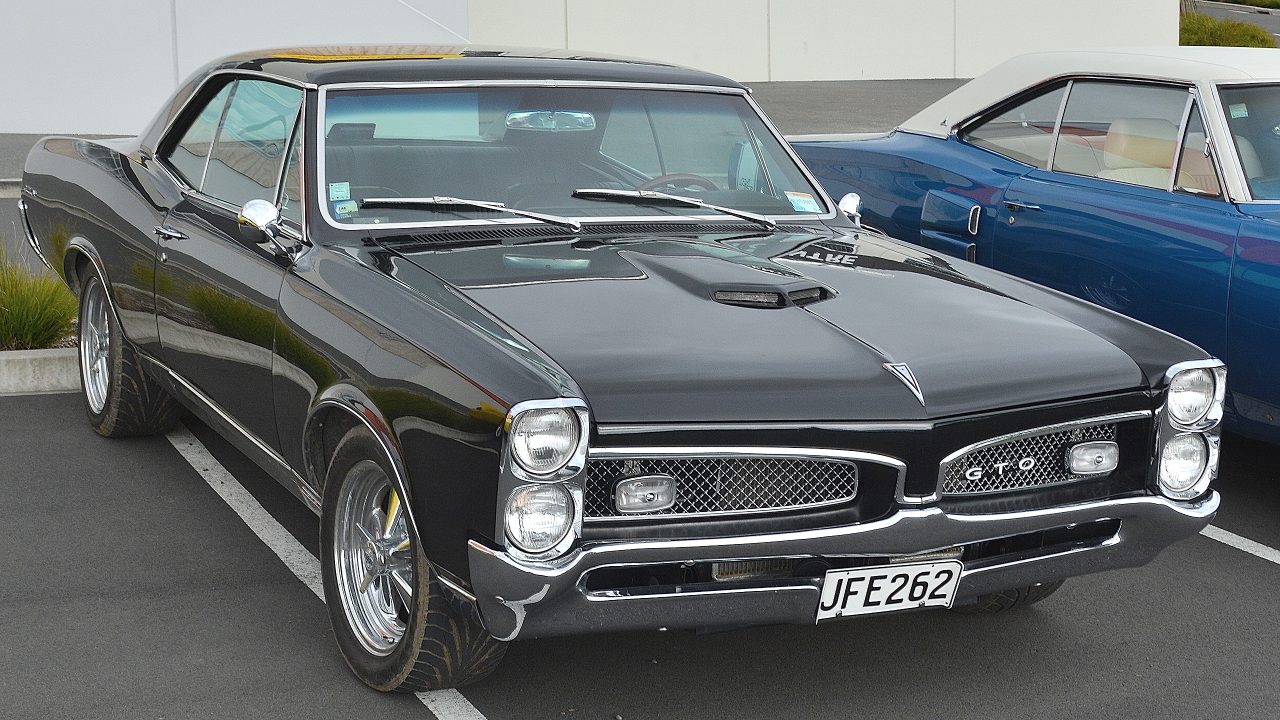
Any discussion of 1960s muscle has to start with the Pontiac GTO, the car that turned a tuning experiment into a full-blown market segment. By dropping a big V8 into a midsize chassis and marketing it unapologetically around performance, Pontiac created a template that rivals rushed to copy. Collectors prize early GTOs because they capture that first wave of factory hot-rodding, and because the car’s mix of straight-line speed and street presence still feels like the purest expression of the muscle idea. The model’s enduring reputation as “The Godfather of Muscle Cars” underlines how central it is to the story of American performance, and that cultural weight is exactly what long term buyers look for when they decide which cars deserve space in a climate-controlled garage.
The GTO’s appeal is not just nostalgia, it is also about how it set expectations for what a performance car should deliver. Period advertising leaned into quarter-mile bragging rights, and that focus on accessible, repeatable acceleration helped define the American Muscle Cars formula that would dominate the late 1960s and into the 1970s. Later commentary that explicitly calls the Pontiac GTO “The Godfather of Muscle Cars” reinforces its status as a foundational model that shaped both engineering priorities and marketing language. For collectors, that combination of historical significance and name recognition makes early GTOs a cornerstone acquisition rather than a discretionary extra.
Ford’s factory terrors, from Mustang to Fairlane Thunderbolt

Ford’s response to the GTO split into two paths, and both are crucial for any serious 1960s muscle portfolio. On one side, the Mustang turned performance into a mass-market phenomenon, especially in its high output variants that appear on lists of the Best 1960s muscle cars. On the other, Ford built limited run drag specials that pushed the boundaries of what a factory would sell to the public. The most extreme of those was the 1964 Ford Fairlane Thunderbolt, a stripped out, race focused machine that prioritized quarter-mile times over comfort or civility. Collectors today see the Thunderbolt as the rarest Ford muscle car of the decade, and that scarcity, combined with its competition pedigree, makes it one of the most aggressively pursued Blue Oval products from the era.
The Thunderbolt’s story illustrates how far manufacturers were willing to go to win on Sunday and sell on Monday. Built in very limited numbers, it used lightweight body panels and serious engine upgrades to dominate drag racing, and later analysis has described it as the rarest Ford muscle car of the 1960s and a pinnacle of the brand’s factory performance efforts. At the same time, more street friendly Fords, including high performance Mustangs and big block intermediates, earned spots among the 10 Best 1960s Muscle Cars for delivering speed that ordinary buyers could actually live with. For collectors, that creates a two tier opportunity: the Thunderbolt as a blue chip, museum grade artifact, and the more common but still significant performance Fords as accessible entries into the era’s culture.
Chevrolet’s big-block icons and the rise of the muscle hierarchy
Chevrolet spent the 1960s refining a lineup that would come to define the muscle hierarchy in many enthusiasts’ minds. Big block Chevelle SS models and early Camaro performance packages delivered the kind of torque heavy acceleration that made American Muscle Cars famous for “jaw dropping horsepower” and “unmatched straight line performance.” When modern rankings of the Best 1960s muscle cars are compiled, Chevrolet’s entries are fixtures, reflecting both their period impact and their continued desirability. For collectors, these cars offer a blend of brand familiarity, parts support, and performance credibility that makes them easier to own and enjoy than some rarer, more fragile contemporaries.
What sets Chevrolet’s 1960s muscle offerings apart is how they bridged the gap between everyday transportation and weekend racing. The same Chevelle that hauled a family during the week could, in SS trim with a big block V8, run with purpose built machines at the drag strip, a duality that modern buyers still find compelling. Contemporary retrospectives on American Muscle Cars in the 1970s emphasize how this formula of bold styling and straight line speed carried into the next decade, but its roots are firmly in the 1960s Chevrolets that proved the concept at scale. That continuity helps explain why collectors often treat these models as foundational holdings, the cars that anchor a collection before more exotic pieces are added around them.
Mopar muscle and the cult of scarcity
While General Motors and Ford chased volume, Chrysler’s Dodge and Plymouth brands carved out a reputation for building some of the most aggressive and, in key cases, the most limited muscle cars of the era. High performance Mopar models, especially those with big block or race tuned engines, have become staples of lists of the rarest American muscle cars, where scarcity and specification combine to drive intense collector interest. The appeal here is not just raw power, but the sense that these cars were built for a small group of buyers who understood exactly what they were getting, a trait that resonates strongly in today’s enthusiast market.
Modern overviews of the Top 5 rarest American muscle cars highlight how limited production runs and specialized equipment have turned certain Mopar variants into blue chip collectibles. These cars, often produced in very small numbers, represent what one analysis calls the “pinnacle of collectibility” because they combine the broader cultural impact of American muscle with the exclusivity usually associated with European exotics. For a collector assembling a 1960s focused garage, adding one of these Mopar heavy hitters is less about filling a brand slot and more about securing a piece that can stand alongside the most coveted performance cars from any region or era.
Why 1960s muscle still outshines later performance legends
By the 1970s, American Muscle Cars had reached a kind of technical and visual peak, with even more dramatic styling and higher advertised horsepower figures. Yet when collectors talk about the cars they consider non negotiable, the conversation keeps circling back to the 1960s. Part of that is historical: the decade marks the origin of the muscle formula, from the Pontiac GTO’s template setting debut to Ford’s Thunderbolt experiments and Chevrolet’s big block mainstreaming of drag strip performance. Another part is cultural, since the 1960s cars are tied to the first wave of youth oriented performance marketing, which still shapes how enthusiasts imagine the ideal American performance car.
The ongoing fascination with 1960s muscle also sits within a broader appreciation for rare and significant cars from that period across the globe. Surveys of 1960s and 1970s rare cars from Europe, Japan, and America describe certain models as “holy grail” machines because of their limited production, advanced engineering, or distinctive design. In that context, the most important American muscle cars of the 1960s, from the Pontiac GTO and the 1964 Ford Fairlane Thunderbolt to the rarest Mopar specials, stand shoulder to shoulder with celebrated European and Japanese exotics. For collectors, that parity reinforces the idea that these Detroit born machines are not just nostalgic artifacts, but central chapters in the worldwide story of high performance automobiles, and that is why they remain impossible to ignore when building a serious collection.