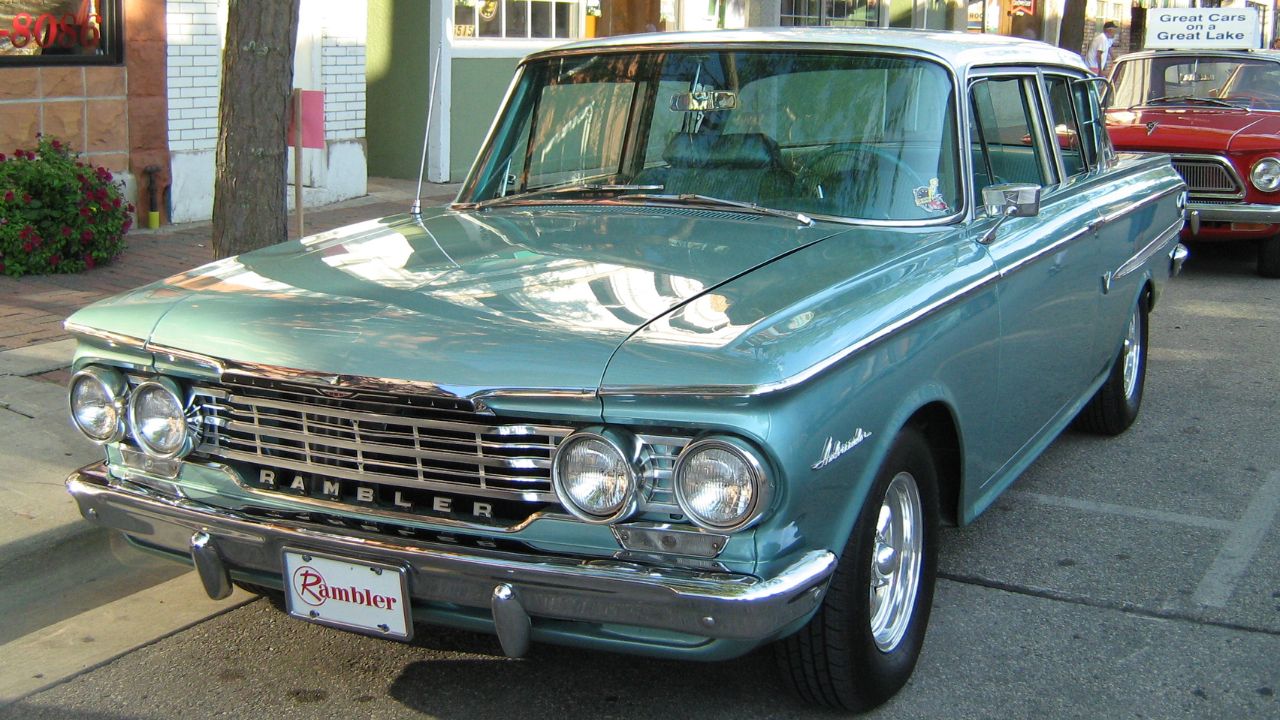
The 1962 Rambler Ambassador emerged as a surprising contender in the competitive landscape of American sedans, offering unique features and a fresh approach that challenged the norms of larger, more established rivals. With its innovative design and consumer-focused performance, the Ambassador redefined what buyers could expect from a full-sized sedan.
Background of the Rambler Brand
The Rambler brand, introduced by the Nash-Kelvinator Corporation in the late 1950s, was positioned as a practical and economical choice for American families. By 1962, Rambler had carved out a niche market, appealing to consumers who sought reliability and affordability over the extravagant styles of larger automakers. The company was primarily known for its compact models, which were gaining popularity as consumers began to prioritize fuel efficiency and ease of handling.
Leading up to 1962, the Rambler Ambassador underwent several iterations, evolving from a mid-sized model into a full-sized sedan that aimed to compete with the likes of Chevrolet, Ford, and Chrysler. During this period, American automotive trends were shifting as smaller, more fuel-efficient cars began to gain traction. The introduction of the 1962 Ambassador reflected these changes, blending practicality with a touch of sophistication that appealed to a broader audience. This was a time when the American automotive industry was on the cusp of significant transformation, preparing for the fuel crises that would soon reshape consumer preferences.
Design Innovations
The 1962 Rambler Ambassador was notable for its introduction of unibody construction, which was less common in full-sized sedans of the time. This design choice not only reduced overall weight but also enhanced the vehicle’s handling and ride quality. The unibody construction gave the Ambassador a more rigid frame, improving safety and stability while allowing for better fuel efficiency. These advantages were particularly appealing in an era when consumers were becoming increasingly conscious of their fuel consumption.
Moreover, the Rambler Ambassador featured unique styling elements that distinguished it from its competitors. With a long hood and short rear deck, the Ambassador exuded a sense of elegance while maintaining a compact footprint. Inside, the cabin was designed with a focus on maximizing interior space without compromising comfort. The clever layout allowed for ample legroom and headroom, making the Ambassador a practical choice for families and long-distance travelers alike. The design was a testament to how a full-sized sedan could be both functional and aesthetically pleasing.
Performance and Engineering
The performance of the 1962 Rambler Ambassador was impressive for its class, offering a range of engine options that included a 287 cubic-inch V8 engine, producing 190 horsepower. This engine provided adequate power for highway driving, making it a suitable option for families and individuals who often embarked on longer journeys. In comparison to larger competitors like the Chevrolet Impala and Ford Galaxie, the Ambassador’s engine output was competitive, particularly considering its lighter weight due to the unibody construction.
Further innovations in the Ambassador’s suspension and handling contributed to an overall improved driving experience. The vehicle featured a unique combination of coil springs and shock absorbers that enhanced ride comfort, allowing the car to glide smoothly over uneven surfaces. The Ambassador offered a driving experience that was both responsive and comfortable, appealing to consumers who valued both performance and comfort in their vehicles. This careful balance of engineering excellence showcased Rambler’s commitment to meeting the needs of its diverse customer base.
Market Positioning and Target Audience
The marketing strategy for the 1962 Rambler Ambassador was innovative, targeting a demographic that included families, young professionals, and budget-conscious buyers. Rambler positioned the Ambassador as an alternative to more expensive models, emphasizing its value proposition without sacrificing quality. Advertising campaigns highlighted the car’s fuel efficiency, spacious interior, and advanced safety features, appealing to a growing audience that sought practicality in their automotive choices.
Furthermore, the Ambassador’s pricing structure played a crucial role in its market positioning. With a base price significantly lower than its rivals, the Rambler Ambassador became an attractive option for potential buyers looking for a full-sized sedan without the hefty price tag. This strategic approach allowed Rambler to carve out a unique niche in a crowded market, effectively competing against larger models that often came with a premium price. The combination of affordability and quality was a key differentiator that resonated with many consumers during this period.
Consumer Reception and Sales Performance
Upon its launch, the 1962 Rambler Ambassador received a positive reception from both consumers and critics. Automotive reviews praised its innovative design, comfortable ride, and practical features. Many noted that the Ambassador offered a compelling option for buyers who were not interested in the typical gas guzzlers that dominated the market at the time. Initial consumer reactions highlighted its spacious interior and overall value as key selling points, contributing to its early success.
Sales figures for the 1962 model reflected this positive reception, with the Ambassador capturing a notable share of the full-sized sedan market. In its debut year, Rambler sold approximately 70,000 units of the Ambassador, competing favorably against its larger counterparts. This strong performance helped solidify Rambler’s reputation as a serious contender in the automotive industry, proving that a well-designed, affordable sedan could challenge the status quo. The lasting impact of the 1962 model on Rambler’s brand image helped pave the way for future designs and innovations.
Competitor Analysis
The Rambler Ambassador faced tough competition from established models like the Chevrolet Impala, Ford Galaxie, and Chrysler Newport. Each of these cars had a loyal following and were known for their size and performance. However, the Ambassador’s smaller stature and lower price point provided a competitive edge that appealed to a different segment of the market. It was not uncommon for buyers to cross-shop between these models, weighing factors such as fuel efficiency, comfort, and pricing.
In response to the Ambassador’s growing popularity, larger sedans began to incorporate features that enhanced fuel efficiency and comfort, as they sought to retain their market dominance. The success of the 1962 Rambler Ambassador forced competitors to re-evaluate their strategies, leading to innovations across the industry. It demonstrated that even within a traditionally dominated market, there was room for disruption and change, particularly when consumer preferences began to shift towards more economical options.
Technological Features
One of the standout aspects of the 1962 Rambler Ambassador was its introduction of advanced technological features that enhanced both safety and fuel efficiency. The vehicle featured a more efficient engine design that not only improved fuel consumption but also decreased emissions—a consideration that was gaining importance among consumers. The incorporation of safety elements, such as a padded dashboard and improved seat belts, reflected a growing awareness of driver and passenger safety during this era.
These technological advancements played a significant role in shaping customer perceptions of the Rambler brand. By positioning the Ambassador as a forward-thinking option that prioritized both innovation and practicality, Rambler was able to attract a diverse customer base. The emphasis on technology in the 1962 model not only appealed to safety-conscious buyers but also helped to establish the brand as a serious competitor in the automotive landscape.
Legacy of the 1962 Rambler Ambassador
The legacy of the 1962 Rambler Ambassador is one of innovation and challenge to traditional automotive norms. Its successful combination of design, performance, and affordability influenced future Rambler models and set a precedent for compact sedans in the American market. The Ambassador’s impact can be seen in how subsequent designs began to embrace smaller, more efficient vehicles that catered to changing consumer demands.
Furthermore, the Rambler Ambassador’s place in automotive history as a trailblazer for compact sedans cannot be understated. It marked a shift in consumer preferences towards practicality and efficiency, paving the way for future models from various manufacturers. The lessons learned from the 1962 model continue to resonate in today’s automotive landscape, where consumers are increasingly seeking value-driven options that do not compromise on quality or performance.
More from Fast Lane Only