The 2016 Formula 1 season gave us one of the strangest sporting sights of the decade: the man who finally stopped Lewis Hamilton’s title streak walking away from the sport almost immediately afterward. Nico Rosberg’s lone championship was not a fluke, and it was not simply the product of a fast car. It was the result of a deliberate, sometimes ruthless campaign to out‑prepare, out‑execute and out‑withstand a team‑mate many regarded as untouchable.
To understand how Nico Rosberg beat what looked like an unbeatable force, I have to trace the arc from his childhood ambition to that tense night in Abu Dhabi, then into the psychological and physical toll that convinced him one title was enough. His story is less about a single season of speed and more about how far a driver can push himself when the only way to win is to be perfect almost all the time.
From karting prodigy to Hamilton’s shadow
Nico Rosberg’s journey to that 2016 summit began long before hybrid engines and data briefings, when he was a six‑year‑old kid deciding he would follow his famous father into the same arena. As a boy he set his sights on emulating Keke Rosberg, the 1982 world champion, and that early resolve shaped a career that eventually carried him into the Formula 1 Hall of Fame. Growing up with that legacy meant he was never just another driver on the grid, and the expectation that came with the Rosberg name framed every success and setback that followed.
By the time he arrived at Mercedes alongside Lewis Hamilton, Nico Rosberg had already logged a decade of hard lessons in the sport, but the partnership quickly tilted in Hamilton’s favor. Over the hybrid era’s early years, Hamilton’s raw pace and race‑day brilliance turned him into the benchmark, and Rosberg into the man trying to keep up. As one season review later put it, Nico had spent years in a draining, emotional fight that often left him on the wrong side of the title equation, even when he had the machinery to challenge at the front of the Formula 1 standings. That context matters, because it explains why 2016 was not a sudden breakthrough but the culmination of years spent studying the one driver he had to beat.
Building a title run against the “unbeatable” benchmark
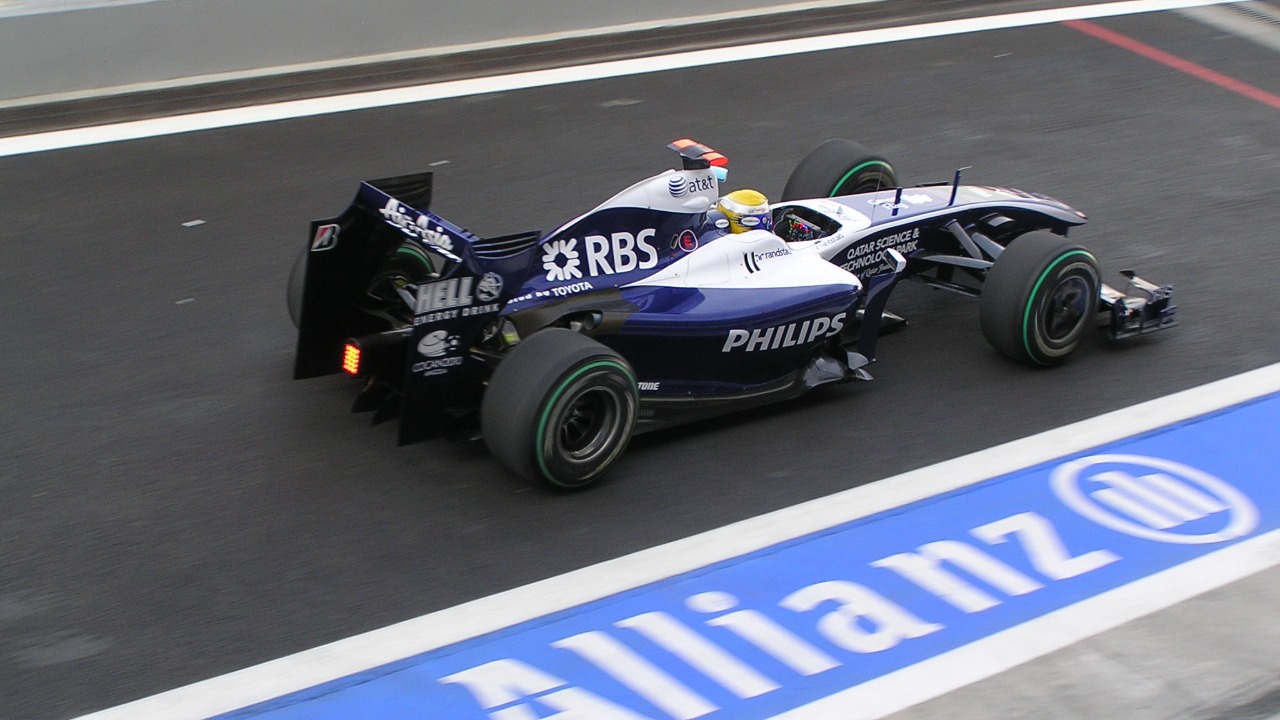
When Nico Rosberg finally put together his championship season, it came after a long stretch in which Hamilton had defined the standard at Mercedes. Earlier coverage of that year captured the scale of the task: after a decade in the sport, Rosberg had to win nine of the 21 races to edge out his team‑mate and become world champion. The numbers underline how narrow the margin was, but they also show that this was not a title won by luck or attrition. He had to convert a dominant car into relentless points, especially on weekends when Hamilton stumbled.
What impressed me most about that campaign was how methodical it looked from the outside. Analyses of the season describe how Nico capitalized whenever Hamilton’s starts or reliability faltered, turning early‑season momentum into a buffer he could defend later in the year. One breakdown of the title fight notes that he beat a sluggish Hamilton off the line at key moments and treated each swing in form as a chance to reset the psychological balance inside the garage, a pattern that helped explain how he won the 2016 championship. In a season where both drivers had access to the same equipment, those small, repeated gains were the only way to chip away at the aura of invincibility around Hamilton.
Mind games, marginal gains and the Japanese Grand Prix
Beating a driver of Hamilton’s caliber required more than clean laps and good starts, and Nico Rosberg has been candid about how far he went into the psychological battle. He has spoken about deliberately “messing” with Hamilton’s head, and one detailed account of that year highlights how he leaned into marginal gains, even down to body weight. In that retelling, Rosberg points out that “One kilo of body weight is 0.04 of a second per lap,” a tiny figure that becomes enormous over a race distance, and he used that logic to justify extreme lifestyle choices as he hunted for every fraction of performance on the way to the 2016 F1 title.
The Japanese Grand Prix became one of the clearest illustrations of that mindset. Season retrospectives describe how Rosberg arrived in Japan with a narrow points edge and then delivered under pressure, extending his advantage while Hamilton struggled. A review of the year notes that the title fight, which had once tilted toward Hamilton, swung back in Rosberg’s favor as he walked “through the fire” of that intense run‑in, with the points gap between them captured in a late‑season tally of 232 to 223 in Hamilton’s column earlier in the campaign before the momentum shifted toward Rosberg’s favor. For me, that race symbolized the essence of his title run: not spectacular dominance, but the calm execution of a plan designed to exploit every weakness in an otherwise formidable opponent.
Abu Dhabi: surviving Hamilton’s last stand
All of that preparation and psychological sparring came to a head in Abu Dhabi, where Nico Rosberg faced the most uncomfortable kind of title decider: one where his rival could win the race and still lose the championship. On that night, Hamilton did everything he could, including backing Rosberg into the chasing pack, to try to force a mistake or a position change that would flip the standings. Reports from the time describe how Rosberg held his nerve in a very tense race, absorbing the pressure from both his team‑mate and the cars behind while Hamilton took the victory, a scenario that still ended with Rosberg securing the Formula 1 world title.
The official race summary captured the duality of that evening: Mercedes celebrated a win for Hamilton and a championship for Rosberg, with the latter emulating his father Keke’s achievement by becoming world champion in his own right. The team’s account of the event notes that Mercedes driver Nico Rosberg emerged from the Abu Dhabi thriller as the 2016 world champion, a result that completed a family circle that began with Keke’s 1982 triumph and underlined how far Nico had come from that six‑year‑old with a dream of matching his father in Formula 1. Watching that race back now, I still see less of a coronation and more of a survival test, one that Rosberg passed by refusing to be baited into the kind of error Hamilton was trying to provoke.
The shock retirement and how history now judges him
What made Nico Rosberg’s story so striking was what happened next. Within days of that title win, he announced his retirement, turning his lone championship into a kind of mic‑drop exit that stunned the paddock. Coverage of the aftermath emphasized how he had been crowned world champion after a tense and controversial finale, only to decide that the emotional and physical cost of staying at that level was too high, a decision that framed his status as a one‑time Formula 1 drivers’ champion. In a sport where legends are usually built on multiple titles, he chose to leave as soon as he reached the summit.
In later reflections, Nico Rosberg has explained that decision in terms that make his 2016 effort look even more intense. In one extended conversation, he described how, as it approached two years since his retirement, he could finally talk about the toll of that season, including drastic changes to his training such as stopping cycling to manage his body and mind more carefully, a glimpse into the sacrifices behind learning how to beat Hamilton and then walking away. When I weigh his legacy now, I see a driver who chose quality over quantity, pouring everything into one perfect storm of a season rather than chasing a dynasty he no longer had the appetite to sustain.
Reassessing Rosberg’s place in the Hamilton era
With the benefit of distance, it has become easier to judge just how good Nico Rosberg really was in the context of Hamilton’s dominance. Many fans still remember him primarily as the man who interrupted Hamilton’s run to win the 2016 World Championship, a framing that can undersell the depth of his craft. A detailed video analysis of his career argues that most Formula 1 followers see him through that single achievement, then digs into his pace, racecraft and adaptability to show why his peak level stacked up far better against Hamilton than casual memory suggests, a case made vividly in a breakdown of how good Nico Rosberg actually was. For me, that reassessment matters, because it shifts the narrative from “one‑season wonder” to “driver who maximized a narrow window against an all‑time great.”
Even contemporary season reviews underline that point by charting how close the internal battle at Mercedes really was. One such review notes that earlier in the campaign Hamilton had led the points 232 to 223, only for the balance to swing as Rosberg pieced together a run of results that turned the deficit into a title‑winning margin, a reminder that the fight was not a procession but a genuine duel inside the same Formula 1 team. When I look back on that era, I see Hamilton as the defining figure, but I also see Rosberg as the one driver who solved the puzzle from the inside, using preparation, psychology and sheer stubbornness to beat the unbeatable, once, when it mattered most.