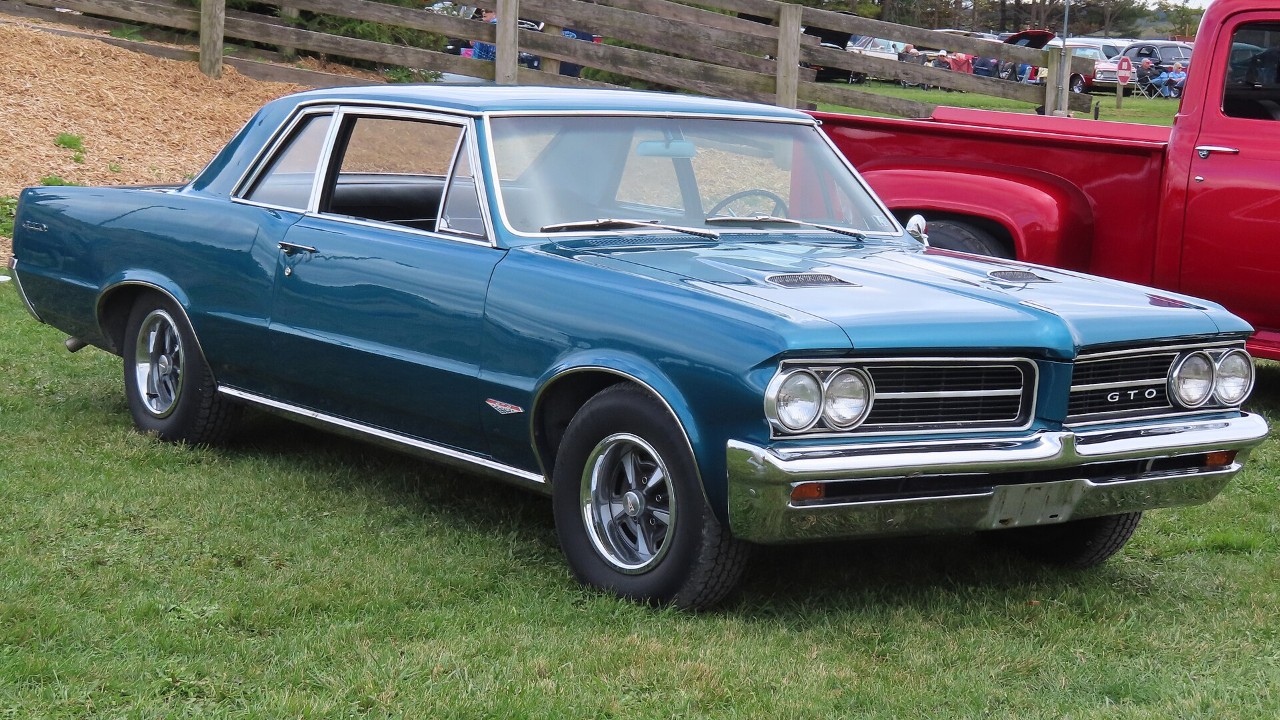
Pontiac sold 32,450 copies of its first GTO in 1964, more than six times the 5,000 cars its sales planners first agreed to build. That surprise turned the Pontiac GTO from a $295 option package into the car most people credit with starting the muscle car decade.
However, the badge never stood still. Over the next ten years it gained a 455, put on a judge’s robe, lost compression to unleaded fuel and finally landed on a compact. Then, after three decades away, it came back from Australia.
These are our picks for the ten GTOs that best capture each turn of that story. The verdict is our opinion, but every figure behind it comes from sources we checked. We start in 1964 and finish with the Holden-built revival.
1. 1964 Pontiac Tempest LeMans GTO
In 1963, GM had a rule for its new intermediate A-body cars: no engine over 330 cubic inches. Pontiac’s 389 broke it. So general manager Pete Estes made the GTO an option package instead of a new model, because option packages didn’t need approval from the top. According to Ate Up With Motor’s history of the GTO, Estes was later reprimanded, and GM raised the limit to 400 cubic inches.
The package cost $295 on a Tempest LeMans. For that money, you got a 389 V8 rated at 325 horsepower with one four-barrel carburetor. With the Tri-Power setup of three two-barrels, the rating rose to 348. Pontiac sales manager Frank Bridge expected 5,000 cars to be a hard sell. Instead, that first batch was gone by Thanksgiving 1963.
Our take: this is the car that wrote the formula. A big engine in a mid-size body, at a price young buyers could reach, became the template its rivals chased. Even better, the plain sports coupe body shows how little it needed to shout. That understatement is a big part of its charm today.
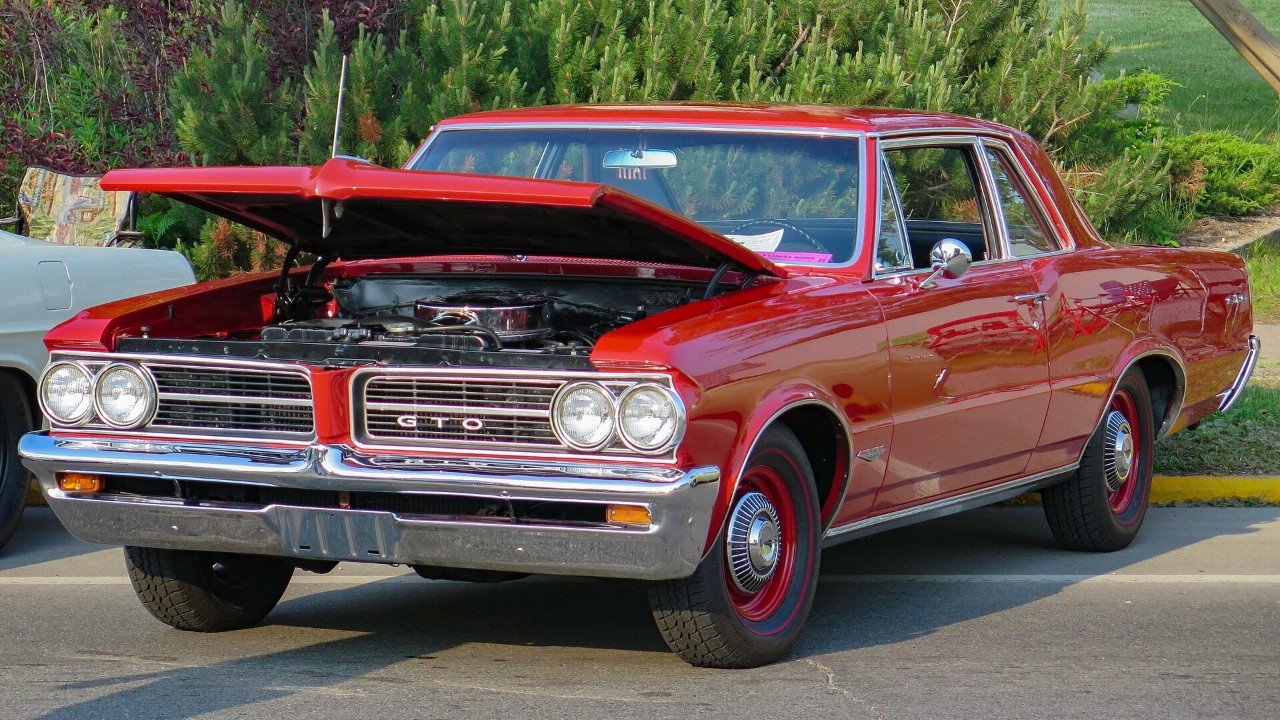
2. 1965 Pontiac LeMans GTO

For its second year, the GTO grew 3.1 inches longer and wore Pontiac’s vertically stacked quad headlights. A simulated hood scoop and a black egg-crate grille finished the new face. Underneath, the base 389 rose to 335 horsepower at 5,000 rpm. Meanwhile, the Tri-Power version now carried a 360-horsepower rating at 5,200 rpm.
Buyers responded in force. GTO sales passed 75,000 for 1965, more than double the debut year. At the same time, Pontiac’s total sales topped 801,000. In other words, the option package was now carrying real weight for the whole division, not just for its image. The recipe hadn’t changed, either: a big V8 in a LeMans body, sold through ordinary Pontiac showrooms.
We’d argue the 1965 car is the best-looking of the early GTOs. The stacked lights give it a stance no rival intermediate matched that year. Tri-Power cars also deliver the mechanical theater people mean when they talk about the era. If you want one, study the paperwork, since the GTO was still an option on the LeMans rather than its own model.
3. 1967 Pontiac GTO Royal Bobcat convertible
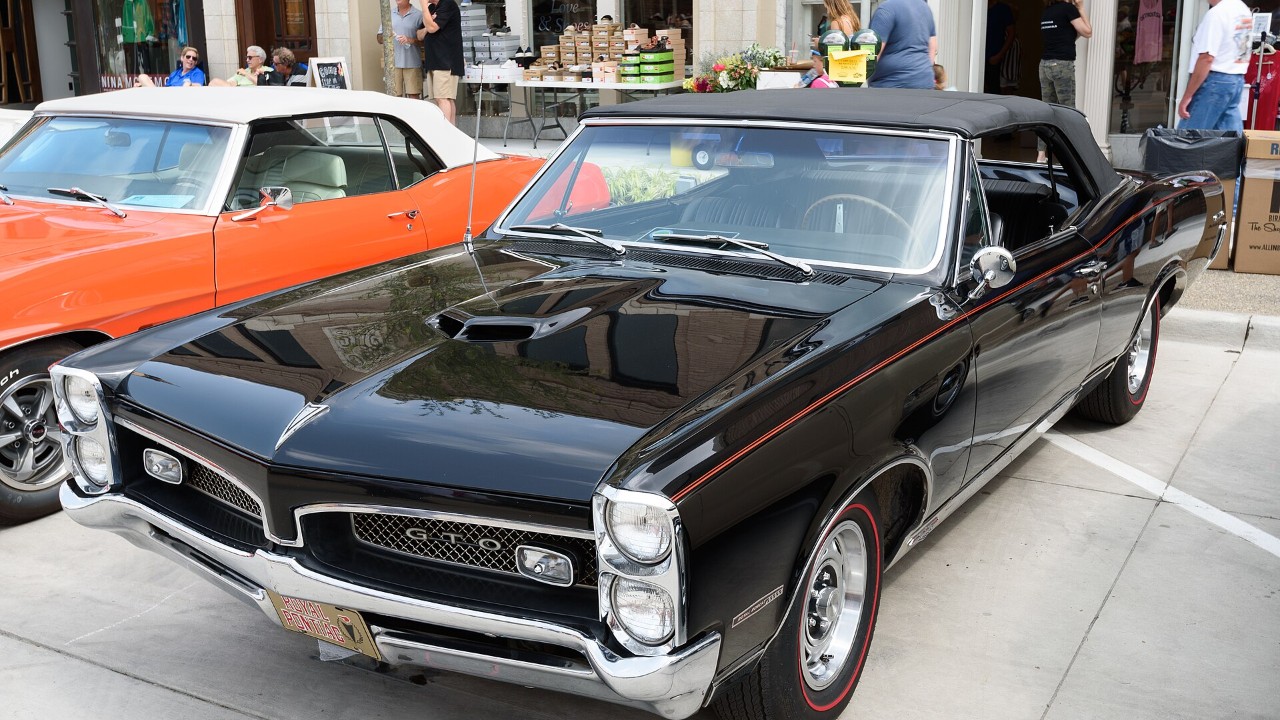
Royal Pontiac, a dealership in Royal Oak, Michigan, built a nationwide mail-order business in Pontiac performance parts. Its Royal Bobcat tune-up kit included thinner head gaskets, a carburetor re-jetting package, a distributor recurve kit with Mallory points, rocker arm locking nuts and Bobcat emblems. Hagerty’s history of the dealer says Royal sold more than 1,000 Bobcat conversion kits in 1966 alone.
The base car got a new engine for 1967. Pontiac bored its V8 out to 400 cubic inches and offered three versions, from a 265-horsepower economy tune to a 360-horsepower high-output engine. Pontiac built 81,722 GTOs that year, and only 9,517 of them were convertibles. Buyers who wanted more air could also tick a Ram Air option, priced at $263.30.
Our take: a Royal Bobcat car captures the dealer-tuned side of the era, when the hottest GTOs came from a service bay as much as from the factory. Royal also fitted warmed-up 428s to some cars, so the badge alone doesn’t tell you what a car received. If you shop for one, insist on Royal paperwork, because the emblems came in a kit anyone could order.
4. 1968 Pontiac GTO convertible
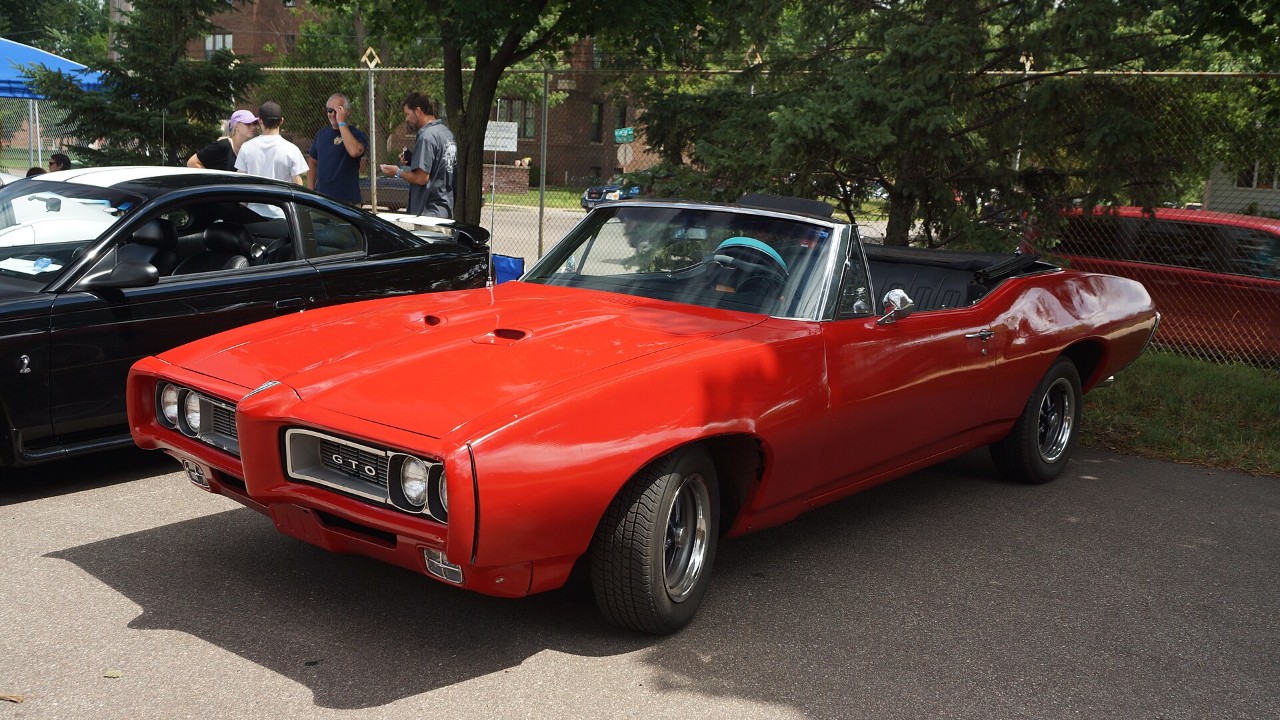
Pontiac reshaped the GTO for 1968 with a shorter wheelbase and a profile that borrowed from the Firebird. The headline feature sat up front. A body-color Endura bumper could absorb a low-speed hit without permanent damage. As a result, the chrome bumpers on rival cars suddenly looked old-fashioned.
Motor Trend named the GTO its Car of the Year, and Pontiac built 87,684 of them. That beat the almost 82,000 sold in 1967, so the bold new look grew sales instead of risking them. A convertible shows off the new shape best. With the top down, the long hood and short deck read clearly. Better still, the Endura nose flows into the fenders without a strip of chrome to break it up.
We think 1968 is the year the GTO stopped looking like a dressed-up Tempest and became its own car. That design shift is why it earns a spot here. To our eyes, it is also the GTO whose styling has aged best of all. When you inspect one, look hard at the Endura nose, because its finish is a big part of what makes the car special.
5. 1969 Pontiac GTO Judge
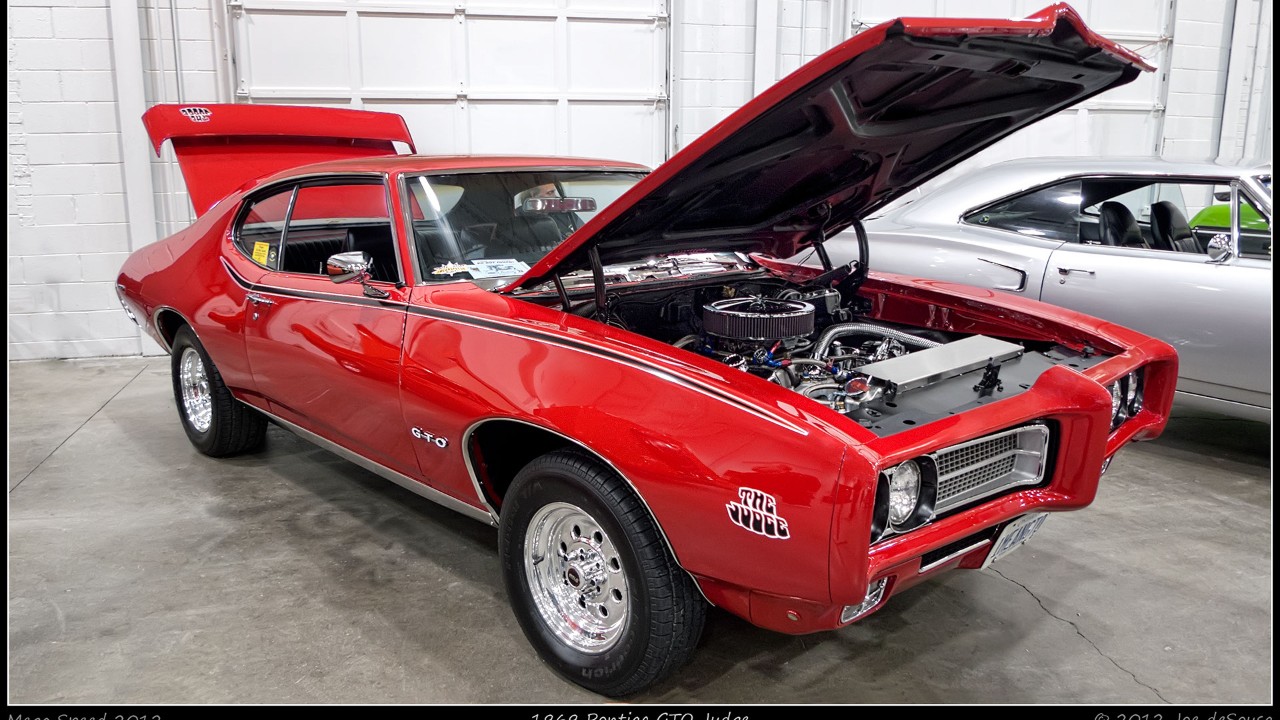
Pontiac launched the Judge in 1969 at $332 over a regular GTO. Its standard engine was the Ram Air 400, rated at 366 horsepower at 5,100 rpm. Fans call that engine the Ram Air III, although Pontiac never used the name. Pontiac also claimed the rear spoiler added some downforce at higher speeds, though it did little at legal ones.
Early Judges came only in Carousel Red. Other colors arrived partway through the model year, which is why a red car is the picture most of us hold. Pontiac built 6,833 Judges among 72,287 GTOs for 1969. That means fewer than one in ten GTOs carried the badge.
Our take: the Judge proved a muscle car could sell on personality as well as power. Its rivals had the numbers, but few had a costume this loud. Pontiac’s cheeky downforce claim for the spoiler is part of the fun. If you are shopping, start with documentation. After all, stripes and a spoiler are easy to add to a regular GTO. A real one, though, is the car most people ask about first at any Pontiac show.
6. 1970 Pontiac GTO hardtop
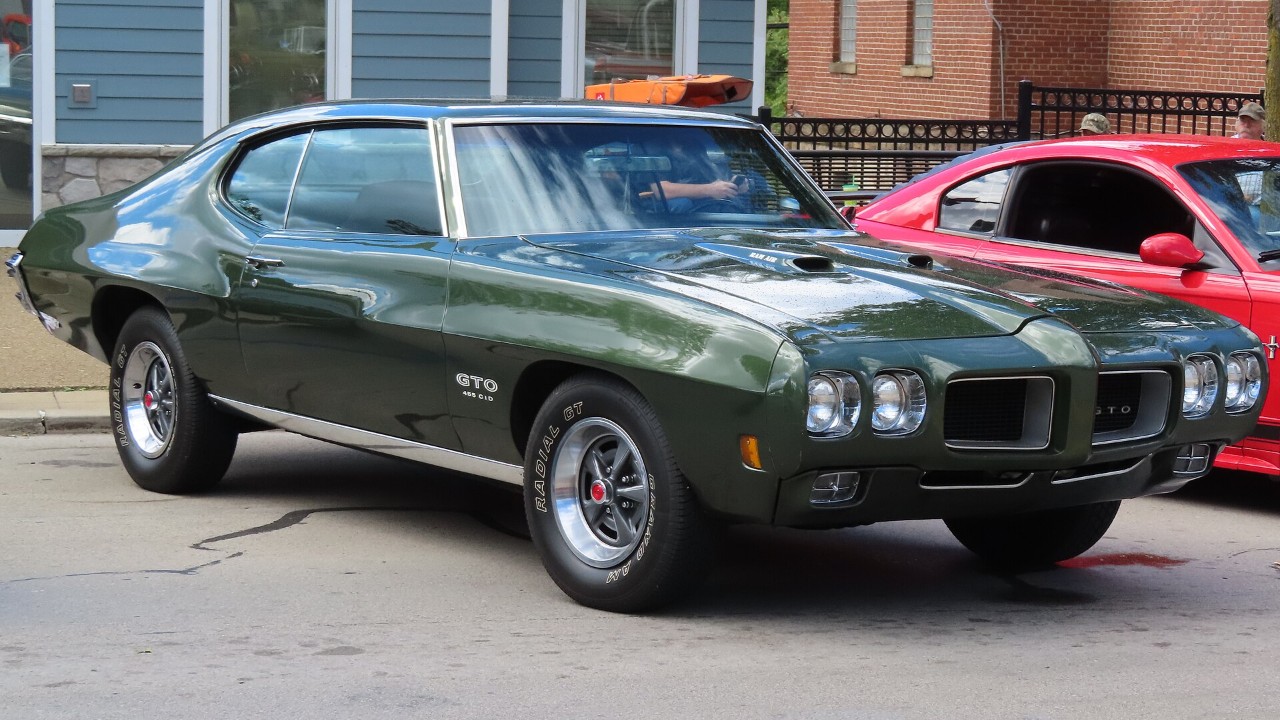
For 1970, Pontiac deleted the hidden headlights and gave the GTO four exposed round lamps in its Endura nose. The bigger change sat under the hood. A D-port 455 HO joined the lineup, rated at 360 horsepower and 500 lb-ft of torque at just 2,700 rpm. That torque figure, more than the horsepower, explains why this car pulls so hard on the street.
Then there was the Vacuum Operated Exhaust option. Pontiac offered it from November 1969 to January 1970, and only about 233 cars got it. GM ordered it canceled after a Super Bowl IV commercial aired on January 11, 1970. Overall, Pontiac built 40,149 GTOs that year, including 3,797 Judges. That total was well down from the 72,287 GTOs of 1969, a sign of what was coming.
Our take: 1970 marks the peak of the big-engine GTO before new fuel rules caught up. The hardtop is the everyday body of that peak, and we’d pick it for exactly that reason. A VOE car is the scarcest of the bunch, so ask for proof before you pay extra for one.
7. 1971 Pontiac GTO hardtop
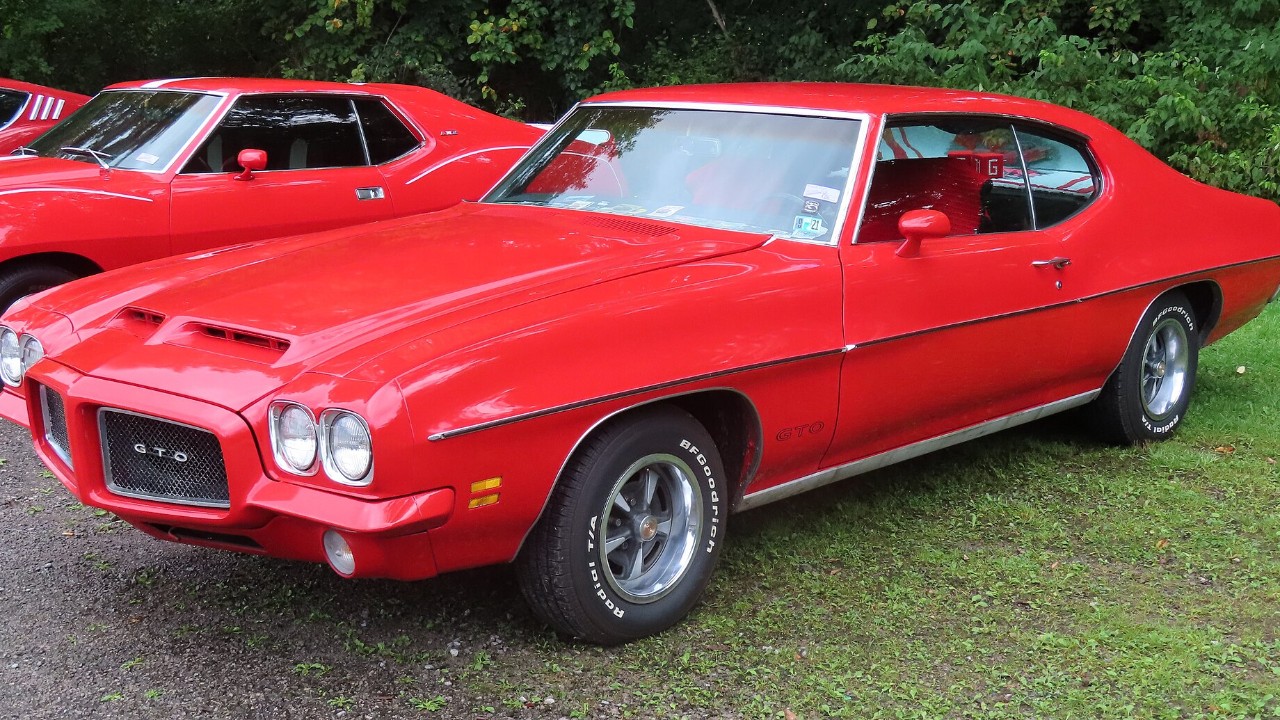
By 1971, the GTO faced unleaded fuel and falling demand at once. Pontiac cut the standard 400’s compression to 8.2:1. Consequently, its rating dropped to 300 horsepower gross, or 255 by the new net measure. The 455 HO carried 335 gross horsepower and 310 net. That mattered, because Ate Up With Motor notes that a loaded 455 GTO with air conditioning already weighed over two tons in 1970.
Sales fell hard. Pontiac built 10,532 GTOs for 1971, down from about 72,000 just two years earlier. The Judge reached its final year with 357 sold. Convertibles were scarce too, with just 661 non-Judge drop-tops built. Meanwhile, Pontiac slipped from third place in American sales in 1970 to fourth.
We include the 1971 car because it shows the turning point more clearly than any other year. It still looked aggressive on the road. However, the window sticker told buyers that the high-compression days were over. Today, its low production is its strongest card. A documented 455 HO car is the version we’d hunt for, though a 400 hardtop makes a fine weekend driver.
8. 1972 Pontiac LeMans with GTO option
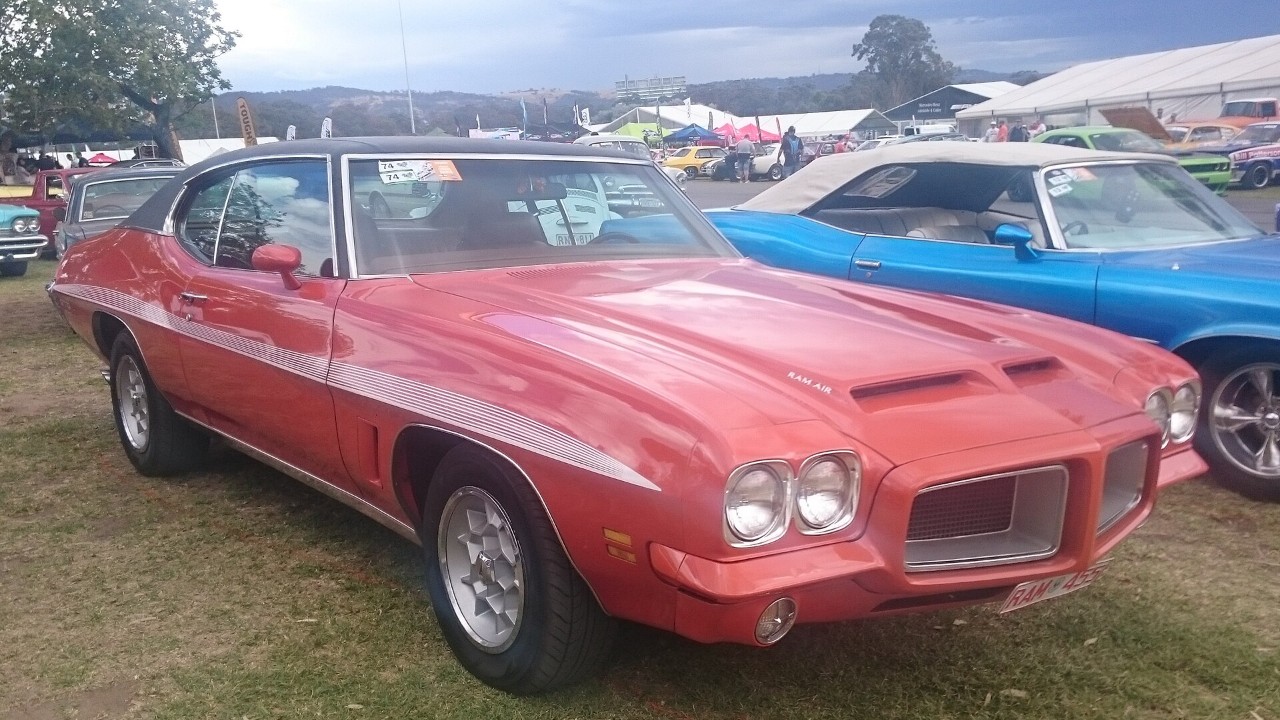
In 1972, the GTO went back to where it started. It stopped being its own model and became a $353.88 option package on the LeMans and LeMans Sport coupes. Production came to 5,811 by one count and 5,807 by another. That makes it one of the scarcest GTOs of the original run, and few cars ever wore the badge more modestly.
The timing tells the story. From 1972 through 1986, Oldsmobile outsold Pontiac every single year. Meanwhile, the performance market that made the GTO famous was shrinking fast, and the badge had to make do as an option once again. Earlier, GM had also canceled the 455 Ram Air V engine after president Ed Cole warned of compression cuts for unleaded fuel.
Our take: the 1972 car is the bookend to the 1964 original. Both were option packages on a LeMans, eight years apart, and the gap between their sales says everything about the era. You won’t see many at shows, which is exactly why we’d stop to look. If you find one, confirm the option through Pontiac documentation, because any LeMans can wear GTO badges.
9. 1974 Pontiac Ventura GTO
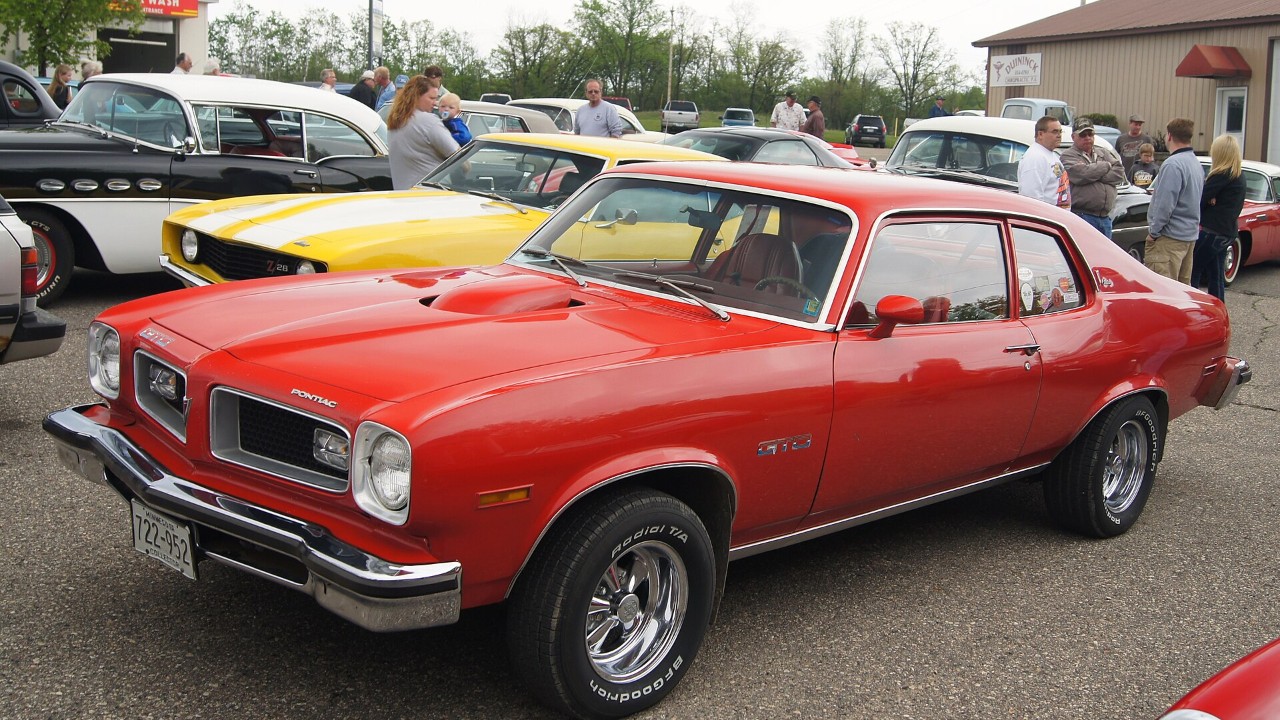
The original GTO’s last year put the name on a compact. For 1974, it became a $461 option package, code WW3, on the Ventura. It used a 350 V8 rated at 200 horsepower at 4,400 rpm. A shaker hood scoop rose through the hood, too, a nod to the bigger cars of a few years earlier.
Pontiac hoped to sell about 10,000. Instead, buyers took about 7,000, which was not enough to justify the option. Even so, that beat the 1973 GTO, which sold fewer than 5,000. Pontiac ended the GTO after that year, and the name then sat unused for three decades.
We know the 1974 car divides opinion. Still, it belongs on a generation list because it shows how the muscle car adapted to a smaller market instead of vanishing outright. For a newcomer, a Ventura GTO is an approachable way into the badge. Its shaker scoop also makes it easy to spot across a parking lot. Our advice: buy it for what it is, a compact with personality, and don’t pay a big-block premium for it.
10. 2004 Pontiac GTO

The GTO returned for 2004 as a rebadged Holden Monaro from Australia. It carried a 5.7-liter LS1 V8 rated at 350 horsepower. Ate Up With Motor’s history puts its 0-60 mph time under 5.5 seconds and its top speed at 168 mph. For 2005, the LS2 raised output to 400 horsepower.
Pricing hurt it from day one. GM planned a price of about $25,000, but the car launched at more than $34,000 because the Australian dollar had risen against the U.S. dollar. As a result, Pontiac sold 13,569 of the 15,728 cars it imported for 2004, well short of the 18,000 GM hoped for. Production for 2004 through 2006 ended at roughly 40,800 cars.
Our take: the 2004 car is a fast, well-mannered coupe that looked too plain to some eyes when it was new. Time has been kind to it, though. Its front-engine, rear-drive V8 layout now reads like the old recipe in modern clothes. If speed matters most, the LS2 cars are quicker, but the 2004 is the first of the revival.
More from Fast Lane Only