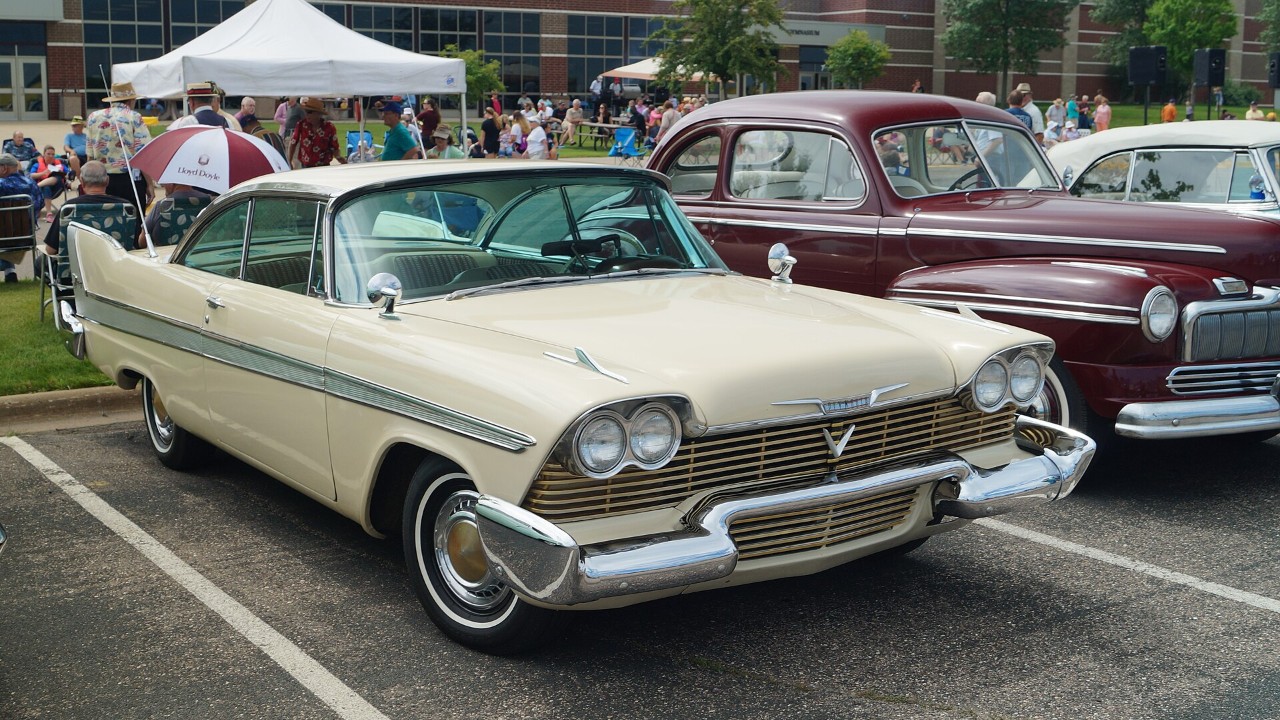
Plymouth’s Fury started in 1956 as a limited-production hardtop offered in a single paint color. Later, Stephen King made the 1958 Plymouth Fury the star of his novel Christine, which became a 1983 film. That’s quite a climb for a nameplate that began as a Belvedere sub-series.
The Fury name stayed around for decades, though, and for much of that time it badged ordinary family sedans. So the versions worth hunting are the ones where Plymouth went all the way. Think dual four-barrel carburetors, big wedge V8s, gold anodized trim and, later, a full luxury package.
These seven are our picks, in order of model year. “Executed without compromise” is our opinion of each one. Meanwhile, the engines, prices and production counts come from period specifications, engine histories and published model records.
1. 1956 Plymouth Fury
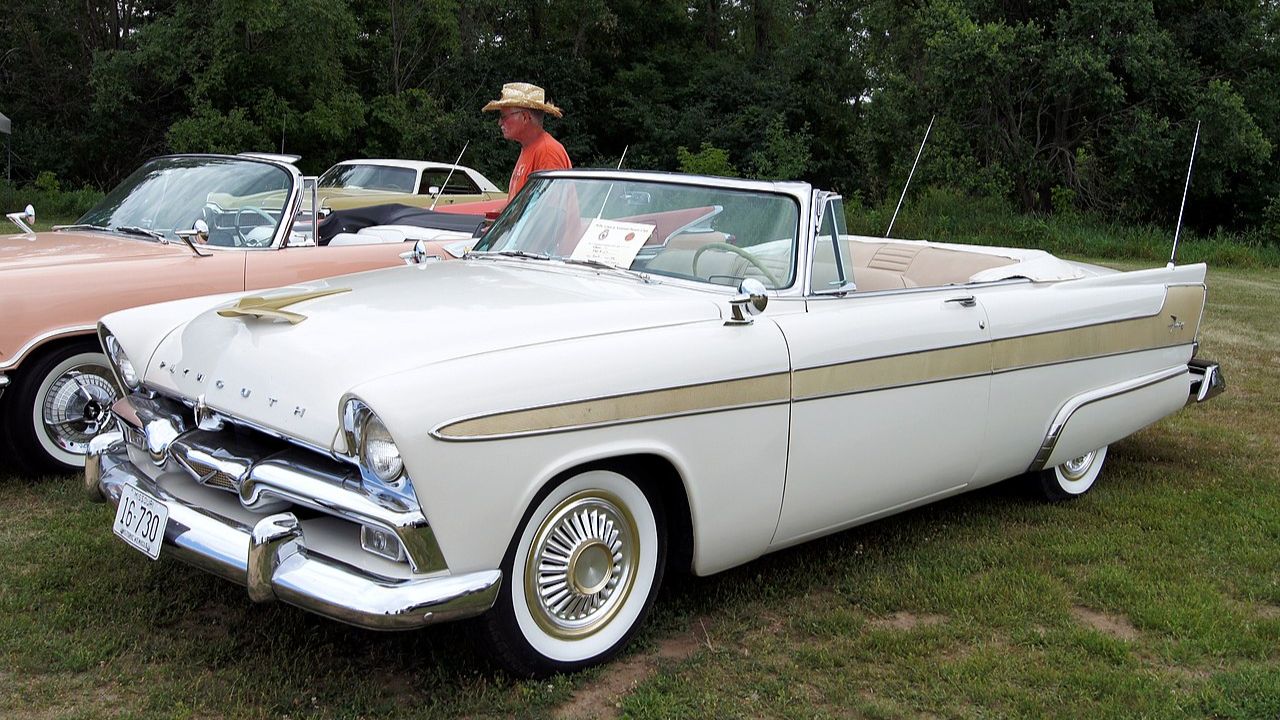
The first Fury arrived as a sub-series of the Belvedere, and Plymouth offered it in one look only. Every car came in eggshell white with a gold anodized sweepspear down each side. Under the hood sat a 303-cubic-inch V8 from Chrysler’s Canadian line, rated at 240 horsepower with a four-barrel carburetor.
The hardware matched the look. According to automotive writer Dan Jedlicka, the Fury got a special sport suspension, large brakes, special tires and a front anti-sway bar. In other words, Plymouth built the chassis to handle the engine, not just to carry the paint. Plymouth made 4,485 of them that year. Buyers could pair the V8 with a three-speed manual or the two-speed PowerFlite automatic.
Our take: this is the purest Fury, because the whole car is one idea with almost nothing to water it down. We covered its launch in detail in our story on the first Plymouth Fury. If you shop for one, make sure the gold anodized trim is original and complete, because that trim is what makes the car. A Fury with a three-speed manual is the most authentic way to enjoy it.
2. 1957 Plymouth Fury V-800
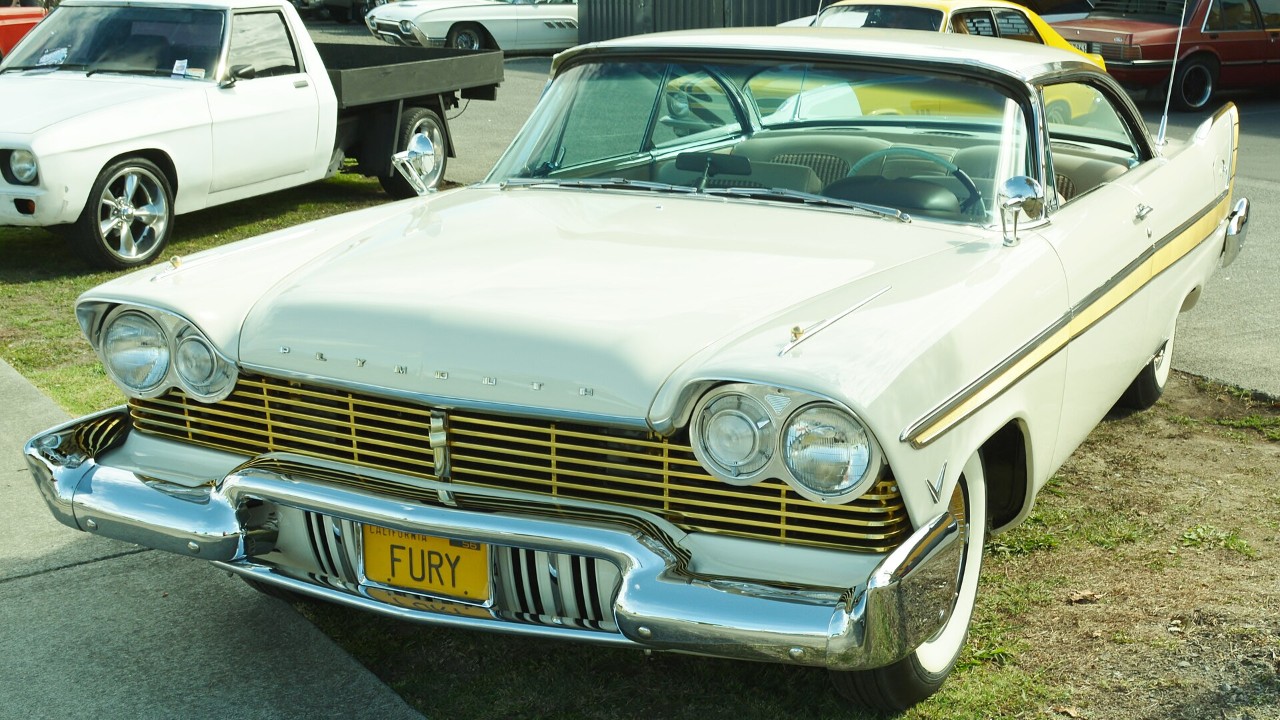
For 1957, Chrysler restyled its whole lineup, and the Fury came out longer and lower. Jedlicka says the wheelbase grew 3 inches, while the car sat 5.5 inches lower than the 1956. It also gained torsion-bar front suspension, which he credits with strong handling. The white-and-gold look carried over, though gold grille bars replaced the gold wheel covers.
Under the hood was the real news. The 318-cubic-inch V-800 used two Carter four-barrel carburetors and made 290 horsepower, the highest output of any factory A-series engine. Plymouth also offered it on lower-range models, but the Fury got it as standard. That year, the Fury cost $2,925, and Plymouth built 7,438 of them, the most of the early run.
In our view, the 1957 car is the best balance of the first-generation Furys. It has the longer, lower 1957 body, the dual-quad V8 and a TorqueFlite three-speed automatic on the option sheet. Buyer’s tip: dual-quad setups need careful tuning, so look for a car whose carburetors have been rebuilt and synchronized by someone who knows Mopars. Done right, that dual-quad 318 is the heart of the car.
3. 1958 Plymouth Fury Golden Commando
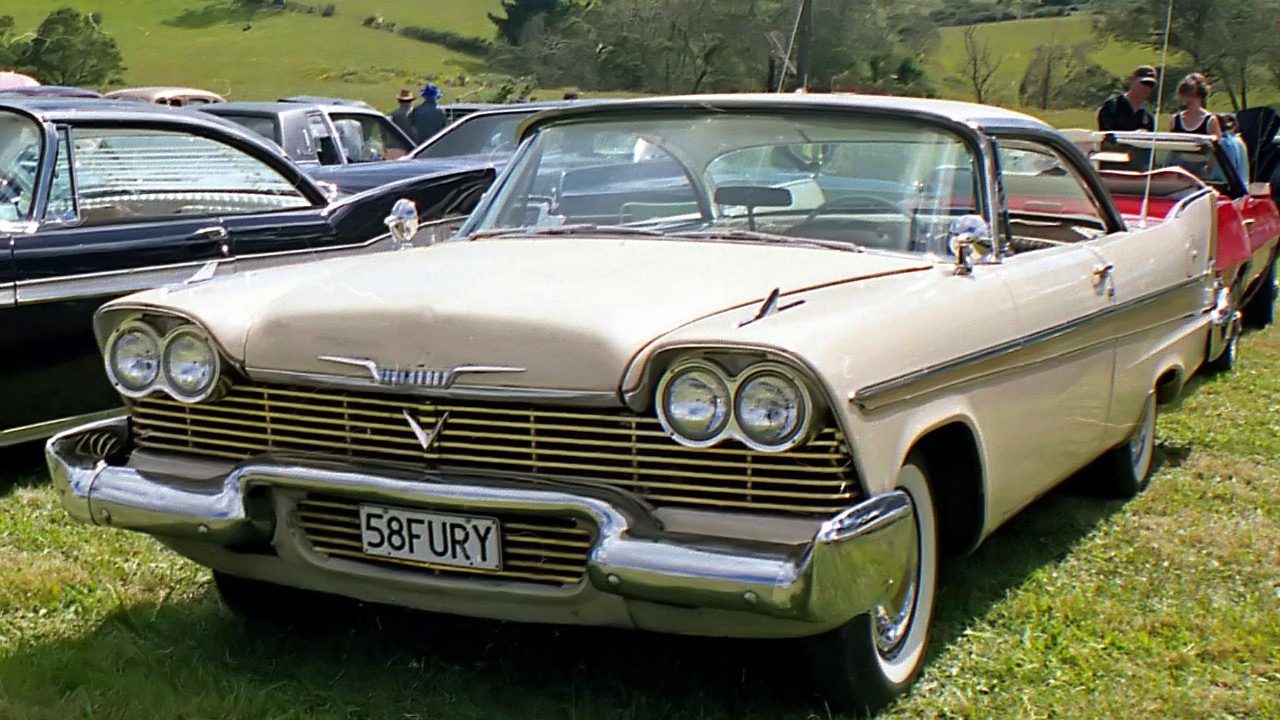
The 1958 Plymouth Fury is the famous one, thanks to Christine. It got four headlights and “lollipop” taillights while keeping the white-and-gold theme. Plymouth priced it at $3,067 and built 5,308. Its standard engine was the 290-horsepower V8 carried over from 1957, and wheel covers with gold centers kept the theme going. Even so, the most interesting part was the optional engine.
That engine was the 350-cubic-inch Golden Commando. Over-Drive Magazine lists it at 305 horsepower and 370 lb-ft with two Carter AFB carburetors and 10.0:1 compression. A rare fuel-injected version made 315 horsepower. However, Over-Drive notes the injection system was unreliable due to electronic interference. As a result, Chrysler recalled those cars and converted them to dual four-barrels.
Our take: a 1958 Plymouth Fury with the Golden Commando is the version we’d want in the garage. It’s the big-engine car from the most famous Fury year. Buyer’s tip: ask for documentation before paying extra for a “fuel-injected” car, because Chrysler converted those systems, so a surviving original setup would be very unusual. A clean dual-quad car is the realistic goal.
4. 1959 Plymouth Sport Fury convertible
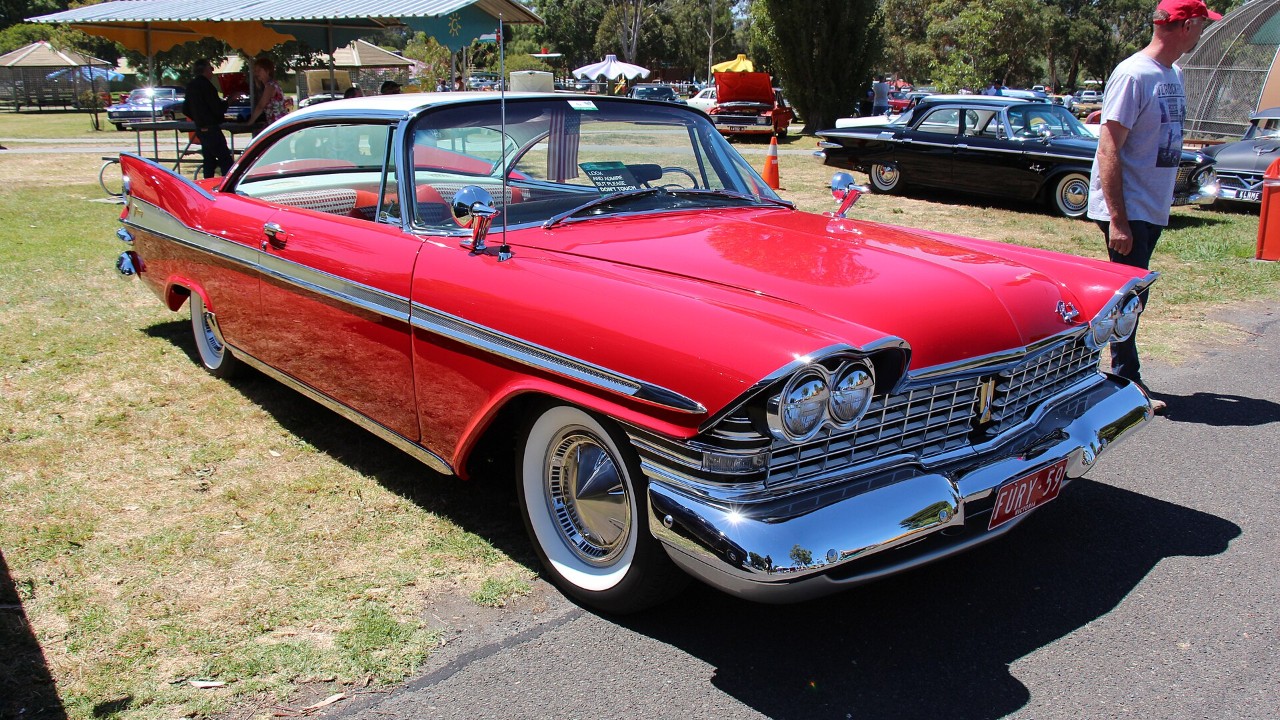
For 1959, Plymouth made the Sport Fury its top model, offered as a two-door hardtop and a convertible. The Fury also became its own series above the Belvedere, and its tailfins grew to suit the era. The convertible is the one that shows them off best.
Under the hood, the 350 was gone. In its place, the Golden Commando grew to 361 cubic inches. Over-Drive lists the 1959 361 Golden Commando at 305 horsepower and 395 lb-ft, with a single Carter AFB four-barrel. That’s more torque than the 1958 engine, and it peaked at 3,000 rpm instead of 3,600.
We think the 1959 Sport Fury convertible is the most glamorous Fury ever built. It’s a top-down cruiser with a big-block under the hood and fins that seem to go on forever. Buyer’s tip: confirm that a “Sport Fury” is the real thing with its trim and paperwork, since badges and trim are easy to swap. Also check the convertible top frame and the floors under the carpet carefully. Get those right, and it turns every head at a cruise night.
5. 1965 Plymouth Fury 426 Street Wedge
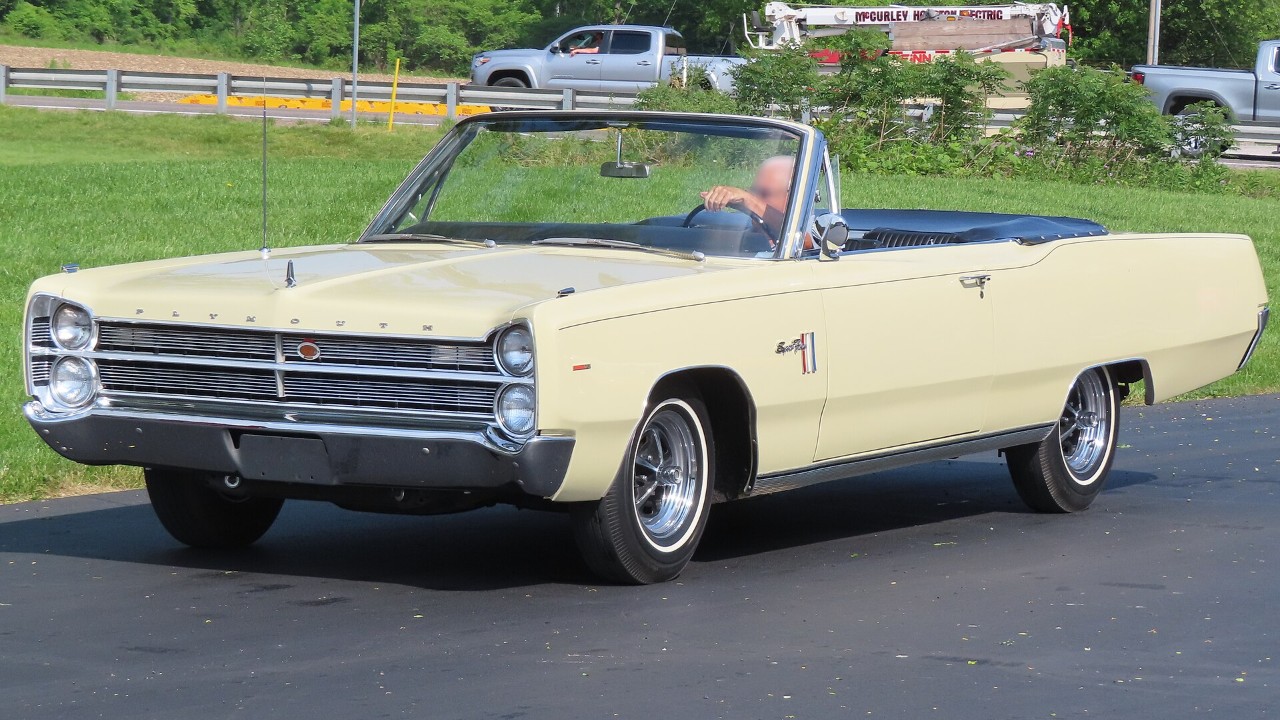
The 1965 Fury was all new. It rode on a 119-inch wheelbase for sedans and 121 inches for wagons, and Plymouth split the line into Fury I, II and III, with the Sport Fury at the top. Buyers could also order the 426 street wedge V8, which Plymouth offered in the new full-size Fury that year.
Over-Drive lists the 1964-1965 Commando 426 at 365 horsepower and 470 lb-ft, with 10.3:1 compression and hydraulic lifters. Chrysler offered it in the Dodge Polara, the Dodge Monaco and the Plymouth Fury as the high-performance V8. Other published histories put the 1965 street wedge at 385 horsepower, so ratings vary by source. Either way, it was the high-performance V8 for the big Fury that year.
In our view, a 426 Street Wedge Sport Fury is the sleeper of this list. It looks like a big, square family car, yet it carries a 426-cubic-inch wedge V8. Buyer’s tip: verify the engine code and the build paperwork before you pay a big-engine price. For more surprise performers, see our list of forgotten Plymouths that outran everything in their class.
6. 1966 Plymouth Fury VIP
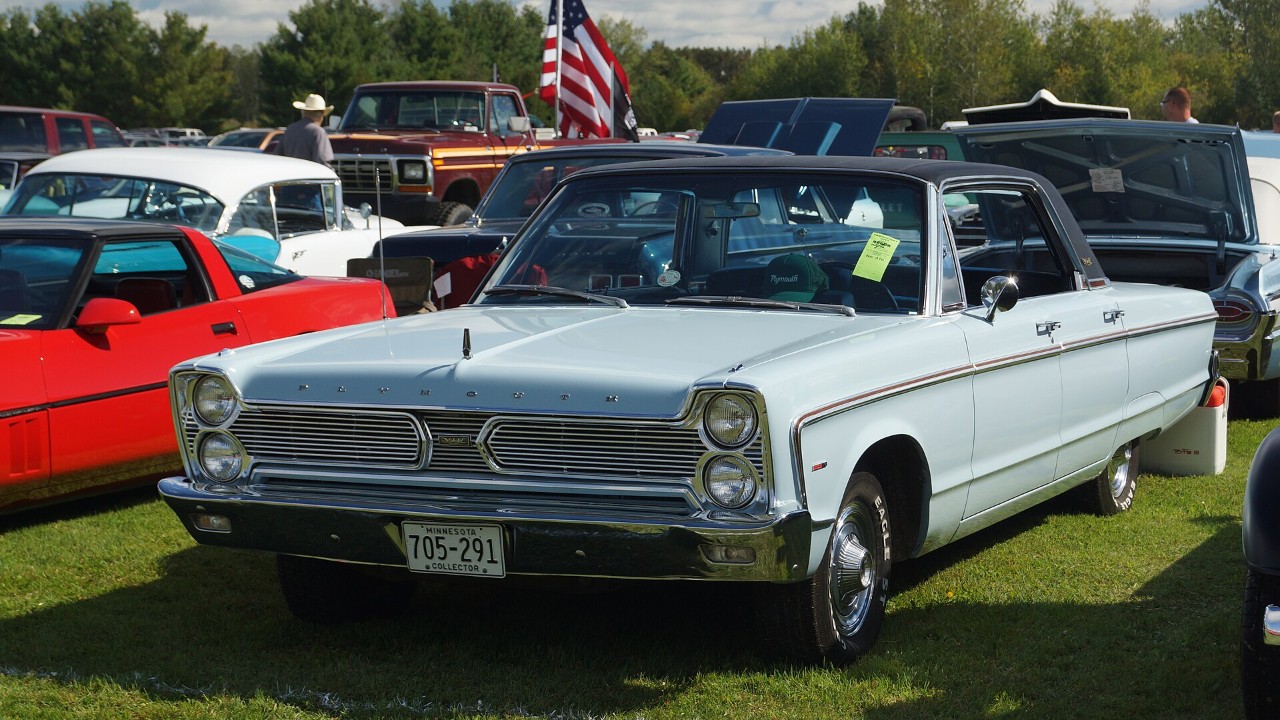
Plymouth launched the VIP in the fall of 1965 as a four-door hardtop, then added a two-door hardtop in early 1966. It was Plymouth’s take on a luxury car. Plush upholstery, contoured door panels with woodgrain trim, “VIP” emblems and fender skirts all came standard.
The standard engine was the 318 V8. A three-speed manual was technically standard, but most buyers chose the TorqueFlite automatic. Plymouth kept the VIP going until 1969, when production of the name ended after four model years. That makes it a short-lived model, built for buyers who wanted Chrysler comfort at a Plymouth price.
Our take: the VIP is the Fury that went all-in on comfort, and it shows. It’s soft, quiet and finished like a car from a pricier brand. Pair the 318 with TorqueFlite, and it simply glides down the highway. In our view, every original VIP is worth saving, and we’d pick the two-door hardtop for its cleaner profile. Buyer’s tip: buy the car with the best original upholstery and woodgrain trim you can, because those VIP touches are what you’re paying for, even if it needs mechanical work.
7. 1970 Plymouth Sport Fury S/23
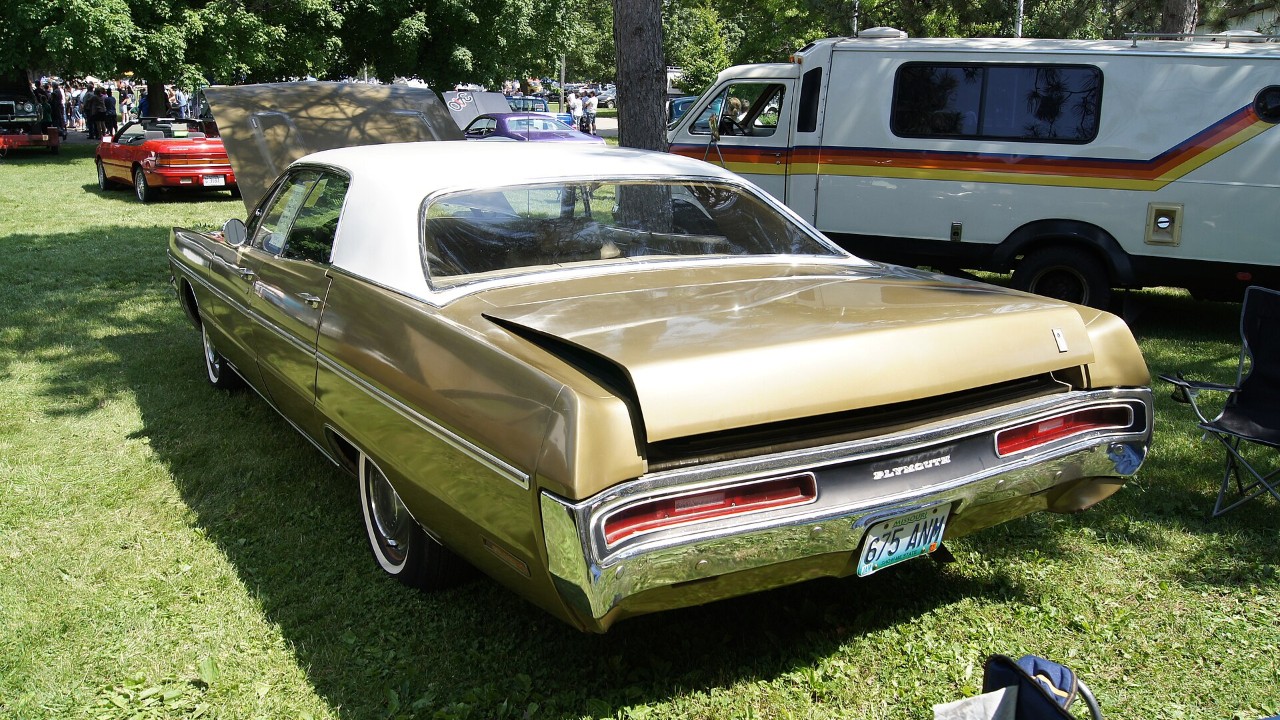
For 1970, the big Sport Fury came in several flavors. A Brougham package added luxury, and the GT hardtop coupe carried a 440 V8. Then there was the S/23, which Plymouth offered for 1970 only and dropped for 1971. That short run is a big part of its appeal today.
The GT shows how much muscle Plymouth was putting into its full-size hardtops that year. Its 440 made 350 horsepower in base form. With three two-barrel carburetors, the same engine made 390 horsepower and 490 lb-ft. By comparison, the S/23 is the lesser-known sibling, and its one-year life explains why so few people recognize the badge.
We think the S/23 is the most overlooked Fury of all, and that’s exactly why we like it. It’s a one-year, full-size Plymouth hardtop from the peak of the muscle era, and hardly anyone remembers it. Buyer’s tip: documentation matters even more here, so check the fender tag and build paperwork to confirm the S/23 package before you buy. A real one is a conversation starter at any Mopar show.
More from Fast Lane Only