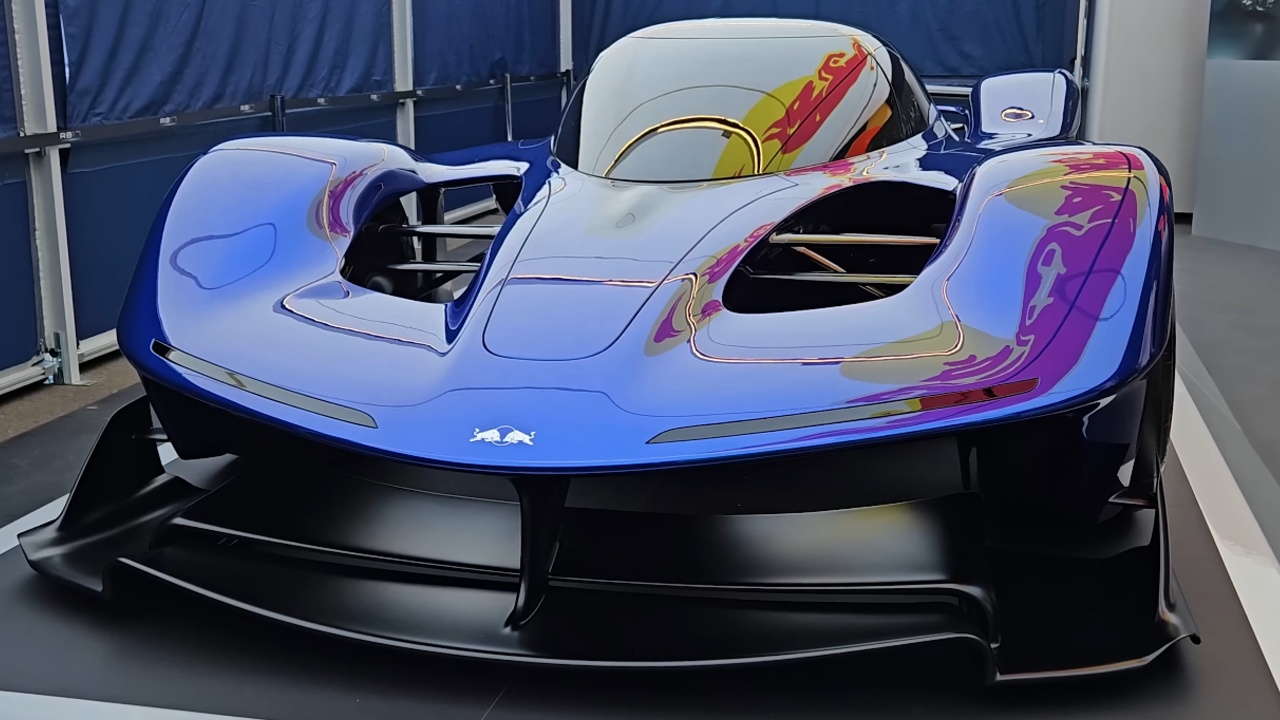
Red Bull has taken the RB17 from outrageous concept to final production form, and each revision seems to push the car further into race car territory rather than reeling it back. The latest tweaks sharpen its aerodynamics, rework its packaging, and add hybrid punch, turning what was already a radical track machine into something even more extreme. It is still framed as a hypercar, but the engineering brief now reads more like a private Formula 1 program for 50 very committed customers.
The result is a machine that looks smaller, more focused, and more serious than the early mock ups, while keeping the core idea of Adrian Newey’s V10 dream intact. The RB17 is no longer just a design exercise from Red Bull’s skunkworks, it is a fully realized track weapon that aims for F1 like lap times, with performance targets and technical details that would have sounded implausible even a few years ago.
The V10 heart gets hybrid muscle
The foundation of the RB17 remains its naturally aspirated 4.5-liter V10, a centerpiece that defines both the character and the performance ceiling of the car. Developed with Cosworth, the engine is designed to rev to a screaming 15,000 rpm and produce 1,000 hp on its own, figures that place it squarely in single seater territory and far beyond typical road going hypercars. That focus on a high revving, relatively compact combustion engine reflects Adrian Newey’s long standing preference for responsive, lightweight powertrains rather than chasing numbers with heavy turbocharging.
Red Bull has not stopped at the V10, however, and the latest evolution adds a 200-horsepower electric motor to create a combined output of 1,200 horsepower. The hybrid system is not framed as a comfort or emissions tool, it is there to fill torque gaps, sharpen throttle response, and push the car’s performance envelope closer to modern F1 machinery. With 1,200 hp working against a target kerb weight under 900 kg, the power to weight ratio moves into territory that even the most exotic road legal hypercars rarely touch, and the project’s stated aim of F1 like lap times and speeds over 350 kph suddenly looks less like marketing and more like a realistic engineering target.
Aerodynamics that treat downforce like a primary control
From the beginning, the RB17 has been pitched as an experiment in what happens when Adrian Newey and Red Bull Advanced Technologies are freed from Formula 1 regulations, and the final design shows how far that idea has been taken. The car’s bodywork is dominated by sculpted tunnels, deep side pods, and a dramatic rear end that appear to prioritize ground effect and airflow management above almost everything else. Compared with earlier prototype images, the latest version is slightly smaller and more tightly packaged, which suggests the team has been chasing cleaner airflow and higher efficiency rather than simply adding more wing area.
The official performance targets back up that visual aggression, with the car described as capable of F1 like lap times and a top speed beyond 350 k. That level of performance depends on more than raw power, it requires a chassis and aero package that can generate enormous downforce without overwhelming the driver. Reports around the final evolution highlight that one of the late stage tweaks came directly from driver feedback, a reminder that this is not just a wind tunnel sculpture but a machine that has been iterated with real track use in mind. The result is a car that treats downforce almost like a driver aid, designed to make mere mortals capable of lap times that would normally demand professional level skill.
From prototype vision to production reality
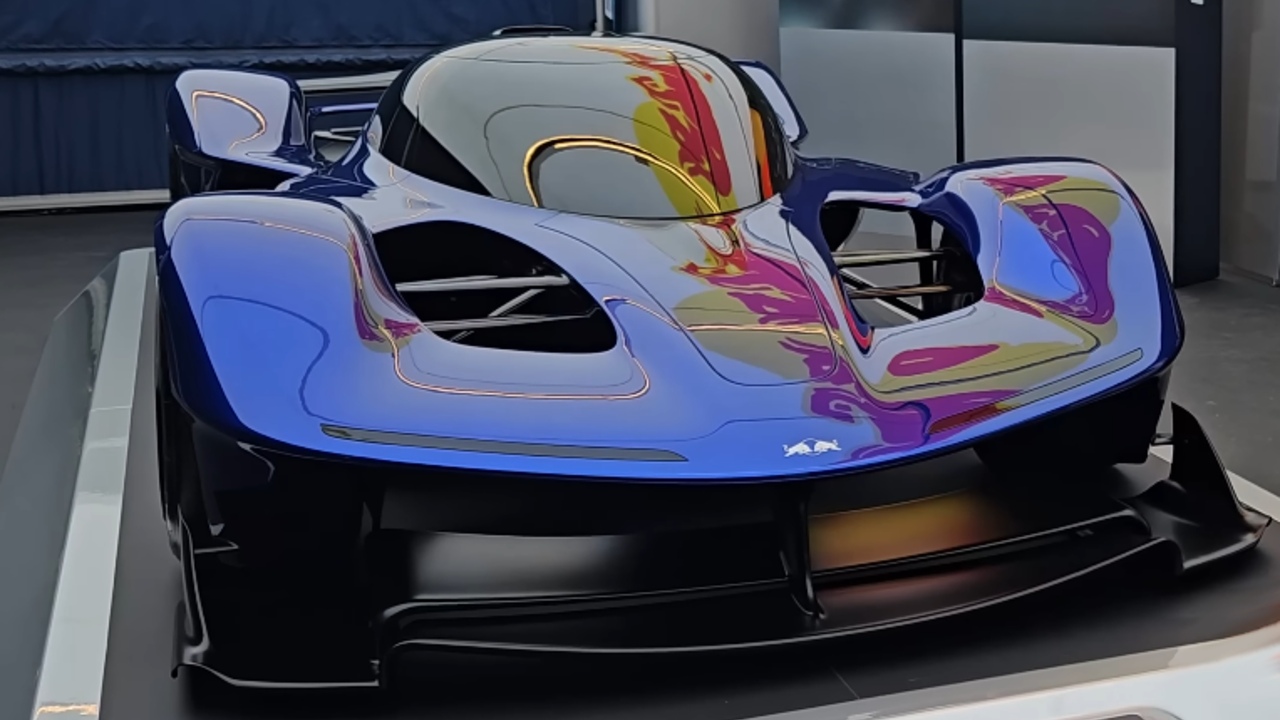
The RB17’s journey from sketch to production has been unusually public, starting with its unveiling in prototype form at the Goodwood Festi and evolving through multiple design updates. Early on, the project was framed as the materialization of a long held vision inside Red Bull to build a track only car that distilled F1 knowledge into something customers could actually drive. Over time, that vision has been refined, with the final design incorporating more practical elements such as mirrors and a windshield wiper, details that signal a shift from pure concept to a machine that can survive real world track conditions and, in some markets, limited public road use.
Despite those concessions, the core intent has not softened. Only 50 examples are planned, a number that underlines how closely this car sits to a race program rather than a mass produced halo model. Production will take place at Red Bull Advanced Technologies in Milton Keynes, England, embedding the RB17 directly inside the same ecosystem that supports the company’s Formula 1 efforts. That proximity matters, because it allows the car to draw on the same simulation tools, aerodynamic expertise, and manufacturing processes that shape Red Bull’s grand prix machinery, turning the RB17 into a kind of parallel F1 project that happens to have two seats.
Newey’s fingerprints, even as the team evolves
The RB17 is repeatedly described as the final Adrian Newey designed Red Bull, a detail that gives the car a particular weight inside the brand’s history. Even as Newey’s day to day role at Red Bull has shifted and he has been linked with other teams, technical leaders such as Rob Gray have noted that Adrian is still allowed to consult on the project and remains interested in its progress. That continuity helps explain why the car’s final form still aligns so closely with his long running preferences, from the compact, high revving V10 to the extreme ground effect underbody and the obsessive packaging around the cockpit.
At the same time, the RB17 also showcases how Red Bull’s broader engineering group has matured beyond a single star designer. Red Bull Advanced Technologies has taken the lead on turning Newey’s concept into a buildable product, integrating feedback from test drivers and potential owners into late stage changes. One of the most dramatic tweaks, described as coming directly from driver guidance, shows how the team has been willing to adjust even major elements of the design to improve usability and confidence at the limit. That balance between honoring Newey’s original vision and iterating it through a wider technical group is part of what makes the RB17 feel like both a farewell and a statement of future capability.
Track day fantasy with a serious learning curve
For all its numbers and design pedigree, the RB17 ultimately has to justify itself as something owners can actually use, even if that use is confined to private circuits. The car’s creators have spoken about a kind of duty of care, acknowledging that a machine with 1,200 hp, a target kerb weight under 900 kg, and F1 like aero loads could easily overwhelm non professional drivers if it were not carefully calibrated. That is part of why the final design includes more conventional cues such as improved visibility, mirrors, and a wiper, along with a cockpit that, while still sparse, is arranged to help drivers focus on the essentials rather than fighting the car.
Red Bull is also positioning the RB17 as more than a purchase, framing ownership as an initiation into a program that will likely include track support, coaching, and data analysis to help drivers unlock the car’s potential. With only 50 cars to build and a base at Milton Keynes, England, the company can treat each owner almost like a customer driver in a private race team, tailoring setup and support to individual needs. In that context, the RB17’s escalating wildness makes more sense, because the car is not meant to be tamed for everyday use, it is meant to give a small group of people access to something very close to a modern grand prix experience, without the constraints of a championship calendar or a rulebook.
More from Fast Lane Only: