A vibration you can feel through the seat is one of the most annoying problems a truck can have. One owner of a 2007 Toyota Tundra with the 5.7-liter V8 had already taken his truck to two other shops about it. However, he came away with two different answers and no fix.
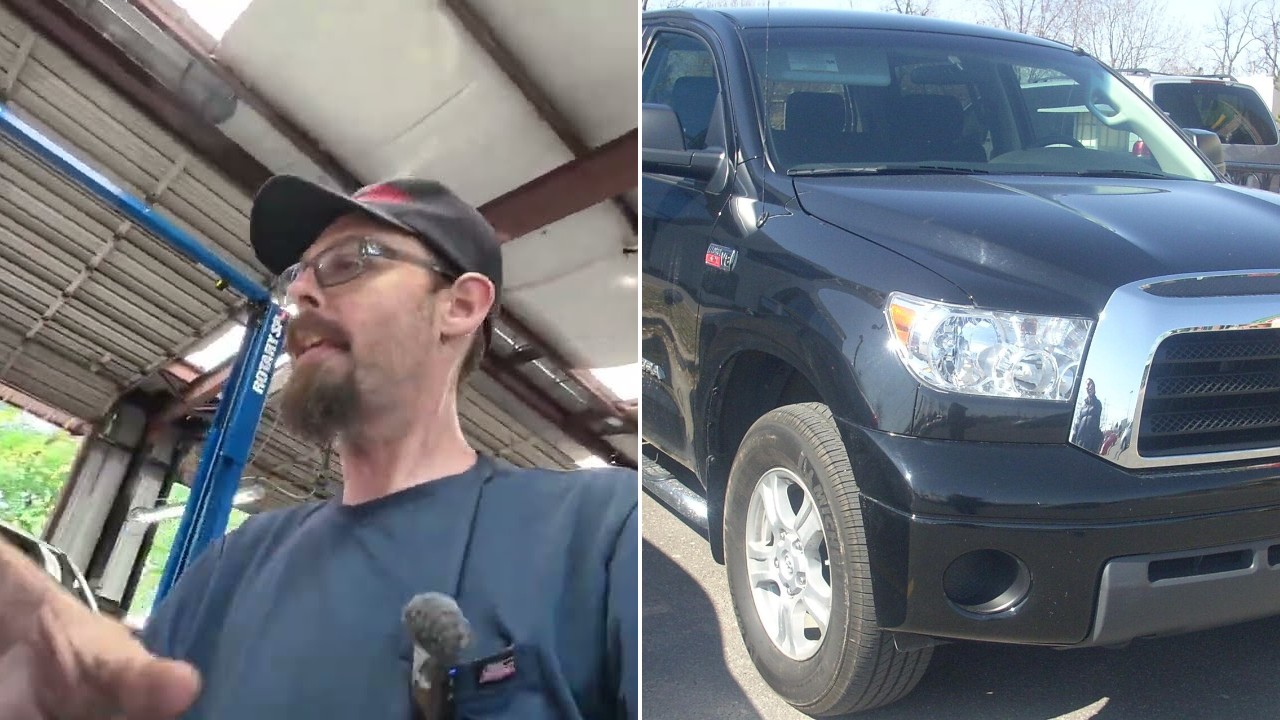
So the Tundra rolled into the garage of a shop owner who posts as @RainmanRaysRepairs. According to him, one earlier shop blamed the torque converter, while the other said the wheels needed balancing. Instead of guessing, he set out to make the vibration show up on camera.
Putting The Tundra On The Lift At 35 MPH
First, he raised the truck so the rear wheels could spin freely. Then a helper started it, shifted into drive and brought the speedometer up to about 35 mph, which he says is enough for the shake to appear.
Once the vibration started, he watched the driveshaft from underneath. Even at idle, it did not run straight. In fact, the shaft wobbled from side to side, and he pointed out that the exhaust was shaking with it.
Since that kind of wobble rarely comes from wheel balance, he shut the truck off, put it in neutral and turned the shaft by hand to look closer.
Clues That Somebody Had Been Here Before
The first clue came from small grease fittings on the universal joints. As he explains, factory driveshafts no longer come with grease fittings because they cost money. So someone had taken this Tundra’s shaft out and replaced all three U-joints with aftermarket parts. He thinks they were Moog components.
New U-joints are not a bad idea on an older truck. Still, he says the way someone installed them caused the trouble. Each joint rides on tiny needle bearings packed inside a cup. If one bearing falls out during assembly, it can hold the cup off its seat by a few thousandths of an inch.
After that, forcing the cup home pushes against the retaining clip on the far side. According to him, that pressure can crack the yoke that holds the joint. On this Tundra, that is exactly what he found.
“We have damaged, broken components.”
A Broken Yoke And Clips That Never Seated
At the rear joint, he showed a steel flange cracked in two places. Meanwhile, two retaining clips near the center support bearing sat too far out, and one of them had bent. Because of that, the shaft no longer turned on its true center line.
“So, we’ve got two faulty U-joint installs.”
Up front, things looked worse. One clip sat almost flush with the edge instead of in its groove, and the cup looked offset. He believes a needle bearing fell over inside it. As a result, the front of the shaft ran off center from the transmission tail shaft.
That wobble does more than shake the cab. He says it is already working on the transmission’s rear seal, which has started to leak. Over time, it could also damage the bushings or bearings in the tail shaft.
What Tundra Owners Can Learn From This
Here is our take on a vibration that keeps coming back:
- Ask every shop what they tested before they name a cause. Two guesses in a row should be a warning sign.
- Tell the next mechanic about any earlier driveline work, even if it seemed minor.
- If a vibration started right after a repair, start the search at the parts that were just touched.
- Look for fresh drips under the back of the transmission. A leak there can point to a shaft problem.
- Keep receipts for U-joints and other driveline parts so the next shop knows what is aftermarket.
Where The Truck Stands Now
In his view, the earlier repair damaged the whole assembly, so the fix is a complete replacement driveshaft. That will not be easy, though. This Tundra is a crew cab with a long bed and two-wheel drive, which he calls a special build.
“Now for the fun part of finding a replacement drive shaft for a 20some year old Toyota.”
His plan A is a new shaft from Dorman’s catalog. If that falls through, plan B is a junkyard driveshaft that he would rebuild himself before installing it.
More from Fast Lane Only