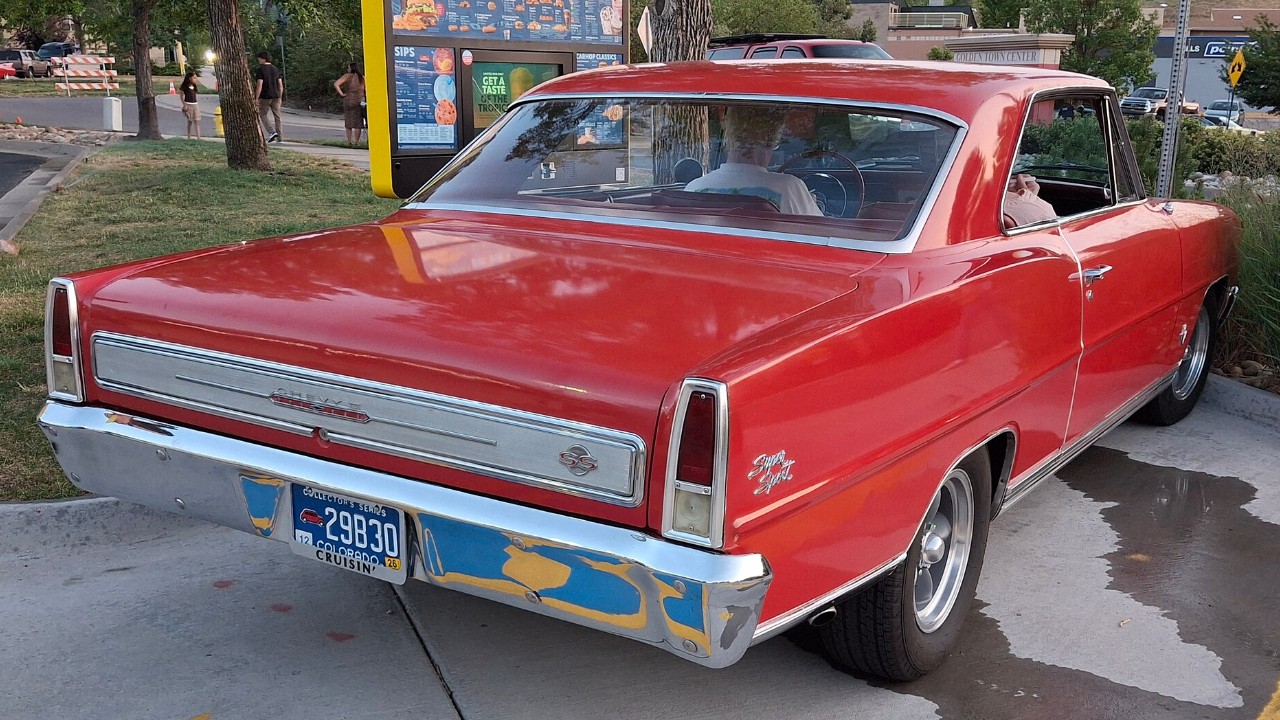
A 1966 Chevy II Nova SS with the right 327 could run the quarter-mile in the low 15s straight off the showroom floor. Yet that was a small compact car, not a big-block bruiser. Through the late 1960s, Detroit kept stuffing more engine into less car, and the drag strip became the proving ground.
Some of those cars barely felt civilized on the street. Others, meanwhile, came with hardware that belonged in a race shop, from lift-off hoods to Dana 60 axles. Decades later, one modern Dodge ran so quick that NHRA rules required a roll cage to race it.
These twelve are our picks, the American cars that seemed almost too wild for the drag strip. The verdicts are our opinion. The engines, ratings and production figures are facts, and we read them in the sources linked below.
1. 1966 Chevy II Nova SS L79
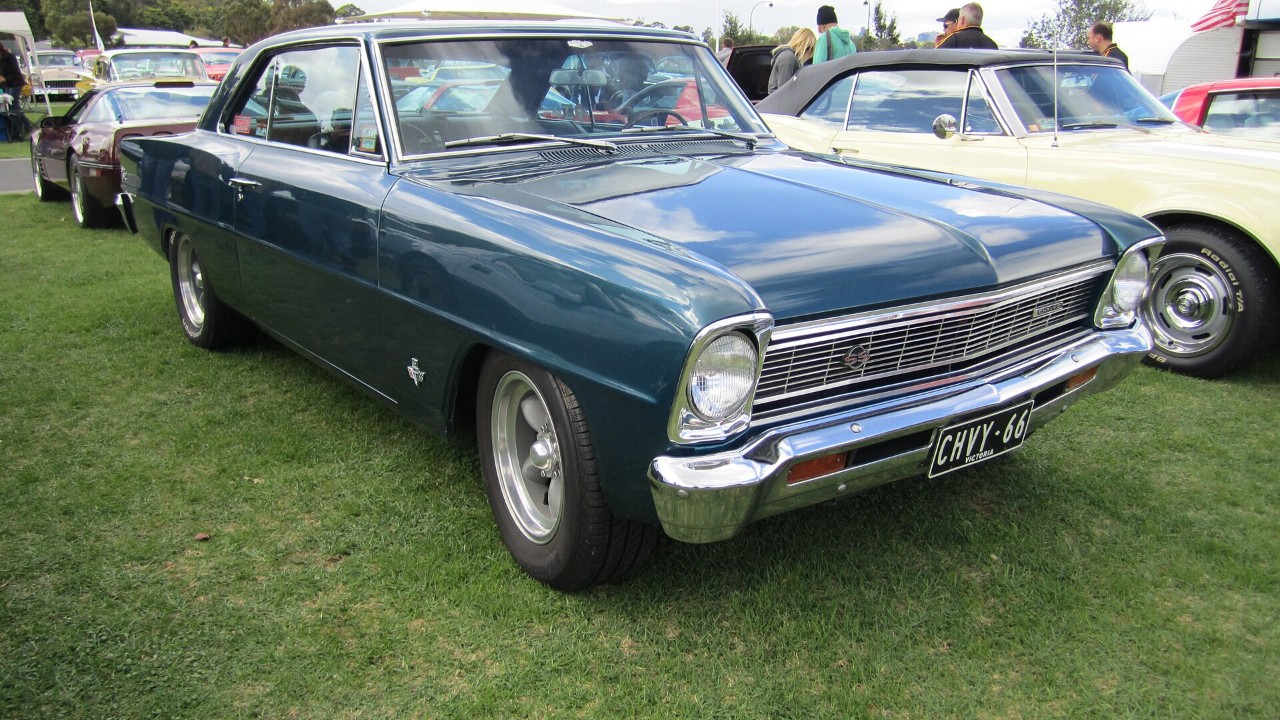
For 1966, the Chevy II got a sharp-edged restyle, and the Chevy II Nova SS came only as a Sport Coupe. It cost $159 more than a Nova 400. However, the engine that mattered was the L79, a 327 rated at 350 horsepower. Chevrolet had first used that rating in the Chevelle before it reached the smaller car.
According to Chevy Hardcore’s guide to 1966 Nova engines, the L79 breathed through a 585-cfm Holley four-barrel on an aluminum intake. Inside, it also ran forged high-compression pistons and a performance camshaft. The cam’s overlap made the idle so lumpy that Chevy offered no automatic with it. As a result, buyers got a three-speed or four-speed manual.
The same guide says a stock car weighed under 3,000 pounds and could run low 15-second quarter-miles. In our view, that power-to-weight math made the Chevy II Nova SS L79 one of the sneakiest street cars of its day. It looked like a sensible compact. However, it behaved like a much bigger car the moment the secondaries opened. If you find a claimed L79 car, ask for the documentation, because that is what proves it.
2. 1968 Shelby GT500KR

The KR stood for “King of the Road,” and Shelby meant it. Starting in April 1968, Ford installed the 428 Cobra Jet in the big Shelby. Shelby left the engine stock apart from die-cast aluminum valve covers. Ford rated it at 335 horsepower and 440 lb-ft of torque at 3,400 rpm.
Still, that torque number tells the real story. A 428 Cobra Jet pulled hard right off idle, which is exactly what a drag launch needs. The 1968 Shelby Mustangs started life at Ford’s New Jersey plant, and A.O. Smith handled the Shelby conversion work. In total, the original GT500KR ran to 1,571 cars.
Our take: this is the Shelby that best matched its name to its behavior. Earlier GT500s carried big engines too. Yet the Cobra Jet turned the car into a straight-line weapon that also looked ready for a concours lawn. Because Shelby built so few, a GT500KR is a car you are more likely to see at an auction than at a test-and-tune night. In our view, that tells you how far it has climbed from its drag-strip roots.
3. 1969 Ford Mustang Mach 1 428 Super Cobra Jet

The Mach 1 debuted in August 1968 as a package for the 1969 Mustang SportsRoof. Buyers could start with a 351 Windsor and climb to the 428 Cobra Jet at the top. Either way, Ford rated that 428 at 335 horsepower, with or without Ram Air.
The wild part came with the “drag pack” option. In effect, checking that box turned the Cobra Jet into the Super Cobra Jet. It also brought a Traction-Lok rear axle with 3.91 or 4.30 gears, 31-spline axle shafts and a nodular case. Meanwhile, the optional Shaker scoop bolted straight to the engine, so it moved with every blip of the throttle. That detail alone made the car look ready for the staging lanes.
Buyers loved the whole package. The Mach 1 sold 72,458 units in 1969, so many that Ford dropped the Mustang GT after that year. We think the SCJ Mach 1 is one of the purest drag cars Ford sold off a dealer lot that year. The gears were steep and the engine was strong, so it felt like a racer that came with a radio. If you shop for one, verify the drag pack hardware rather than trusting decals.
4. 1970 Oldsmobile 442 W-30

In 1970, GM dropped its engine-size cap, and Oldsmobile answered with the 455. It became the standard 442 engine at 365 horsepower and 500 lb-ft. The W-30 version, by comparison, carried a 370-horsepower rating. In other words, Oldsmobile claimed only five more horsepower for all that extra hardware.
The W-30 package read like a race order sheet. It brought a fiberglass hood with functional scoops, a low-restriction air cleaner and an aluminum intake manifold. Oldsmobile also fitted a special camshaft, cylinder heads, distributor and carburetor. Then Motor Trend tested a four-speed car with 3.91 gears and ran the quarter-mile in 14.2 seconds at 102 mph. The magazine noted that Oldsmobile engineers had recorded 13.7 seconds with the same car after a fresh tune.
That same year, the 442 also paced the Indianapolis 500. In our view, the W-30 is the Olds that best shows how far anyone could push the gentleman’s muscle car. It looked tidy, with vertical grille bars and vertical taillights. Even so, with that much torque on narrow 1970 tires, every launch was a negotiation with the rear end. We’d take one with the four-speed and a lot of patience.
5. 1970 Plymouth Road Runner 440 Six Barrel
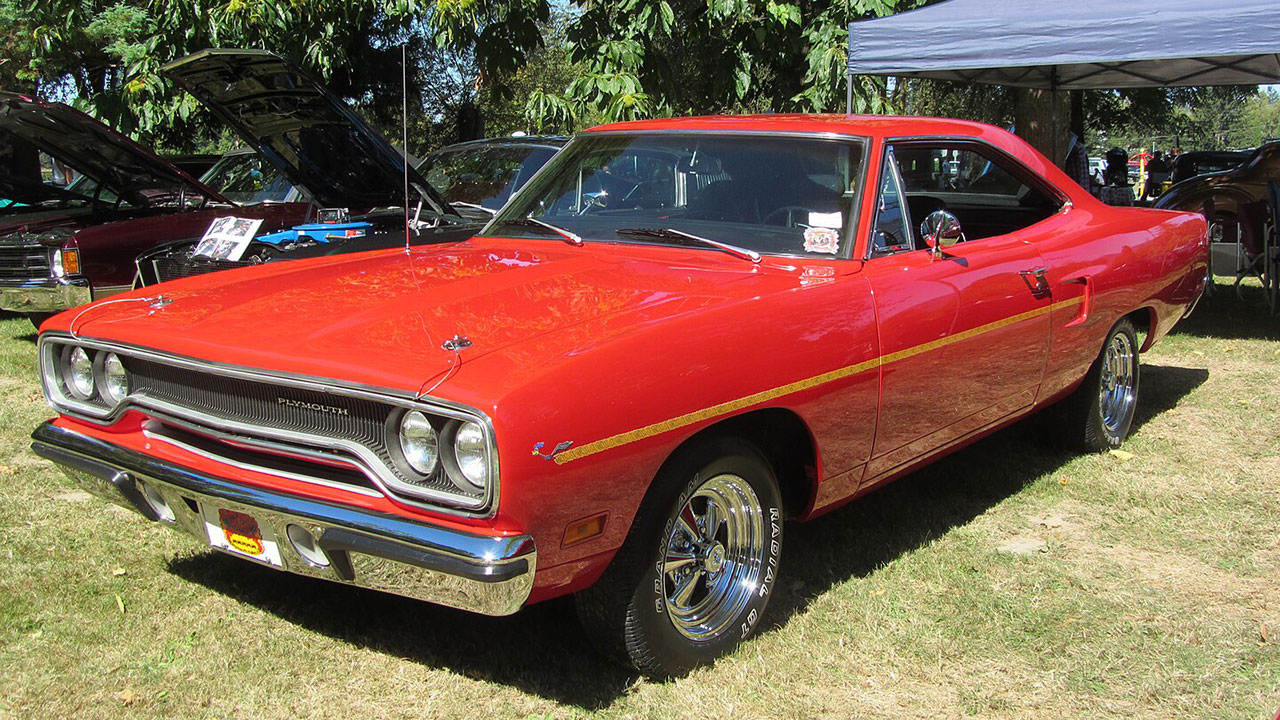
Plymouth built the Road Runner on a simple idea: big power in a cheap car. Plymouth paid $10,000 to develop its “beep, beep” horn, and $50,000 to Warner Bros.-Seven Arts for the cartoon name. Then the car won Motor Trend’s Car of the Year award for 1969.
Midway through 1969, Plymouth added the A12 440 Six Barrel package. Three Holley two-barrels fed a 440 rated at 390 horsepower and 490 lb-ft. A black fiberglass lift-off hood with a functional scoop sat on top, and plain steel wheels sat underneath. In all, about 1,432 cars got that setup in 1969. For 1970, the Six Barrel stayed on the options list, though a cast iron intake replaced the earlier aluminum Edelbrock piece.
Road Runner sales fell by more than half for 1970, to around 41,000 cars. Even so, that figure beat the Pontiac GTO by about 1,000. We think the 1970 Six Barrel Road Runner is the most honest drag car here. It skipped the frills and spent the money on carburetors and a hood you lift off by hand. In our view, that sums up the whole muscle era in one car.
6. 1969 Dodge Super Bee 440 Six Pack
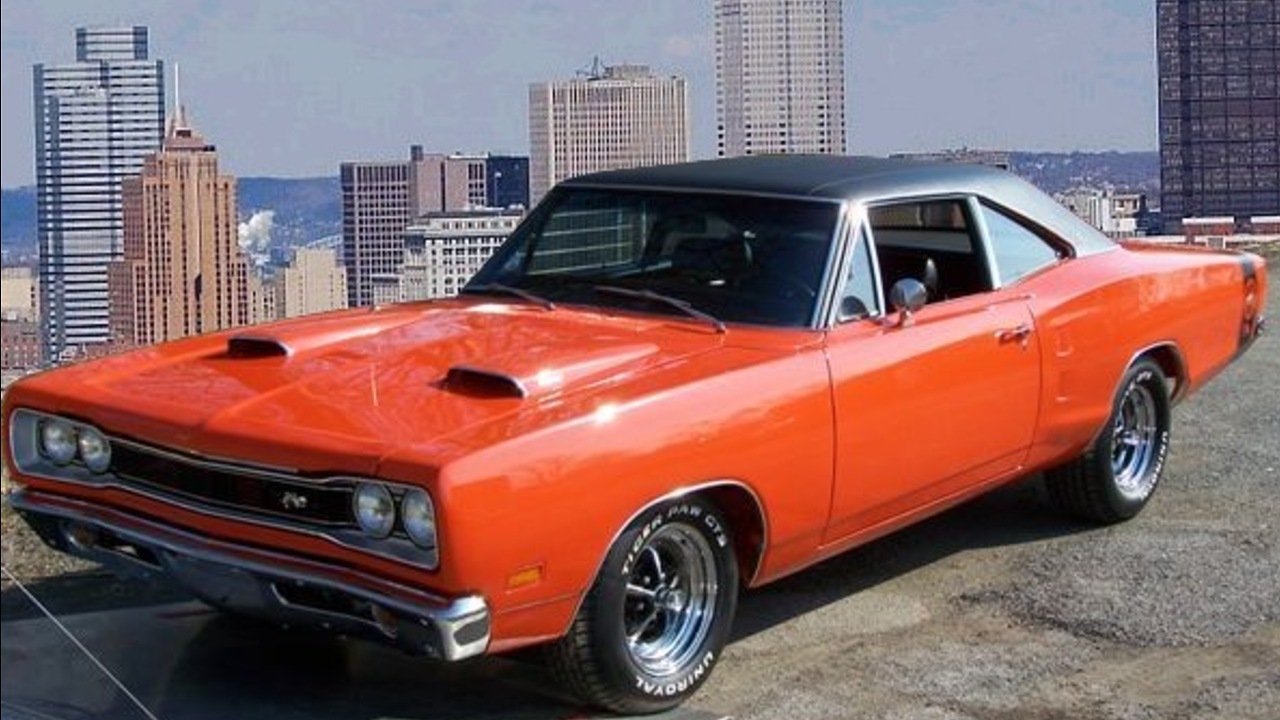
Dodge’s twin to the A12 Road Runner arrived the same year. The Super Bee had started in 1968 as a no-frills Coronet two-door, and its show car debuted at the Detroit Auto Show. For 1969½, Dodge added the A12 package, which changed the fifth digit of the VIN to M.
Above all, the hardware was serious. The 440 Six Pack used three two-barrel Holleys and carried a 390-horsepower rating at 4,700 rpm, with 490 lb-ft at 3,600 rpm. Dodge also fitted a Dana 60 axle with 4.10 gears, heavy-duty engine internals and 11-inch drum brakes. On top sat a flat black, scooped lift-off hood. Below, black steel wheels wore G70x15 tires. The option cost $463, and Dodge built 1,907 of these cars.
In our view, the A12 Super Bee looks more menacing than almost anything else from 1969. Bare black steel wheels and a flat black hood say exactly what it is for. The story kept going into the next year, which we covered in our look at the 1970 Super Bee. If you want one, check the VIN for that M first.
7. 1969 Pontiac GTO Judge Ram Air IV

Pontiac launched the Judge for 1969 and borrowed its name from the “Here Come de Judge” bit made famous on Laugh-In. The package cost $332 over a standard GTO. At first, it came only in Carousel Red, with other colors added later in the year.
The Judge came standard with the Ram Air 400, the engine fans call the Ram Air III, though Pontiac never used that name. At the top of the GTO engine list sat the Ram Air IV. Pontiac rated it at 370 horsepower at 5,500 rpm and 445 lb-ft at 3,900 rpm. The Judge also wore a rear spoiler, Rally II wheels without trim rings and a Hurst shifter with a T-handle.
In the end, Pontiac sold 6,833 Judges out of 72,287 GTOs in 1969. Meanwhile, only 759 GTOs of any kind left with the Ram Air IV that year. We think a Ram Air IV Judge is the loudest statement Pontiac made all decade, in paint and in power. Because the Ram Air IV total covers every GTO, an engine-and-Judge car is a needle in a haystack. In our view, documentation matters more here than on almost any other car in this list.
8. 1970 Dodge Coronet R/T Hemi
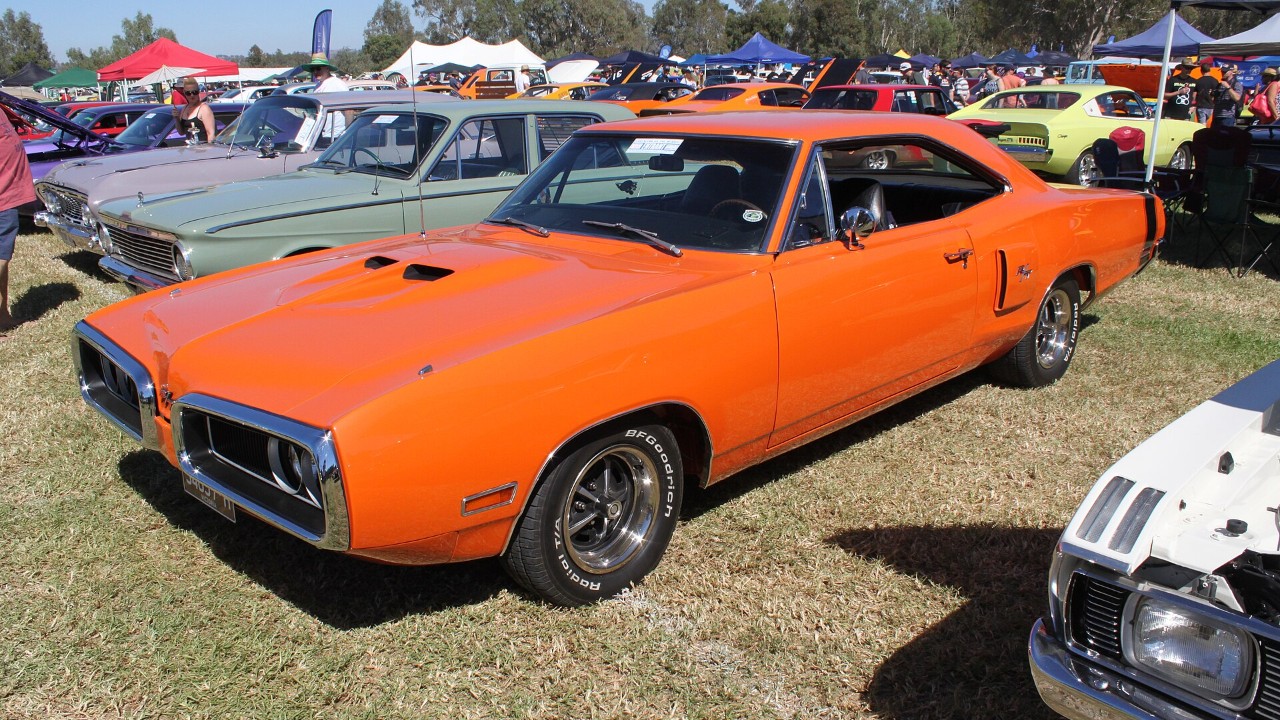
Dodge had offered the 426 Hemi in any Coronet starting with the 1966 model year. From 1967, it went only into badged muscle cars such as the Coronet R/T. By 1970, the R/T hardtop and convertible were near the end of their run, and the line got a facelift.
Few buyers took the Hemi that year, though. As a result, survivors are scarce. According to Hagerty’s list of the rarest Hemi muscle cars, Dodge built only 14 Hemi Coronet R/T hardtops for 1970. Only two Hemi convertibles followed, one with a four-speed and one with a TorqueFlite. The 425-horsepower Hemi cost $718 at the time. Hagerty suggests that price and the new front-end styling held sales down.
In our view, this is the drag car that buyers were too nervous to order. After all, a Hemi in a mid-size Dodge was pure race hardware, and the option price showed it. If you ever see one, look closely, because you may never see another. Hagerty adds that a numbers-matching Hemi R/T hardtop sold at Mecum in 2014 for $305,000. That is a long way from the $718 a buyer once paid to tick the box.
9. 1970 Buick GS 455 Stage 1
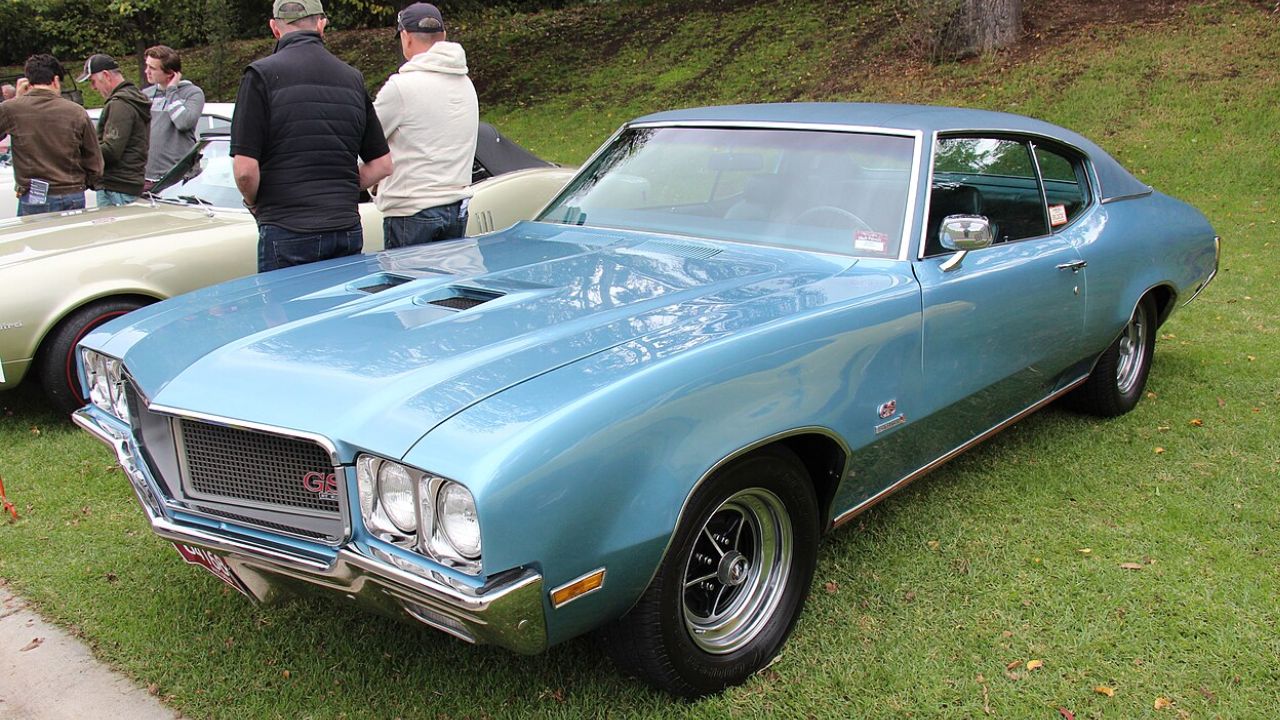
Buick’s Gran Sport looked like a banker’s car, which made the Stage 1 such a surprise. Buick had first offered a Stage 1 option in 1969 on the GS 400. For 1970, it moved to the new 455, rated at 360 horsepower at 4,600 rpm and 510 lb-ft at 2,800 rpm.
For drag racers, that torque figure was the headline. Motor Trend ran a 3,810-pound GS Stage 1 coupe to a 13.38-second quarter-mile at 105.5 mph. In addition, Buick built 10,148 two-door GS 455 models in 1970. Later in the year, the GSX package arrived, and 400 of the 678 GSX cars carried the Stage 1 engine. We dug into how close that engine came to never reaching buyers in our story on Buick’s Stage 1 455.
Our take: the GS 455 Stage 1 is the biggest sleeper on this list. It wore conservative Buick trim, yet it ran with cars that looked twice as angry. Those ratings are SAE gross numbers, so treat them as period marketing, not dyno sheets. If you want one, a documented Stage 1 car is worth the premium over a clone.
10. 1969 Ford Torino Cobra 428 Super Cobra Jet
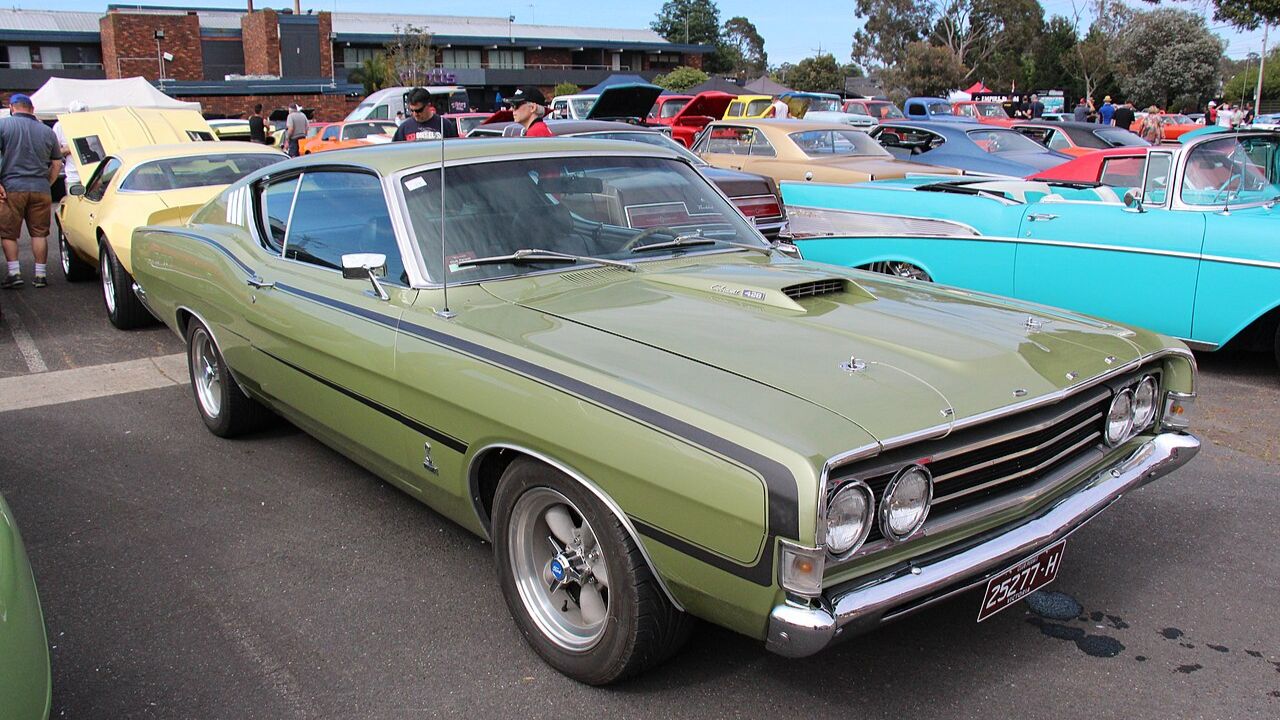
Ford’s midsize Cobra arrived for 1969 as a SportsRoof or a hardtop. Ford marketed it simply as the “Cobra,” though people call it the Torino or Fairlane Cobra. Unlike the Mustang, it came with the 428 Cobra Jet as standard, along with a four-speed, competition suspension and F70-14 tires.
Once again, the drag pack changed everything. It turned the 428 into a Super Cobra Jet with cast pistons, a stronger crankshaft and an oil cooler. It also added 3.91 or 4.30 rear gears. Oddly, Ford kept the same 335-horsepower rating. In July 1969, Road Test magazine ran a Ram Air car with 3.50 gears to 15.07 seconds at 95.74 mph. However, the testers blamed the missing tachometer and the factory shifter for part of that time.
We think the SCJ Cobra is the midsize Ford that most people forget when they list 1969 drag cars. It shared its basic body with the Torino Talladega, which Ford built to go racing, as we covered in our piece on Talladega production. In our view, a drag pack Cobra is the cheaper, louder sibling worth hunting. Because Ford did not report separate Cobra production, though, expect to prove a car’s history through its paperwork.
11. 1986 Buick Regal T-Type
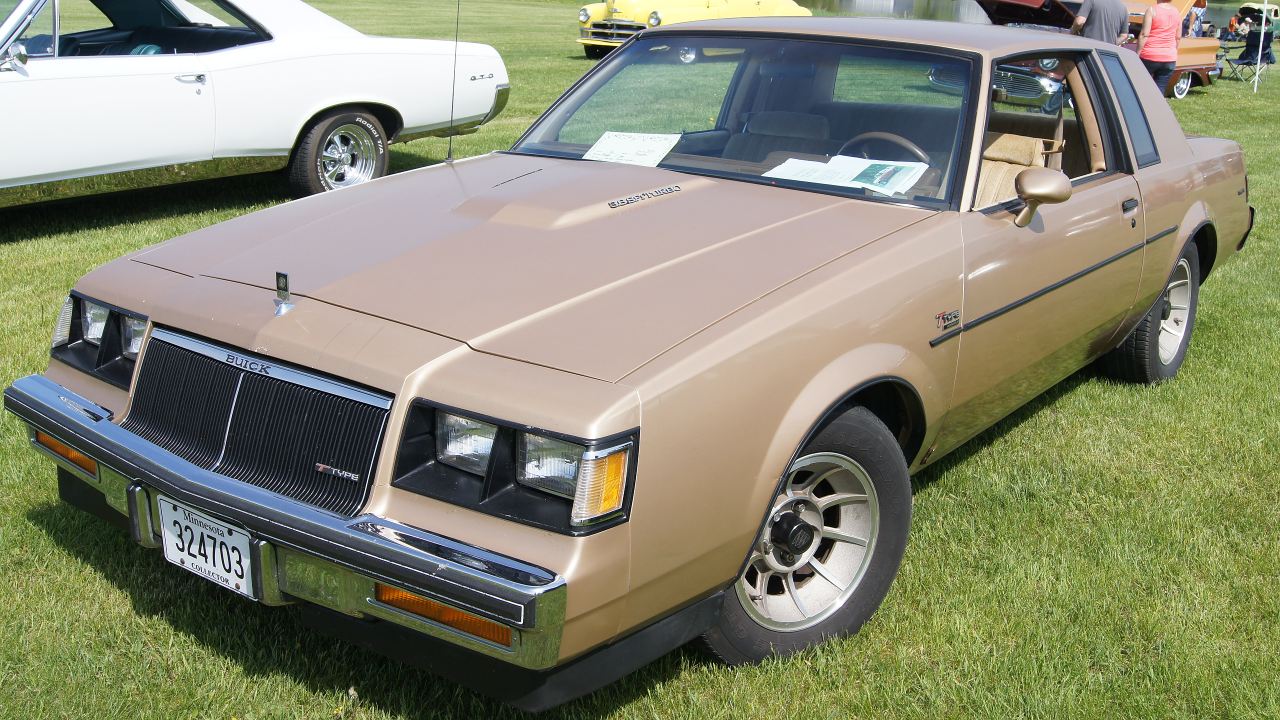
By the mid-1980s, Buick had turned to a turbocharged 3.8-liter V6 for its fast Regals. For 1986, air-to-air intercooling lifted output to 235 horsepower at 4,000 rpm and 330 lb-ft at 2,400 rpm. As a result, Buick built 2,384 T-Types that year, alongside 5,512 Grand Nationals.
A year later, output rose by 10 horsepower to 245, with 355 lb-ft, without any change to the engine design. Then came the GNX. Buick sent Grand Nationals to McLaren/ASC for upgrades, built 547 of them, and rated each at 276 horsepower. Buick underrated it, and real output sat closer to 300 horsepower and 420 lb-ft.
Our take: the turbo Regal is the car that taught V8 owners to fear a V6. It looked like a personal-luxury coupe, yet in our view it could embarrass far bigger engines at the strip. We like the T-Type because it is the rarer 1986 turbo Regal, with fewer than half as many built as Grand Nationals. If you shop for one, budget for a careful inspection of the turbo plumbing, because these cars are now decades old.
12. 2018 Dodge Challenger SRT Demon
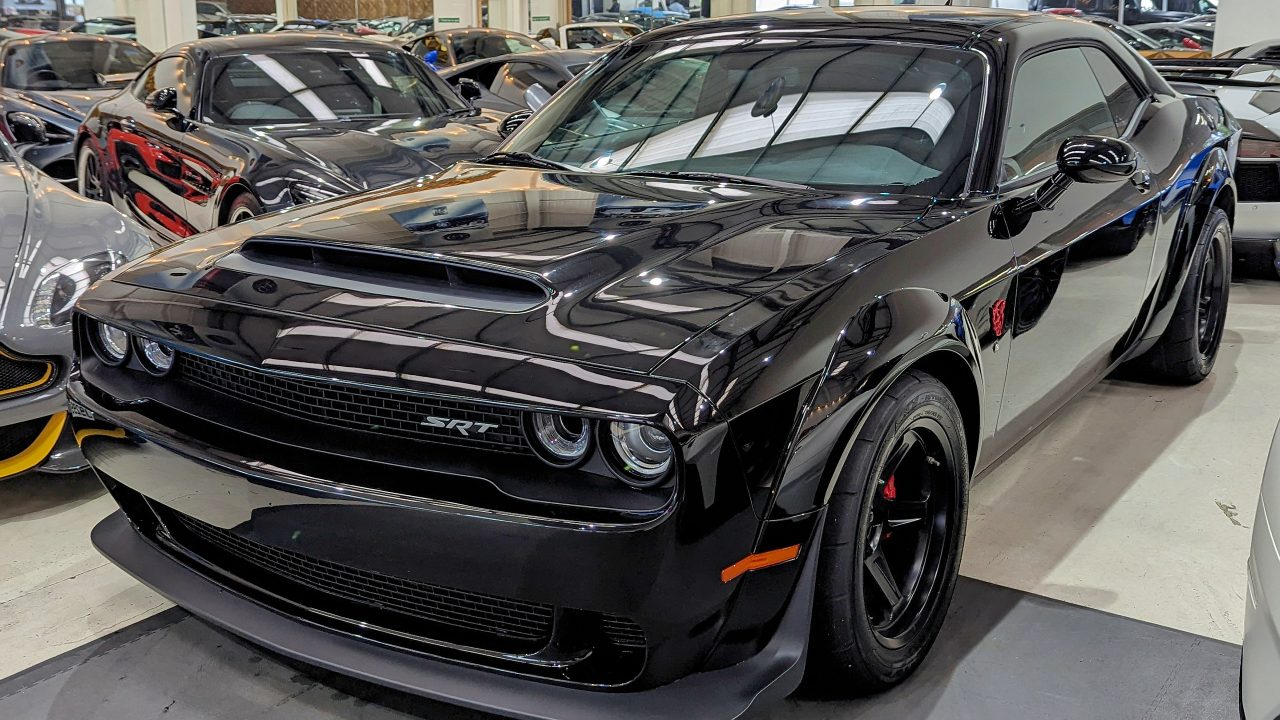
The Demon brought the story full circle. Dodge rated its Hemi V8 at 808 horsepower on 91-octane fuel and 840 horsepower on 100-octane, with 770 lb-ft. It wore Nitto NT05R drag radials and a factory transbrake that locked first and second gear to hold the car before launch. In total, Dodge built only 3,300 of them, so seeing one at a local strip is a real event.
Then it ran a 9.65-second quarter-mile at about 140 mph. However, that pass created a problem for owners. As Motor1 explained, NHRA rules require a competition license and safety gear for factory street cars quicker than 9.99 seconds or faster than 135 mph. That gear can include a helmet, fire suit and roll cage, depending on inspection. Owners also need supervised passes to earn the license. In other words, the stock car was too quick for its own owners to race without extra equipment.
That is exactly why it closes our list. Every car above flirted with the line between street and strip, so the Demon makes a fitting finish. The Demon crossed it from the factory, and NHRA’s rulebook proved it with a 9.99-second cutoff the Demon beat by a third of a second.
More from Fast Lane Only