When enthusiasts talk about Buick’s glory years, the GS 400, GSX, and Riviera usually dominate the conversation. Those cars earned their reputations with bold styling and impressive performance credentials that have only grown stronger over time. Yet another Buick from the same era quietly built a loyal following among buyers who wanted effortless power without drawing constant attention. The 1969 Buick Wildcat never tried to be the loudest or flashiest performance car on the road, but it consistently delivered the kind of driving experience that made owners appreciate it every time they got behind the wheel.
The Wildcat occupied an interesting position in Buick’s lineup. It was a full-size car that emphasized comfort, refinement, and luxury, but it also packed enough muscle to surprise drivers who underestimated it. At a time when insurance costs and practicality were beginning to influence buying decisions, the Wildcat offered an appealing alternative to smaller intermediate muscle cars. It gave buyers room for the family, highway comfort for long trips, and enough V8 power to leave slower traffic behind with ease.
A different approach to performance
Unlike many muscle cars that focused almost entirely on quarter-mile times, the Wildcat was designed to excel in everyday driving. Buick engineers believed performance should feel effortless rather than aggressive. The result was a car that accelerated smoothly and confidently while maintaining the quiet, composed ride expected from the brand.
The long wheelbase contributed to exceptional highway stability, making the Wildcat an ideal grand touring machine. Drivers could spend hours behind the wheel without feeling beaten up by a stiff suspension or noisy cabin. That combination of comfort and power helped distinguish the Wildcat from competitors that leaned heavily toward raw performance.
Big-block power under the hood
One of the Wildcat’s greatest strengths was its standard 430-cubic-inch V8. Producing up to 360 horsepower and an impressive 475 lb-ft of torque, the engine delivered effortless acceleration from almost any speed. Rather than requiring high engine speeds to make power, the massive V8 generated strong low-end torque that made passing slower vehicles almost effortless.
Power was routed through Buick’s dependable Turbo Hydra-Matic automatic transmission. While some enthusiasts preferred manual gearboxes, the automatic suited the Wildcat’s personality perfectly. Shifts were smooth, responsive, and well matched to the engine’s broad torque curve, allowing the car to build speed without drama.
Luxury didn’t mean slow
During the late 1960s, many buyers assumed large luxury cars sacrificed performance for comfort. The Wildcat challenged that assumption. Despite weighing considerably more than intermediate muscle cars, its abundant torque allowed it to accelerate with surprising authority.
Contemporary road tests often praised the Wildcat’s ability to cover long distances quickly and comfortably. Instead of delivering explosive launches followed by a rough ride, it provided consistent performance that felt refined. This balance appealed to buyers who wanted speed without giving up the features expected in a premium full-size automobile.
Styling that aged gracefully
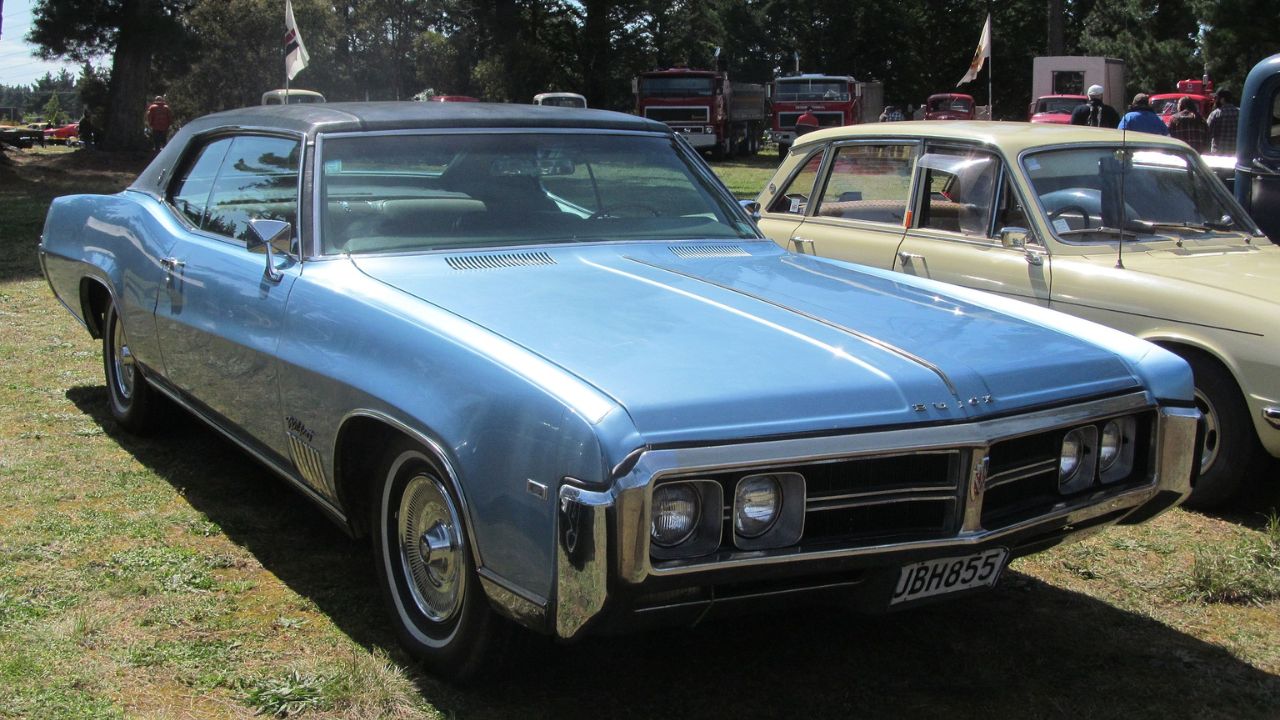
The 1969 model received subtle styling updates that gave it a confident presence without becoming overly dramatic. The front fascia featured stacked headlights, a wide grille, and clean body lines that reflected Buick’s upscale image. Chrome trim highlighted the car’s premium positioning while avoiding unnecessary ornamentation.
From the side, the Wildcat displayed classic late-1960s proportions with a long hood and substantial rear deck. The design communicated strength without relying on oversized scoops or racing-inspired graphics. Even today, the styling has aged remarkably well because it emphasized clean lines rather than passing trends.
Comfort that matched its performance
Inside, the Wildcat reminded buyers that Buick built premium automobiles first and performance cars second. Plush bench or optional bucket seats offered excellent comfort for long drives. High-quality materials, generous interior space, and thoughtful ergonomics created an inviting environment for both driver and passengers.
Features like power windows, air conditioning, cruise control, and power steering could all be equipped depending on the buyer’s preferences. Combined with its smooth ride, these options made the Wildcat feel far more luxurious than many performance-oriented competitors. Owners didn’t have to choose between comfort and capability because the car successfully blended both.
Why buyers appreciated it
The Wildcat appealed to a different type of performance enthusiast. Some buyers wanted burnouts and drag strip glory, but others simply wanted a powerful car that handled daily driving with ease. The Buick satisfied those expectations by delivering strong acceleration, excellent road manners, and impressive reliability.
Its understated personality also worked in its favor. Without flashy stripes or aggressive spoilers, the Wildcat often flew under the radar. Drivers who knew what was under the hood appreciated that it could surprise unsuspecting competitors while remaining perfectly civilized during everyday commuting.
A forgotten collector’s favorite
Today, the 1969 Buick Wildcat remains one of the more overlooked full-size performance cars of the muscle car era. Collectors often chase Chevelles, GTOs, Chargers, and Mustangs first, leaving Wildcats relatively affordable by comparison. That makes surviving examples attractive to enthusiasts who want something distinctive at shows and cruise nights.
Finding well-preserved examples can still require patience, particularly convertibles and highly optioned models. Fortunately, Buick’s solid engineering means many Wildcats have survived with their original drivetrains intact. Owners also benefit from a supportive community of Buick enthusiasts who continue preserving these unique full-size classics.
The legacy of the 1969 Buick Wildcat
The 1969 Buick Wildcat never sought celebrity status among American performance cars, and perhaps that’s exactly why it continues earning admiration today. It represented an era when full-size luxury and genuine V8 performance could coexist without compromise. Its combination of effortless torque, refined comfort, timeless styling, and dependable engineering created a package that still feels satisfying decades later.
For enthusiasts willing to look beyond the usual muscle car legends, the Wildcat offers something increasingly rare: authentic big-block performance wrapped in understated elegance. It quietly earned the respect of performance buyers in 1969, and more than half a century later, it continues to deserve it.
More from Fast Lane Only