By the mid-1970s, the glory days of American muscle cars were fading fast. New emissions regulations, soaring insurance premiums, and the lingering effects of the oil crisis had forced automakers to rethink performance. Bigger engines were disappearing, horsepower was dropping, and enthusiasts wondered if exciting American cars were becoming a thing of the past.
Chevrolet answered that question with an unexpected experiment. Instead of building another V8-powered muscle car, it partnered with British racing specialist Cosworth to create a sophisticated, high-tech version of its compact Vega. The result was the 1975 Chevrolet Cosworth Vega—a limited-production coupe that broke from Detroit tradition and dared to chart a new course for performance.
It wasn’t a commercial hit, but it remains one of General Motors’ most ambitious engineering projects.
Turning an Economy Car into Something Special
When the Chevrolet Vega debuted in 1971, it was designed to compete with growing imports from Europe and Japan. Lightweight and affordable, it offered good fuel economy but wasn’t intended to thrill driving enthusiasts.
The Cosworth Vega changed that mission entirely.
Working alongside Cosworth Engineering, Chevrolet developed a unique 2.0-liter aluminum inline-four equipped with dual overhead camshafts, four valves per cylinder, and electronic fuel injection. Those features were common on European sports cars but almost unheard of in American production vehicles.
The engine produced 110 horsepower, a modest figure by muscle-car standards, but impressive for a naturally aspirated four-cylinder during the emissions-conscious 1970s. More importantly, it delivered its power with a willingness to rev that made the driving experience feel completely different from traditional American V8s.
A Distinctive Look
Chevrolet made sure the Cosworth Vega looked as exclusive as its engine.
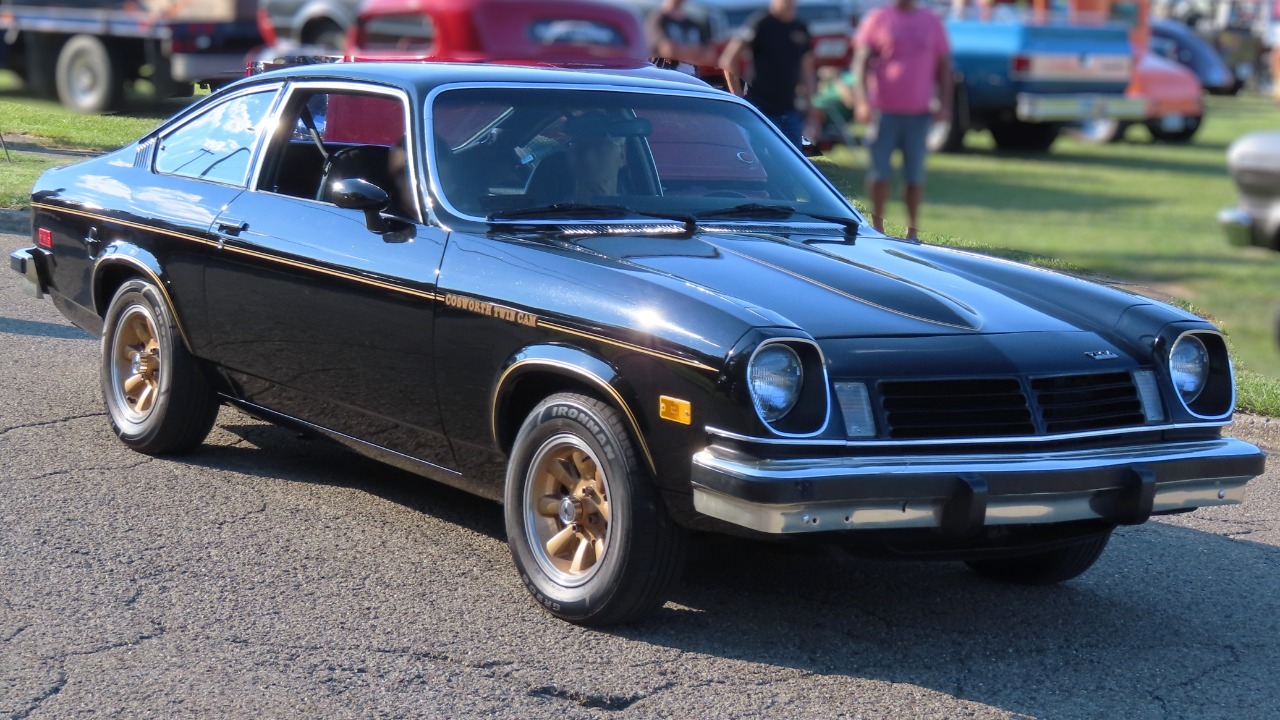
Every 1975 example left the factory painted black with gold striping and matching gold aluminum wheels, creating one of the most recognizable color combinations of the decade. Gold “Cosworth Twin-Cam” lettering adorned the body, while the cabin featured an engine-turned dashboard and a numbered plaque identifying each car’s production sequence.
The styling wasn’t loud or exaggerated. Instead, it reflected the car’s engineering-first philosophy, letting subtle details separate it from an ordinary Vega.
Innovation Came at a Price
The Cosworth Vega showcased technology well ahead of its time, but advanced engineering didn’t come cheaply.
Its sophisticated engine, fuel-injection system, and specialized components pushed the sticker price close to that of larger V8-powered cars. Buyers could walk into a Chevrolet dealership and purchase a Camaro with considerably more horsepower for similar money.
At the same time, the standard Vega had already developed a reputation for durability problems, particularly with its early aluminum engines. Although the Cosworth model featured numerous upgrades and improved engineering, many shoppers remained hesitant to spend premium money on a car carrying the Vega name.
Production never reached Chevrolet’s original expectations. Just 2,061 units were built for 1975, followed by 1,447 more in 1976 before the project came to an end.
A Different Kind of Performance
The Cosworth Vega wasn’t designed to dominate drag strips.
Instead, it rewarded drivers who appreciated balance, responsive handling, and a free-revving engine. Its lighter weight, precise steering, and advanced powertrain made it feel more like a European sport compact than a traditional American performance car.
That approach may have confused buyers in 1975, but it foreshadowed the direction performance cars would eventually take. Smaller, more efficient engines paired with sophisticated engineering would become the norm decades later.
Ahead of Its Time
Looking back, the 1975 Chevrolet Cosworth Vega seems less like a failed experiment and more like a glimpse into the future. It challenged the belief that performance depended solely on large-displacement V8 engines, introducing technology that would later become standard across the automotive industry.
Today, the Cosworth Vega stands as one of General Motors’ most daring projects—a rare collector car that proved innovation sometimes matters more than immediate success. Its production numbers may have been small, but its place in automotive history is anything but.
More from Fast Lane Only