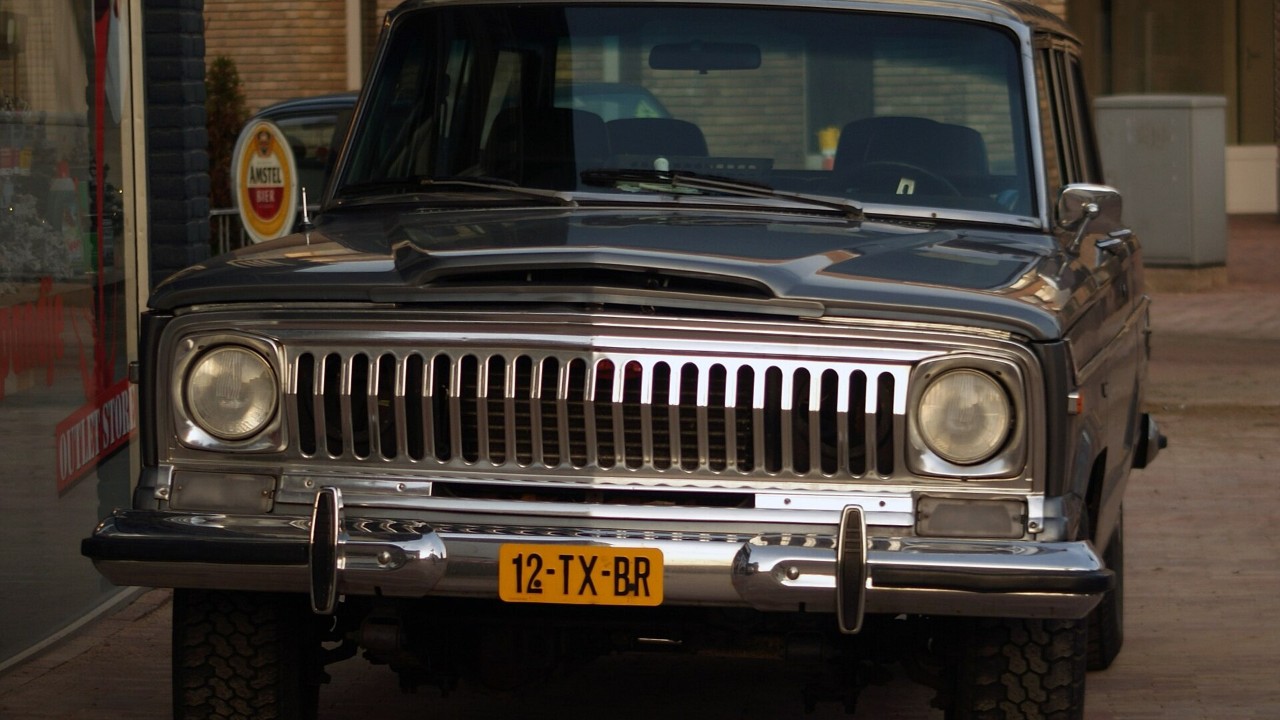
The 1992 GMC Typhoon arrived looking like a boxy suburban runabout, yet it could outrun contemporary Corvettes and Ferraris in a straight line. What began as a parts-bin compact SUV became one of the strangest and most entertaining performance stories of the early 1990s, a short-lived experiment that foreshadowed the modern super-SUV long before that term existed. More than three decades later, the Typhoon’s mix of turbocharged power, all-wheel drive, and everyday practicality still feels oddly ahead of its time.
How a mild Jimmy turned into a turbocharged anomaly
The Typhoon started life as a humble GMC Jimmy, a two-door, body-on-frame SUV that shared its bones with workaday Chevrolet S-10 pickups. Engineers and product planners within GMC had already toyed with the formula by creating the GMC Syclone, a compact pickup fitted with a turbocharged 4.3-liter V6, all-wheel drive, and sports-car levels of acceleration. The Typhoon carried that same core hardware into a more practical, enclosed body and turned a niche drag-strip curiosity into something closer to a usable daily driver.
Period testing showed that the Typhoon could launch from a standstill to highway speeds in roughly five seconds, a figure that put it in direct contention with revered sports cars of its era. Contemporary Corvettes and several European exotics struggled to match the SUV’s brutal off-the-line shove, especially in poor weather where its all-wheel-drive system and fat rear tires found traction that rear-drive coupes could not. As a result, the Typhoon quickly gained a reputation as the boxy truck that humiliated 1990s performance icons, a status reflected in reports that the turbo SUV routinely embarrassed 90s sports.
Visually, the transformation was subtle but intentional. Lowered suspension, body-colored cladding, and discreet badges hinted that this was no ordinary grocery-getter. Inside, the Typhoon offered leather upholstery and a more upscale feel than the base Jimmy, which helped justify its premium price and positioned it as a sort of American alternative to European hot hatchbacks and Japanese turbo coupes. The contrast between its utilitarian roots and its real-world performance created a kind of cognitive dissonance that still fascinates enthusiasts.
The cultural footprint of a short-run performance SUV
Despite limited production and a brief time on showroom floors, the Typhoon managed to leave an outsized cultural mark. Celebrity ownership helped. Actor and director Clint Eastwood, known for a taste in understated but interesting vehicles, has been linked to a Typhoon that appears in discussions of the coolest cars in his collection. That sort of association reinforced the truck’s image as a connoisseur’s choice, something for people who understood what it could do rather than those chasing obvious status symbols.
Within the performance community, the Typhoon became a cult object. Drag racers appreciated its ability to launch hard in almost any conditions. Tuners discovered that the turbocharged V6 responded well to modest upgrades, which unlocked even more straight-line speed. Yet the Typhoon was never only about numbers. Owners valued the oddball charm of an SUV that could carry groceries one moment and then line up against a sports car the next, all while looking relatively anonymous in traffic.
The truck’s rarity added to its mystique. Production figures remained low, and the Typhoon’s run was short, which meant that many enthusiasts only encountered it through magazine tests or word-of-mouth stories. That scarcity helped preserve its reputation, since the model never had time to become common or diluted through endless variants. Instead, it remained a snapshot of a particular moment when a mainstream American brand decided to experiment with something genuinely strange.
From curiosity to blueprint for modern performance SUVs
Viewed from today’s vantage point, the Typhoon looks less like an odd one-off and more like an early prototype for the high-performance SUVs that now fill premium showrooms. Modern crossovers such as the Jeep Grand Cherokee Trackhawk, BMW X5 M, and Porsche Cayenne Turbo all follow a formula that the Typhoon sketched in rough form: combine serious power with all-wheel drive and a practical body, then sell the package to buyers who want one vehicle that can do nearly everything.
Analysts of performance SUV history often point to the Typhoon and its pickup sibling as part of a small group of trailblazers. In surveys of high-performance SUVs, the GMC duo appears alongside early outliers such as the Lamborghini LM002 and the Mercedes-Benz G-Class in AMG form. The Typhoon’s contribution was different from those more exotic machines, however. It applied the formula to a compact, relatively affordable platform and sold it through mainstream dealerships, which meant that buyers did not need supercar budgets or tastes to experience supercar-like acceleration.
The truck also anticipated a shift in how performance is used. Rather than building a stripped-down sports car that sacrificed comfort and practicality, GMC offered a vehicle that could commute, haul cargo, and then surprise drivers of dedicated sports machines. That multi-role capability has become a defining trait of modern fast SUVs. Families now cross-shop vehicles that can tow, handle winter weather, and still produce acceleration figures that would have seemed outrageous in the early 1990s.
There is also a design legacy. The Typhoon’s stance, with its lowered suspension and aggressive wheel-and-tire package, previewed the visual language of later performance crossovers. Manufacturers eventually embraced the idea that utility vehicles could look athletic rather than purely rugged, and the Typhoon’s subtle but purposeful styling hinted at that shift long before it became mainstream.
Why enthusiasts keep rediscovering the Typhoon story
Interest in the Typhoon has surged again as collectors and younger enthusiasts search for distinctive 1990s vehicles that combine analog driving experiences with unusual backstories. Many of the era’s sports cars have already climbed in value, which has pushed attention toward more obscure performance models. The Typhoon fits that demand perfectly: it is rare, clearly of its time, and yet surprisingly usable compared with fragile exotics or cramped coupes.
Online communities and video reviews have amplified the truck’s legend. Footage of stock or lightly modified Typhoons running neck and neck with modern performance cars serves as a reminder that raw acceleration has been accessible in unexpected forms for decades. At the same time, owners share stories about maintenance challenges and the quirks of living with a turbocharged early-1990s GM product, which grounds the legend in everyday reality.
Nostalgia for the experimental spirit of that period plays a role as well. Automakers in the early 1990s were willing to greenlight odd projects that did not necessarily align with long-term brand strategies. The Typhoon was one of those projects. It did not spawn a direct successor, and it did not reshape GMC’s lineup in the short term. Yet it showed that a mainstream brand could build something genuinely surprising and technically ambitious without asking customers to abandon practicality.
What the Typhoon’s legacy suggests about the next performance wave
Looking ahead, the Typhoon’s story offers hints about where performance SUVs might go next. As electrification spreads, manufacturers are already experimenting with battery-powered crossovers that deliver startling acceleration while still serving as family transport. The core idea that performance can live inside an everyday shape has not changed. What changes are the tools, from turbocharged V6 engines to electric motors and large battery packs.
Modern engineers face a similar challenge to the one GMC tackled in 1992: how to make a practical vehicle genuinely exciting without turning it into a fragile toy. The Typhoon solved that problem with a relatively simple formula and a willingness to accept some compromises in ride comfort and refinement. Future performance SUVs will need to balance range, charging times, and weight against the desire for speed. The lesson from the Typhoon is that buyers will respond if the end result feels special and slightly subversive.
More from Fast Lane Only
- Unboxing the WWII Jeep in a Crate
- 15 rare Chevys collectors are quietly buying
- 10 underrated V8s still worth hunting down
- Police notice this before you even roll window down
*Research for this article included AI assistance, with all final content reviewed by human editors