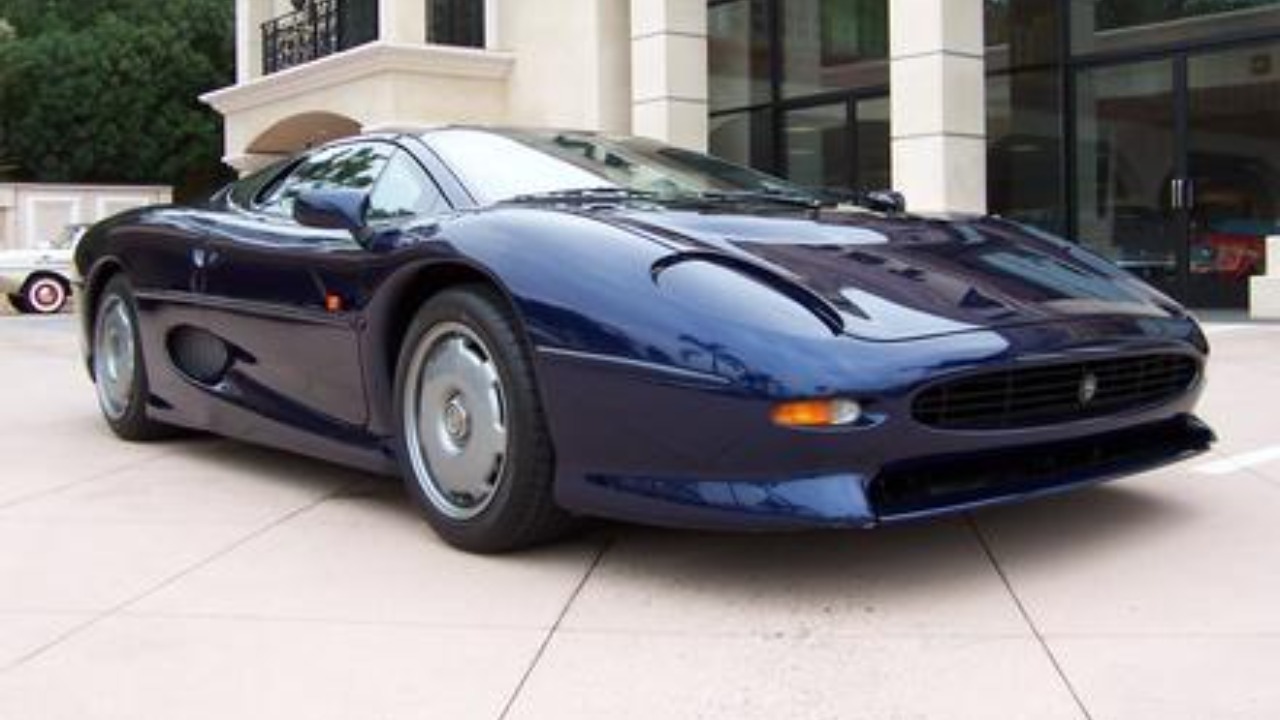
The Jaguar XJ220 arrived as a supercar that seemed to outrun its own era, a machine conceived to be the fastest road car on the planet just as the performance arms race reached fever pitch. It promised a top speed that matched its name, a radical layout, and a price tag to match its ambition, only for shifting economics and engineering compromises to blunt its impact. Yet with time, the car that once symbolised overreach has started to look more like a misunderstood milestone that simply ran out of road.
Today the XJ220 sits at the intersection of myth and reassessment, its reputation shaped as much by what it did not quite achieve as by what it actually did. I see a car that was born from idealism inside a big manufacturer, battered by reality on the way to production, and now slowly reclaimed as a landmark in design and speed rather than a cautionary tale.
The dream that stunned the motor show
The XJ220 story began as a skunkworks fantasy inside Jaguar, a group of engineers chasing the idea of a road‑going endurance racer with the silhouette of a Le Mans prototype. From the moment it debuted at the 1988 British International Motor Show, the concept car looked like it had driven in from another decade, impossibly long, impossibly low, and clearly built around the idea of extreme speed. When the XJ220 broke cover however, it looked like it was doing 220mph stood still, and dropped the jaws of everyone present, a visual statement that Jaguar was ready to challenge the most exotic machinery in the world.
That confidence was not just about styling, it was baked into the engineering targets that gave the car its name. The XJ 220 label itself spelled out the ambition for a 220 mph maximum, a figure that would put it at the sharp end of the performance hierarchy and signal that The XJ was no mere styling exercise. When the concept was unveiled at the motorshow, the response was overwhelmingly positive, and When the crowds saw a Jaguar supercar with scissor doors, a racing‑inspired chassis and the promise of all‑wheel drive, the company suddenly found itself with a waiting list for a car that did not yet exist in production form.
From passion project to production compromise
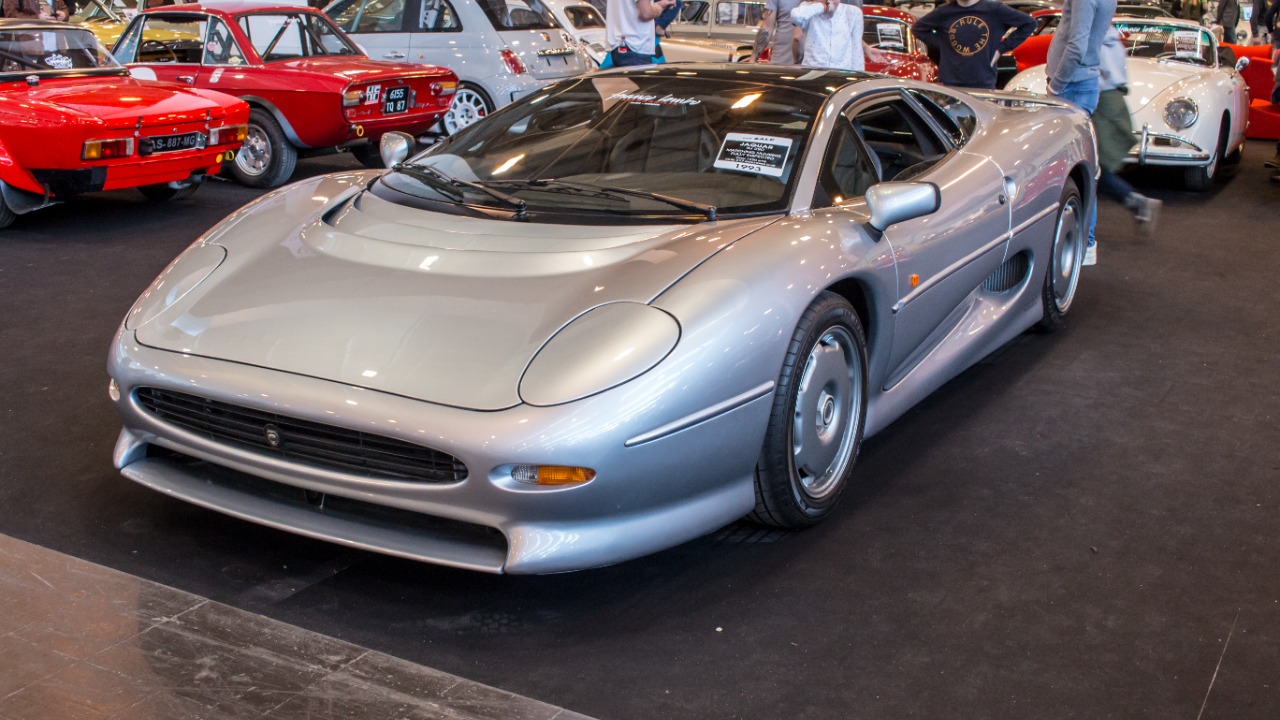
Turning that showstopper into something buildable proved far more complicated than the early euphoria suggested. The Jaguar XJ220 is a two-seat supercar produced by British luxury car manufacturer Jaguar from 1992 until 1994, in collaboration with specialist partners, and the shift from concept to reality forced a series of hard choices about cost, emissions and practicality. The original vision of a V12 engine and all‑wheel drive gave way to a twin‑turbocharged V6 and rear‑wheel drive, a change that made sense for packaging and regulations but left some early depositors feeling that the production car differed significantly from what was promised.
Even with those revisions, the engineering remained ambitious. The XJ220’s body, made of aluminum honeycomb, contributed to its lightweight yet robust structure, a sleek powerhouse that tried to blend cutting‑edge aerodynamics with the drama expected of a flagship supercar. Jaguar launched a new ‘fastest car in the world’ in 1992, with its 217.1mph certified by the Guiness Book of World Records as the highest speed achieved by a production road car, a figure often rounded to 217 in shorthand but still shy of the magic 220 that had been emblazoned on the badge. The final price of the XJ220 ( Jaguar XJ220 ) exceeded £400,000, leading to discontent among some enthusiasts who had signed up in a different economic climate and now faced a car that was both more expensive and mechanically different from the fantasy they had reserved.
The fastest car that still disappointed
On paper, the XJ220 delivered performance that should have silenced any doubts, yet context is everything in the supercar world. Jaguar launched its record run into a landscape where rivals were also chasing headline numbers, and while the car achieved 217.1mph in official testing, the gap between that figure and the promised 220 became a symbol of expectations that had been set almost too high. And while it is commonly trod territory to talk about why the XJ220 did not achieve its stated objective, the maximum speed achieved was still enough to secure recognition in the Guiness Book of World Records, a tall order for any car that had started life as a side project inside a traditional manufacturer.
The problem was that the narrative quickly shifted from what the car did to what it did not quite do. The XJ 220 survived Jaguar’s takeover by Ford the following year, but when it eventually entered production in 1992 it arrived into a recessionary market where speculative buyers were disappearing and supercar values were softening. Some customers tried to walk away from their contracts, arguing that the change from a V12 to a V6 and the absence of all‑wheel drive meant the finished product no longer matched the original specification, and the gap between the £400,000 price and falling resale values only sharpened that sense of disappointment.
Behind the wheel, a very different story
Strip away the baggage and the XJ220 experience is far more compelling than its reputation suggests. Drivers who have spent time in the cockpit describe a car that feels narrower from behind the wheel than its vast bodywork implies, with a chassis that comes alive at speed and a turbocharged surge that builds relentlessly along a long straight. It is a shame that the Jaguar XJ220 is so often remembered for the wrong reasons, because once the world’s fastest car is up on boost and the road opens out, the only place anyone wants to be is in the driver’s seat, working with a machine that still feels brutally fast by modern standards.
Specialists who maintain these cars talk about a supercar that rewards commitment rather than casual posing. It is a truly capable and mesmerising machine, the kind that demands respect for its size and power, and Just do not forget that size and keep checking the speedo, as the muted cabin and long gearing can make very high speeds feel deceptively calm. The Jaguar XJ220 is finally getting the love it always deserved in part because more owners and journalists are now able to experience well‑sorted examples, rather than relying on period stories shaped by early teething troubles and market turmoil.
Time capsules, workshops and a slow redemption
Three decades on, the XJ220 has moved from controversial new arrival to blue‑chip collectible, helped by the survival of remarkably original cars. A timewarp Jaguar XJ220 supercar with 16 miles is for sale, a reminder that some examples spent years as static investments rather than being driven, preserved by classic car and motorsport specialist dealers who recognised their long‑term significance. From the moment it debuted, at the 1988 British International Motor Show, the design of the XJ220 ( Jaguar XJ220 ) continued to capture imaginations, and those low‑mileage survivors now act as reference points for restorers and historians trying to understand how the car left the factory.
Support infrastructure has also matured, turning what was once a difficult car to own into a more realistic proposition. Dedicated workshops and marque experts keep the world’s fastest car of its era in fighting shape, with Jaguar itself highlighting how Jaguar launched a new ‘fastest car in the world’ in 1992 and now supports it through classic programmes that understand its quirks. Don Law Racing is where the Jaguar XJ220 legend lives on in the independent world, a place where the knowledge base has been built up over years of maintaining, upgrading and even re‑engineering components to modern standards so that owners can actually use their cars rather than hiding them away.
A flawed icon that finally fits its moment
With the benefit of distance, the XJ220 looks less like a failure and more like a victim of timing. The car arrived just as economic headwinds hit, just as regulations tightened, and just as expectations for supercars were being reset by new rivals, yet its core achievements remain impressive. The Jaguar XJ220 is finally getting the love it always deserved because collectors now judge it on its design, its record‑setting speed and its rarity, rather than on the legal disputes and market crashes that surrounded its launch.
When the XJ220 was unveiled at the motorshow, the response was overwhelmingly positive, and when the dust settled on its troubled production run, what remained was a limited‑build supercar with a unique silhouette and a story that speaks to both ambition and overreach. The XJ220’s body, made of aluminum honeycomb, contributed to its lightweight yet robust structure, and that blend of advanced engineering with this passion project is exactly what modern enthusiasts prize. In that sense, the Jaguar that once promised more than time allowed is finally aligned with an era that can appreciate what it actually achieved, rather than what it was supposed to be on paper.