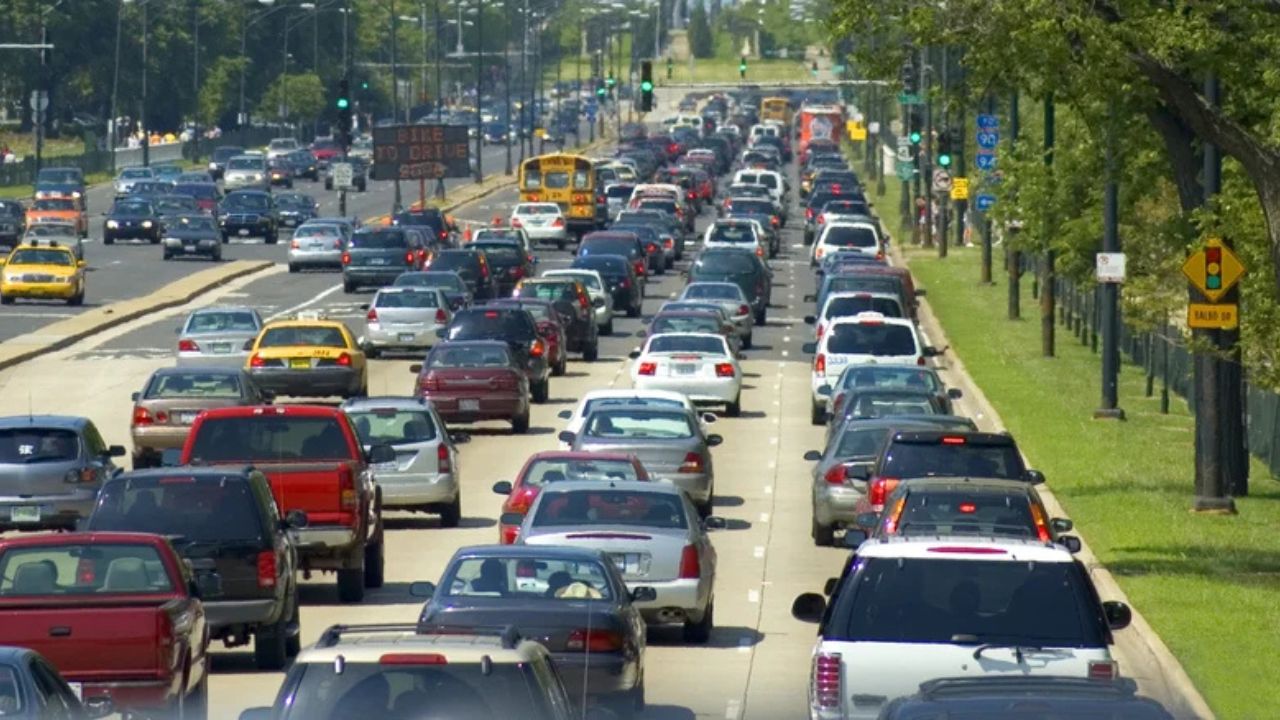
Commuters in major U.S. metro areas including Chicago, New York City, and Philadelphia are now losing more than 100 hours per year sitting in traffic, underscoring how congestion has become one of the most persistent urban mobility challenges in the United States. The findings highlight a growing strain on aging road networks as vehicle volumes, delivery traffic, and commuter patterns continue to push infrastructure to its limits.
The data paints a picture of daily gridlock that is no longer limited to peak rush hours, but increasingly spreads across the entire day in dense urban corridors.
What happened
Recent traffic analysis shows that drivers in Chicago, New York City, and Philadelphia each lose more than 100 hours annually due to congestion delays. This time loss is measured by comparing actual travel times against free-flow driving conditions, revealing how often commuters are stuck moving significantly slower than normal speeds.
In New York City, congestion is driven by a combination of dense population, limited road expansion options, heavy commercial deliveries, and constant demand on major routes and bridges. Chicago faces similar pressures along its highway system and downtown corridors, where commuter traffic frequently overlaps with freight movement. Philadelphia’s traffic burden is intensified by narrow urban road layouts and regional commuting flows that funnel vehicles through limited arterial routes.
Across all three cities, the rise of ride-hailing services, last-mile delivery vehicles, and ongoing construction projects has added additional pressure to already saturated road networks. Even minor disruptions can cascade into long delays during peak periods.
Why it matters
Losing more than 100 hours per year in traffic has both economic and personal impacts. For workers, it translates into reduced productivity, longer commute fatigue, and less time spent at home. On a larger scale, congestion contributes to billions of dollars in lost economic output through wasted fuel, delayed deliveries, and reduced business efficiency.
The environmental impact is also significant. Idling vehicles and stop-and-go traffic increase fuel consumption and emissions, particularly in older vehicle fleets that lack modern efficiency systems. This makes congestion not only a transportation issue but also an air quality and climate concern in dense urban centers.
The trend also reflects deeper infrastructure challenges. Many major U.S. cities were designed around earlier population levels and commuting patterns, and expanding road capacity is often limited by geography, cost, and political constraints. As a result, cities increasingly rely on traffic management systems, public transit investments, and congestion pricing strategies to manage demand rather than expand supply.
What to watch next
Cities like Chicago, New York City, and Philadelphia are expected to continue exploring solutions such as congestion pricing, improved public transit integration, and smart traffic management systems using real-time data. New York in particular is closely watched as it experiments with congestion pricing models aimed at reducing vehicle volume in the busiest parts of Manhattan.
Investment in public transportation will also play a key role. Expanding subway reliability, commuter rail capacity, and bus rapid transit systems could help reduce dependence on private vehicles for daily commuting.
At the same time, emerging technologies such as autonomous delivery vehicles and improved traffic-routing algorithms may help optimize flow, but they are unlikely to fully solve congestion without broader changes in commuting behavior.
For now, the 100-hour annual loss remains a stark indicator of how deeply traffic congestion is affecting daily life in some of America’s largest and most economically important cities.
More from Fast Lane Only