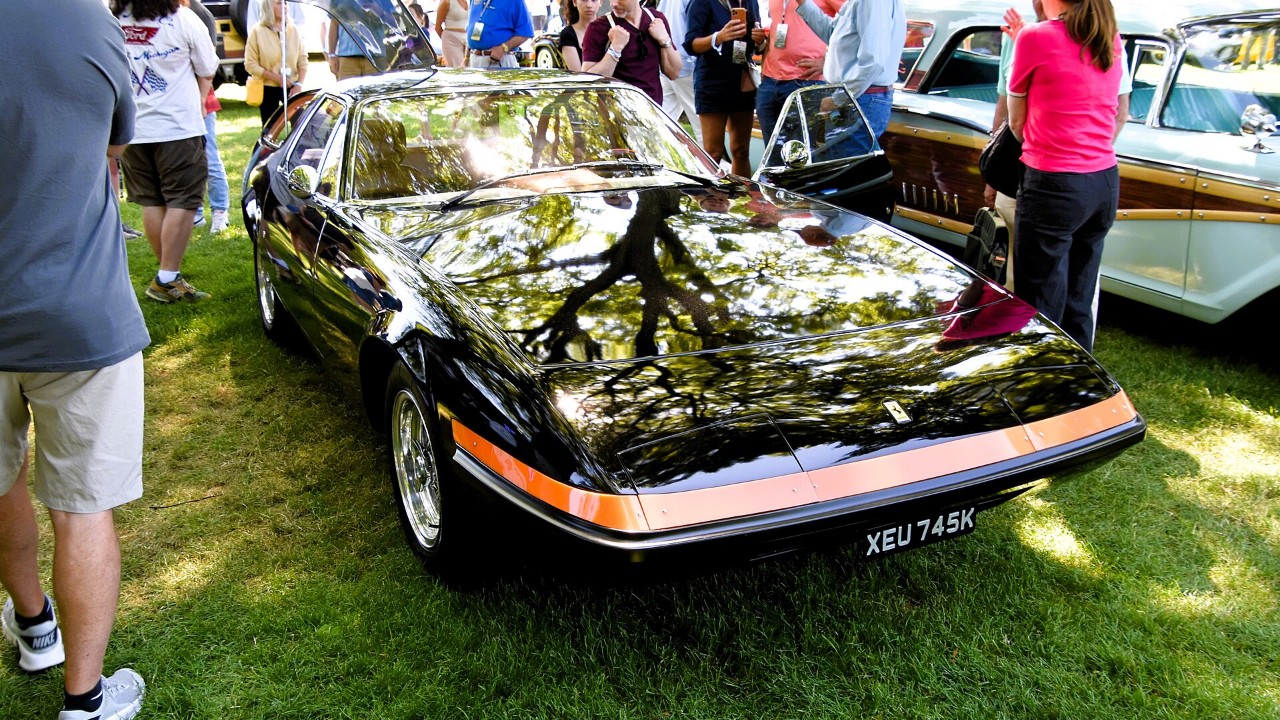
An American property developer once asked a Ferrari dealer for something different, and he got a Daytona shooting brake. That one-off red Ferrari wagon explains this list better than any definition. A long roof can turn a sports car, a family sedan or a sensible import into something you stop and stare at.
Many of these cars never reached an American showroom. Some were built in Australia, Britain, France, Italy or Japan for buyers with very different roads. Others were made by hand in tiny numbers, so even keen car-show regulars rarely meet one. In fact, one of them exists as a single example on earth.
These are our picks for 12 wagons that you are unlikely to bump into at the local cruise night. The opinions are ours. However, the years, engines and figures come from auction records, period tests and marque histories.
1. 1972 Ferrari 365 GTB/4 Daytona Shooting Brake
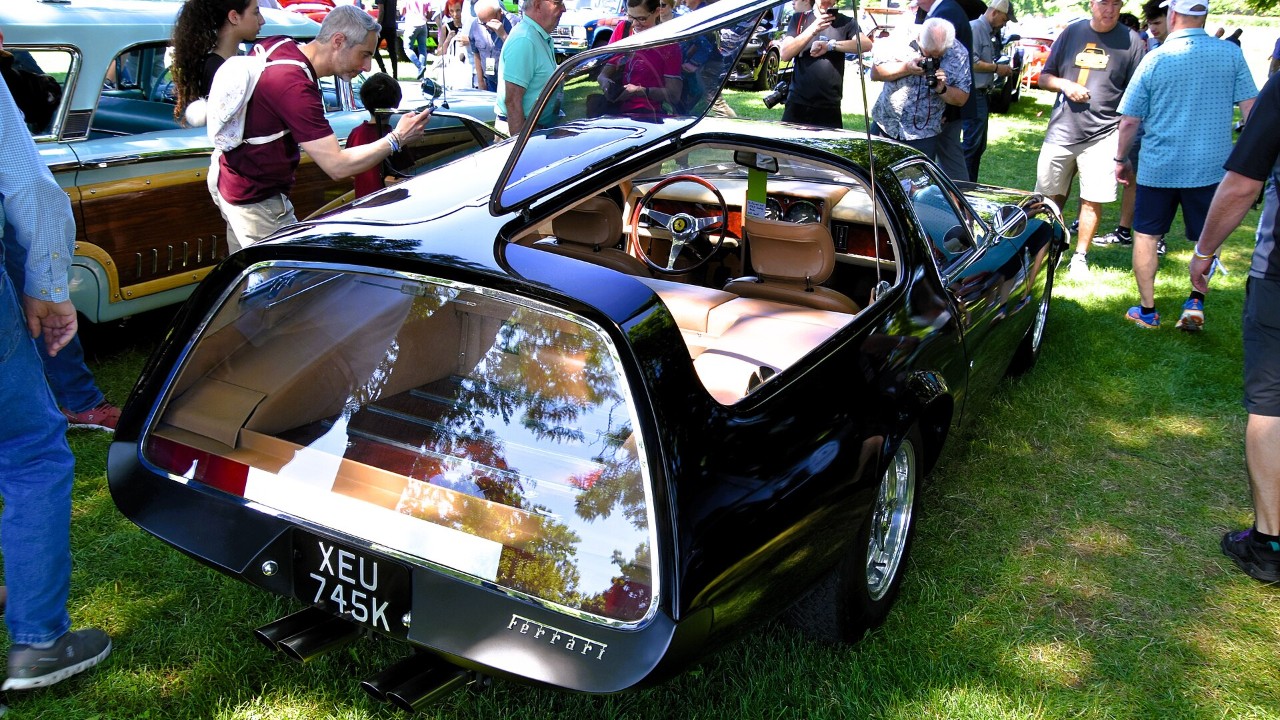
Bob Gittleman walked into Luigi Chinetti’s New York Ferrari dealership in the early 1970s and asked for “something a bit different,” according to CAR magazine’s story on the car. The base was a red 365 GTB/4 Daytona coupe. Then Panther Westwinds in Surrey, England, rebuilt the back half into the only Daytona shooting brake.
Luigi Chinetti Jr. drew the design. Panther gave it gullwing side windows for access to the load bay, a trapezoid glass tail and a wooden floor in the boot. Under the hood sat the stock 4,390 cc V12 with six Weber carburetors, rated at 352 hp at 7,500 rpm, per Gooding & Company’s lot description. By the time the car reached Gittleman in Florida in 1975, the conversion had cost about as much as four regular Daytonas.
Our take: purists may wince at this shooting brake, but we love it. It is a genuine Ferrari V12 grand tourer that can carry luggage for two, and nobody else has one. Gooding offered chassis 15275 at Pebble Beach in 2016 with a $750,000 to $1,000,000 estimate.
2. 1991 Lynx Eventer
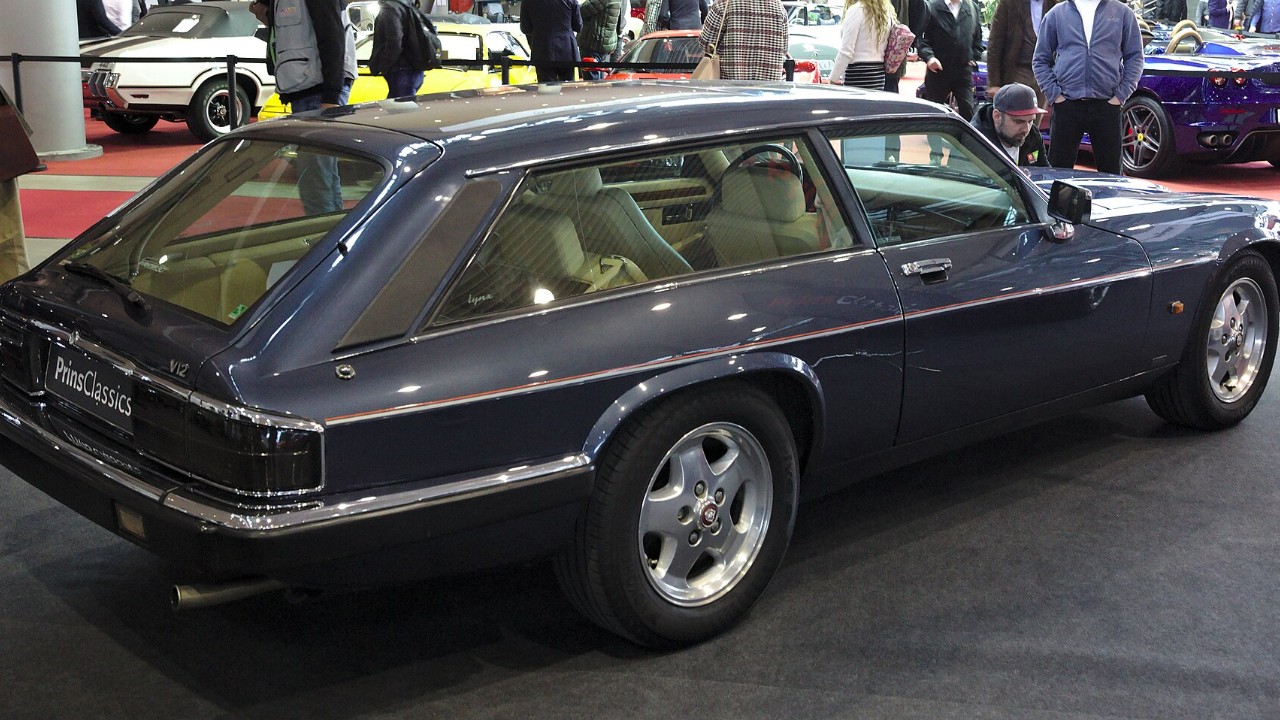
The Jaguar XJS never came as a wagon from the factory, so Lynx Motors made its own shooting brake. The firm launched the Eventer in 1983 and kept building it for 16 years. Lynx fitted a new roof, new glass and new bodywork from the B-pillar back. It also moved the fuel tank and stiffened the rear suspension to carry the extra load.
Inside, the rear seats moved back for more legroom, and they fold flat to give six feet of load floor. According to Silodrome’s history of the Eventer, the conversion cost £6,950 in 1983. That was about a third of the price of a new XJS V12. Lynx is believed to have made only about 67, and each one was tailored to its owner’s order.
In our view, the Eventer is the most elegant wagon Britain ever made from a coupe. The long glass roof suits the XJS better than the original sail panels. Because no two cars are alike, every Eventer you meet will be slightly different from the last one, which only adds to the appeal.
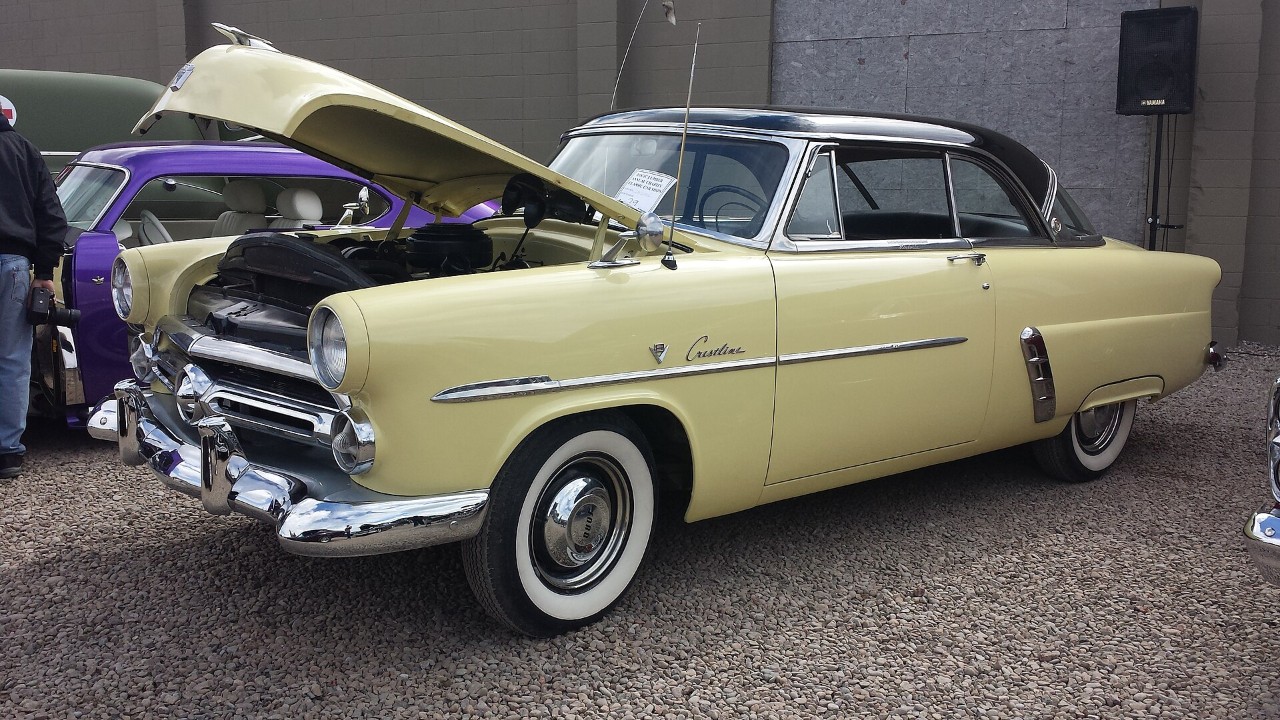
3. c.1957 Ford Zephyr Farnham Estate by E.D. Abbott
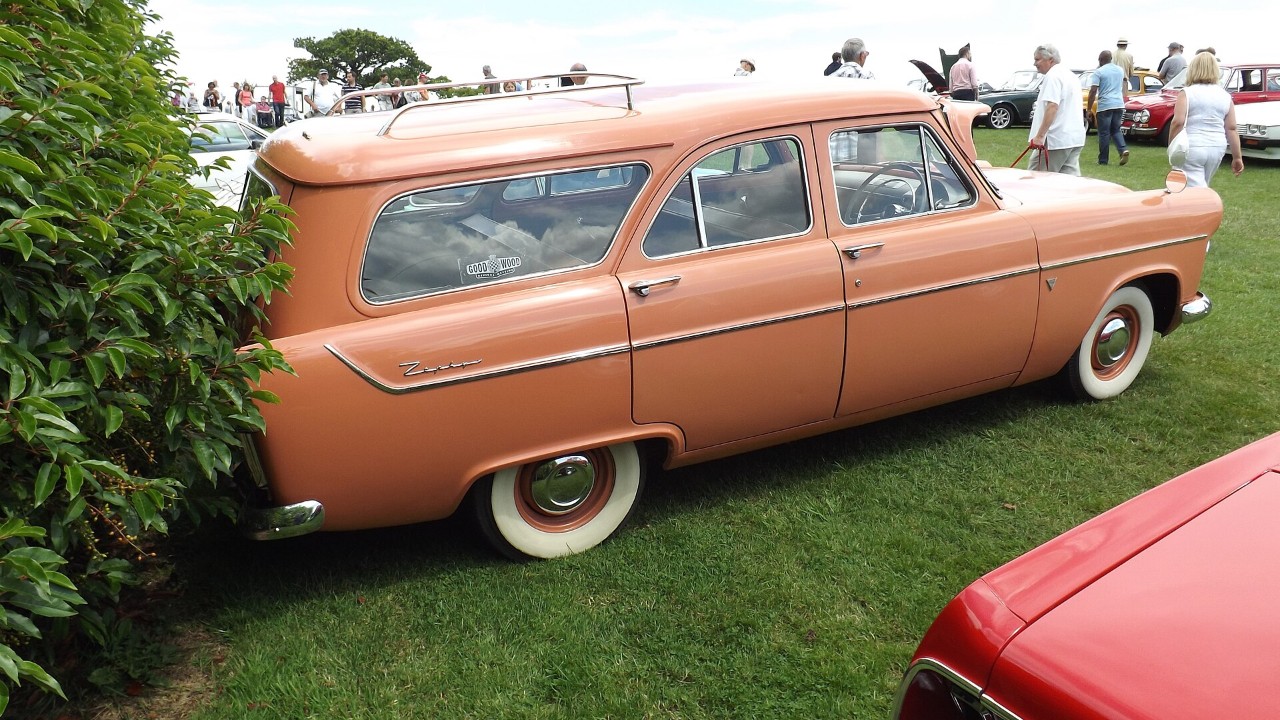
Ford of Britain built the Zephyr from 1950 to 1972. However, the Mark II Zephyr estate did not come off Ford’s own line. Instead, it was a conversion by E.D. Abbott Ltd, a coachbuilder in the town of Farnham, which is why these cars carry the Farnham name.
The Mark II went on sale in April 1956 and ran until 1962. Ford enlarged the six-cylinder engine to 2,553 cc for this generation, and it made 86 bhp. That six gave the big Ford real pulling power for its day. Meanwhile, the long roof turned the Zephyr into a proper load carrier for trades and touring families.
Our take: this is a coachbuilt wagon in working clothes. The Farnham had no luxury pretensions, yet each one passed through a craft shop rather than a factory line. That makes it a rarer sight than its humble badge suggests, and we would stop for one at any show. The Zephyr name itself ended in 1972, when Ford replaced it with the Consul and Granada. So if you want a big six-cylinder British Ford wagon from the 1950s, the Farnham is the one to hunt.
4. 1966 Fiat 1100 Familiare
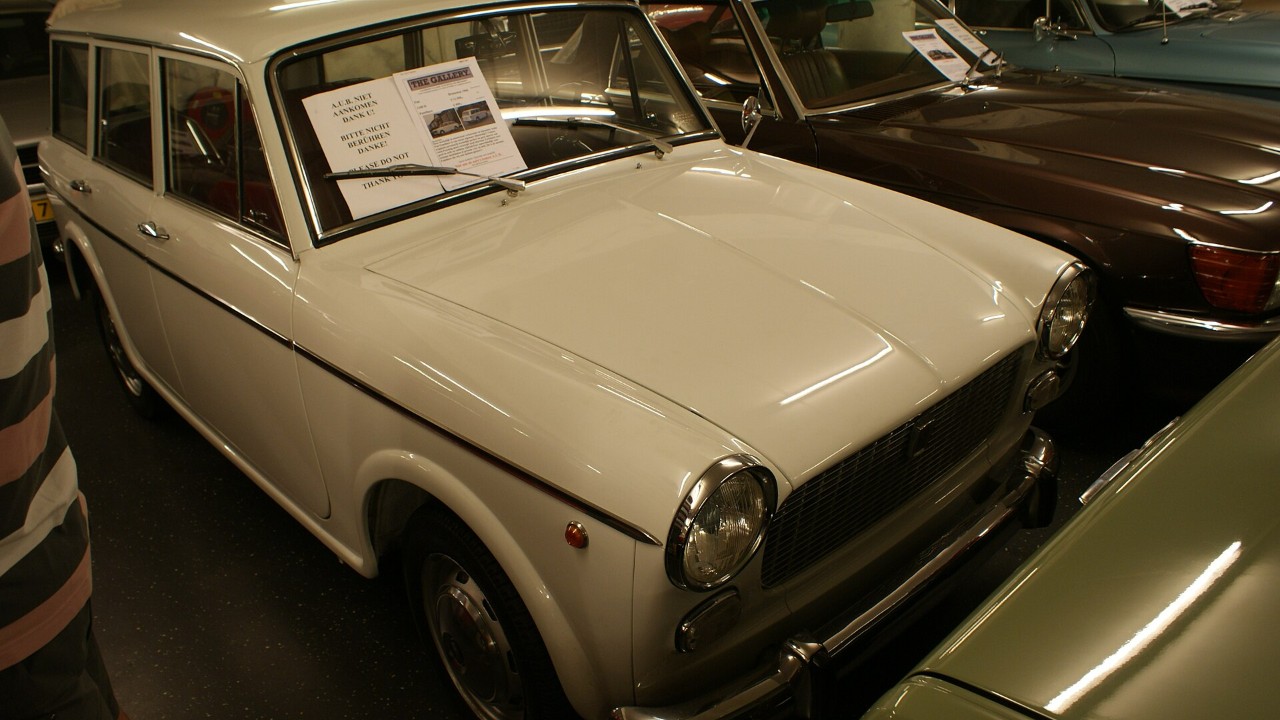
Fiat showed the 1100 Familiare at the 1954 Geneva Motor Show as a five-door estate. Its party trick was a third row. Two forward-facing jump seats carried a fifth and sixth passenger in a car that was barely bigger than a modern compact. Also, the rear bench folded into a flat floor rated to carry 300 kg. Power grew over time, from 36 PS in 1953 to 50 PS with the 103 H engine in 1960.
The Familiare stayed in the range as the 1100 grew up. The 1100 D arrived in 1962 with an estate alongside it. Then, in February 1966, the 1100 R took over as the last of the line. It used a 1,089 cc four with a claimed 48 bhp. Fiat finally replaced the 1100 with the front-drive 128 in October 1969.
We think the Familiare shows how clever small-car packaging was in postwar Italy. Six seats, a flat load bay and a tiny four-cylinder engine made it a whole family’s transport. The 1100 D design also lived on in India, where Premier sold its Padmini sedan from 1974 until 2000. A Familiare, on the other hand, is a far rarer find.
5. Hillman Husky
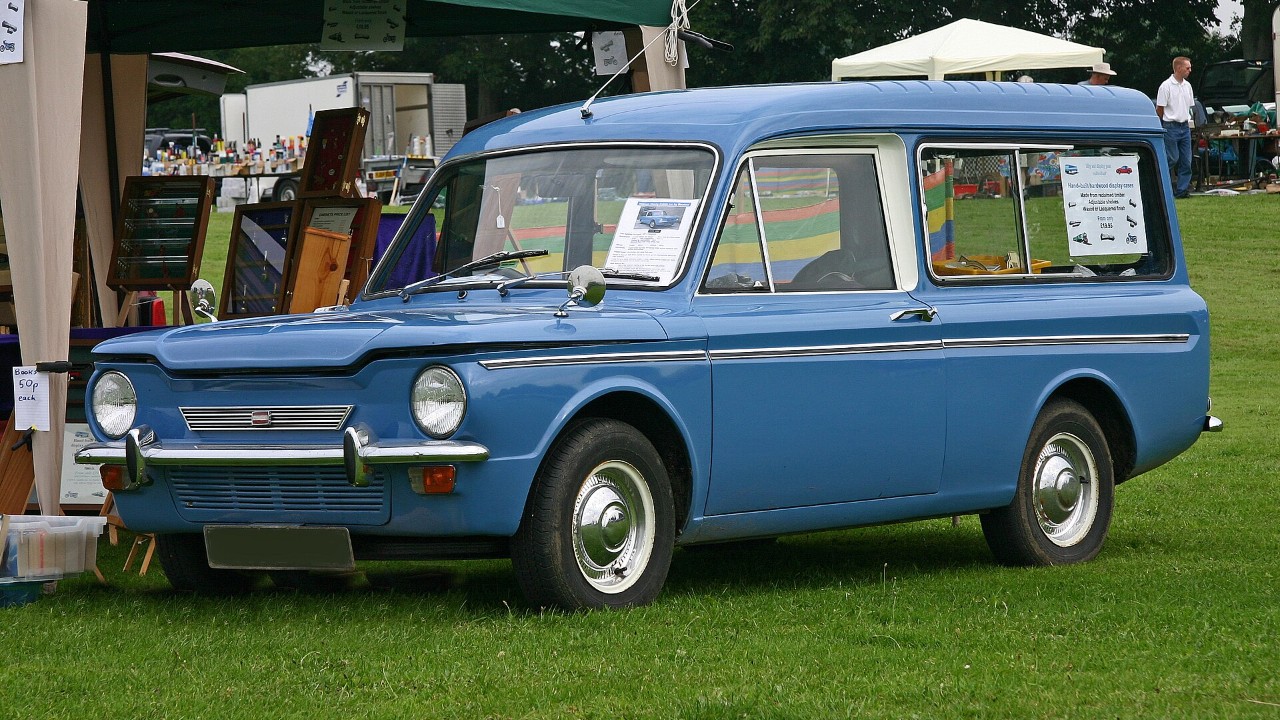
Hillman launched the Husky in 1954 as a short, tough estate based on the Mark VIII Minx. It had two passenger doors and a side-hinged rear door. The wheelbase was nine inches shorter than the Minx estate’s, and the first cars used a 1,265 cc sidevalve four with 35 bhp. In a 1954 test by The Motor, the price came to £564 with taxes.
The formula worked. Hillman sold about 42,000 of the first Huskies before the Series I arrived in 1958 with a 1,390 cc overhead-valve engine. Later, the Series III offered a 1,592 cc engine for the USA, and it gained an all-synchromesh gearbox from 1964. As Old Classic Car’s Husky gallery notes, the Husky compares closely with the Commer Cob van, but it added extra seats and side windows. One even ran the 1959 Coronation Safari Rally.
Our take: the Husky is the honest little workhorse of this list. The last version, from 1967 to 1970, moved to the rear-engined Imp with an 875 cc overhead-cam engine. Either way, few American enthusiasts have ever seen one up close.
6. 1971–1974 Holden HQ Kingswood Wagon
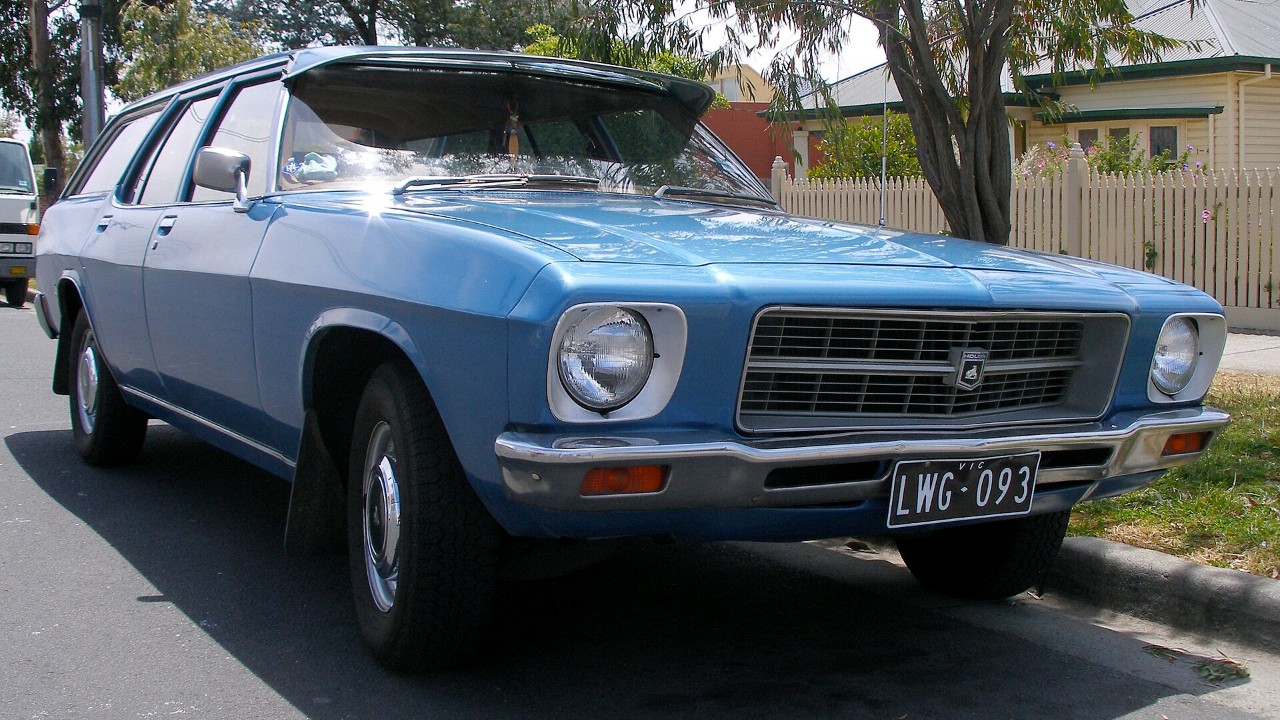
Holden released the HQ on July 15, 1971, and it was a big step for General Motors’ Australian brand. It was the first ground-up redesign of the Holden line since 1948, with a new body, chassis and suspension. Holden built 485,650 HQs before the HJ replaced it in October 1974.
The wagon was more than a sedan with a long roof. It rode on a 114-inch wheelbase, three inches longer than the sedan’s, and stretched to 190 inches overall. Engine choices began with the 173- and 202-cubic-inch Red sixes. Above them sat the 253 and 308 Holden V8s, and Holden also offered a 350 Chevrolet V8. So a Kingswood wagon could be a frugal family hauler or a fast one.
In our view, the HQ Kingswood wagon is Australia’s answer to the American family wagon. Even so, it was never sold new in the United States, which is exactly why one would draw a crowd at an American show. If you import one, the V8 wagons are the ones we would chase. For more family haulers, see our list of classic wagons that still make practical sense.
7. 1971 Ford Falcon XY 500 Wagon
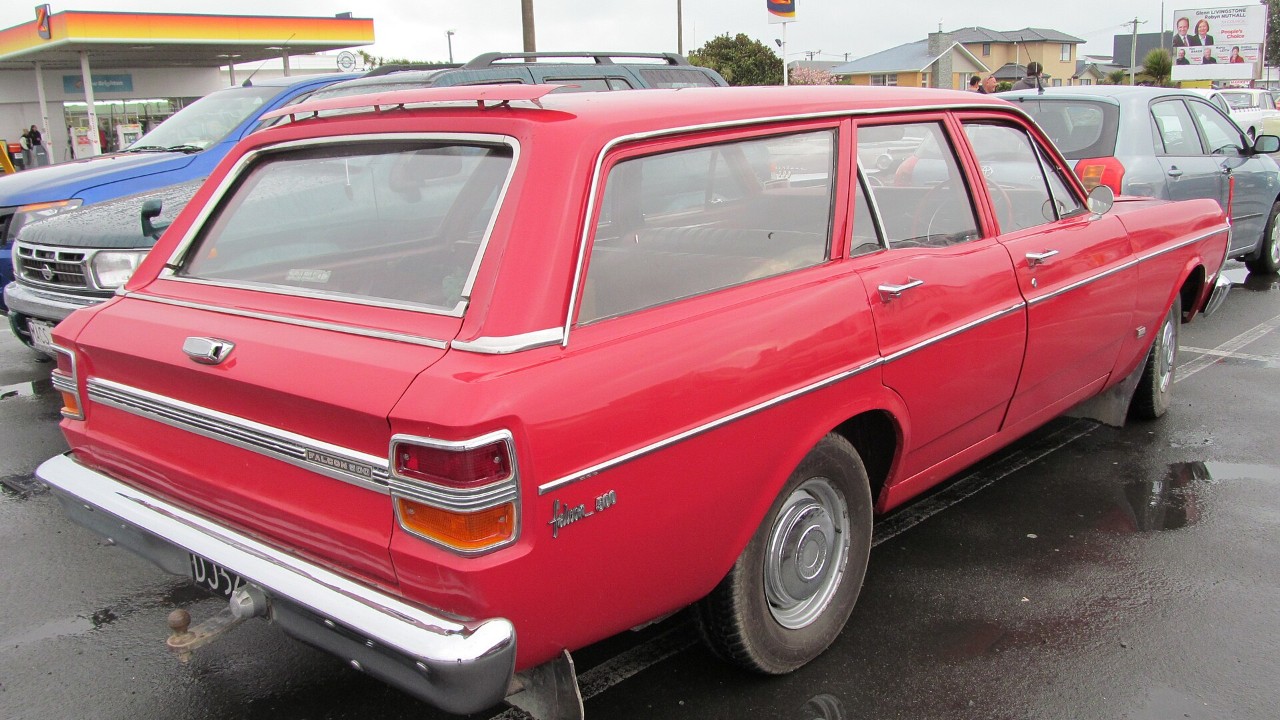
Ford Australia built the XY Falcon from October 1970 to March 1972. It was a facelift of the XW, with a divided grille and new tail lights. New 200- and 250-cubic-inch sixes went under the hood, while the 302 and 351 V8s carried over. The Falcon 500 was the mid-range trim, sold as a sedan and as a wagon.
The XY is best known for the GT-HO Phase III, which arrived in May 1971. Ford built just 300 GT-HOs and 1,557 XY GTs out of 118,666 XY Falcons. That means ordinary Falcons far outnumbered the race-bred sedans. However, a 500 wagon buyer could still order a V8.
Our take: if you love the Phase III but need room for the kids, this is the Falcon to want. It looks like the hero car’s sensible sibling. A buyer could also add a GS Rally Pack to the Falcon 500. Away from Australia, an XY wagon is rare enough that most American car fans will need it explained to them. For another long-roof Ford, our list of classic wagons owners refuse to part with is worth a look.
8. Citroën DS Break
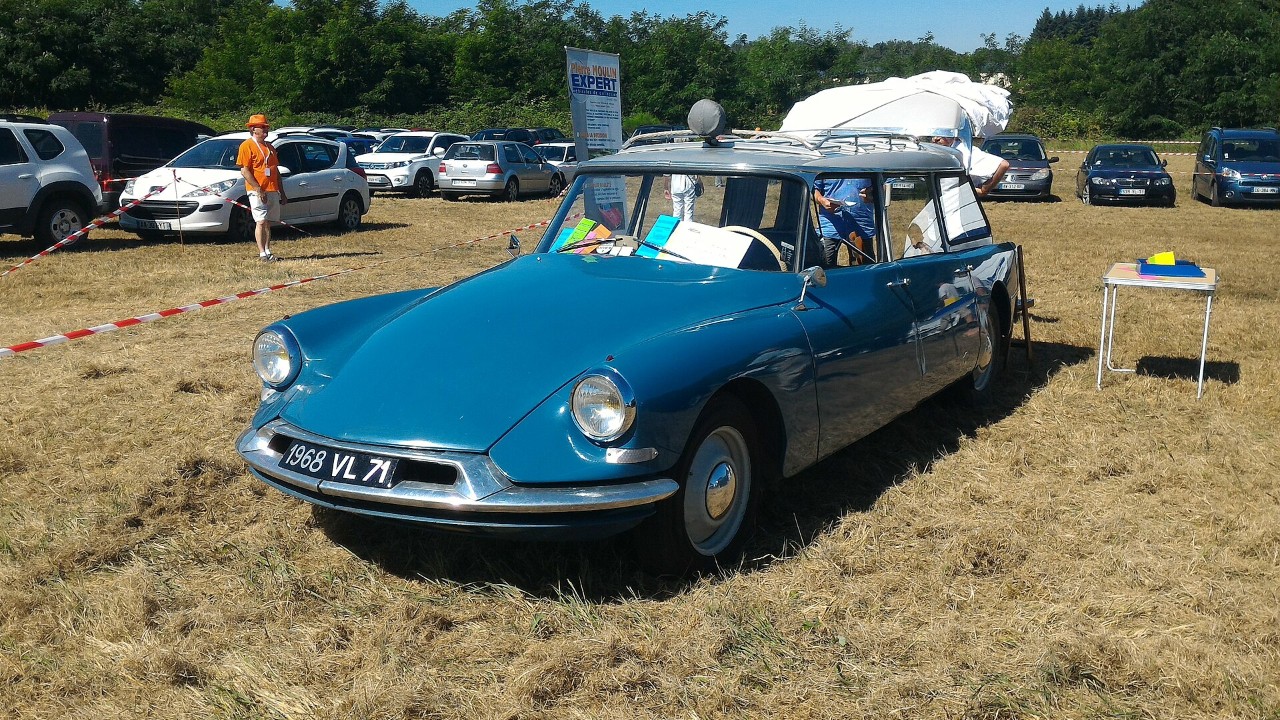
Citroën added a station wagon to the DS range in 1958. France called it the Break, while Britain knew it as the Safari or Estate. The body got a steel roof strong enough for a standard roof rack. In addition, the load bay carried two side-facing seats, and the Familiale version added three folding seats in the middle row.
The hydropneumatic suspension did more than smooth the ride. Because it kept the car level and steady, the BBC and others used DS Safaris as camera cars for filming on the move. Citroën even built ambulance versions with a split rear seat for a stretcher. Altogether, Citroën made 1,455,746 DS-family cars in six countries.
We would argue the DS Break is the most futuristic wagon of its era. It carried a family, a film crew or a patient on the same self-leveling system. The last DS left the line on April 24, 1975. Yet Citroën had built about eight months of estate stock, so it kept selling the Break until the CX estate arrived that autumn.
9. 1963 Peugeot 404 Break
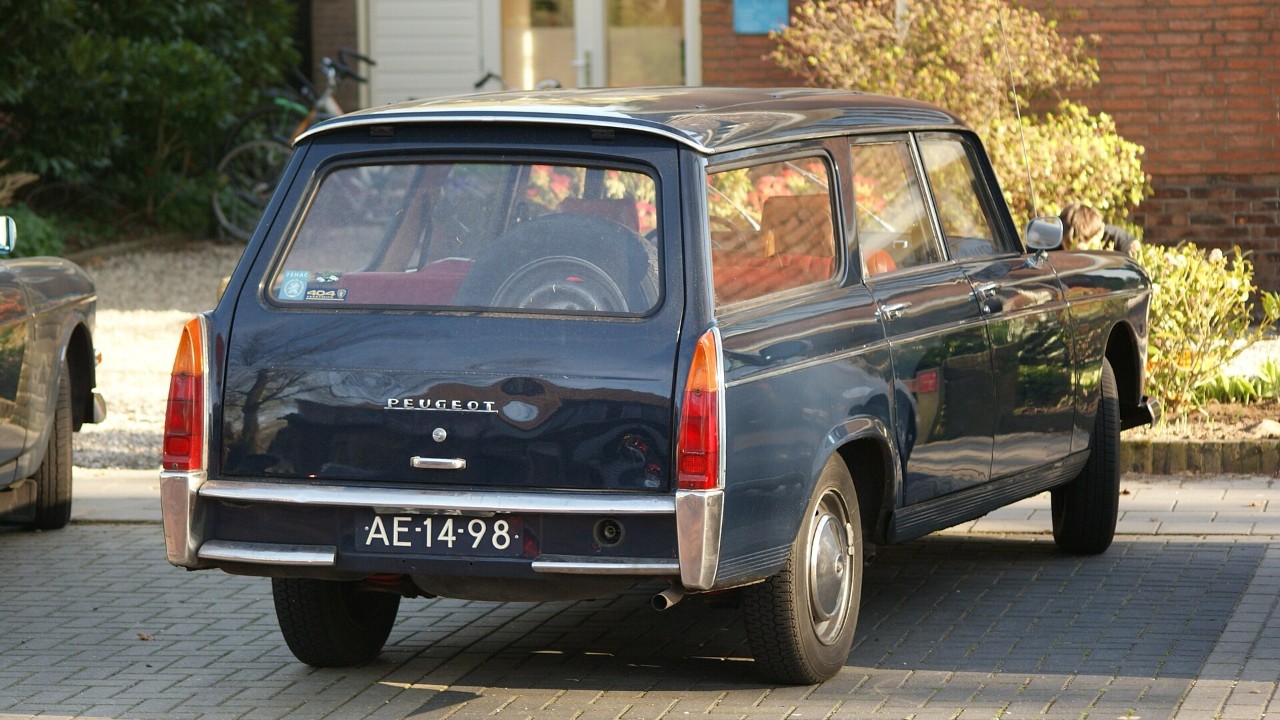
Peugeot introduced the 404 Break in February 1963. Pininfarina had styled the 404, and the estate used the same 1,618 cc four-cylinder engine. In its first form, it made 72 hp on the SAE scale, and later versions reached 80 hp. Diesel estates also arrived with 1,816 cc and then 1,948 cc engines. Meanwhile, the seven-seat Familiale offered extra room for larger families.
The 404 earned a reputation for toughness far from France. It won the Safari Rally in 1963, 1966, 1967 and 1968. Peugeot also assembled the car in Kenya, where production carried on under licence until 1991. Argentina built 162,583 of them at El Palomar, too. In the end, Peugeot built 2,885,374 404s worldwide.
Our take: few family cars this plain have proved this durable. The 404 Break is a no-nonsense French wagon with a rally résumé, and we would happily take one in either body. In France, the petrol Break and Familiale stayed on sale until 1971. After that, the diesel Familiale kept going until May 1975. In America, however, you could go years between sightings.
10. Toyota Crown Wagon Super Deluxe (S130)
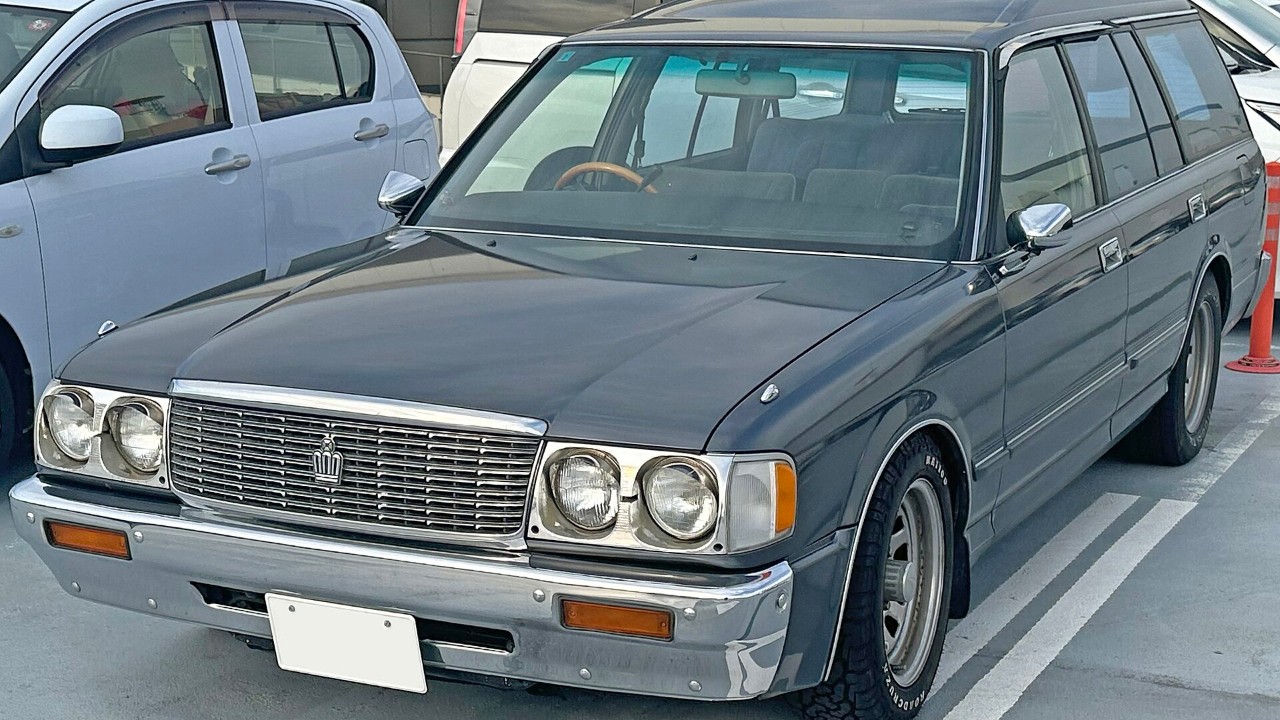
Toyota introduced the Crown in January 1955, and it sold the car in the United States from 1958. The eighth generation, the S130, arrived in 1987 long after Toyota had stopped selling the Crown in America. So this boxy Japanese-market wagon is a car most American drivers have never had a chance to see.
Its engine range showed how upscale the Crown had become. The 1G-FE 2.0-liter twin-cam inline-six was the core engine, and a 2.4-liter turbodiesel was also offered. The wagon range even included a supercharged Royal Saloon. Then, from August 1990, Toyota added a 2.5-liter 1JZ-FE six. After the 1991 facelift, the sedan and wagon moved to the 1JZ-GE and 2JZ-GE engines.
The wagon also outlived its sedan by a wide margin. Toyota ended S130 sedan sales in Japan in December 1995, though the sedan stayed in production in Indonesia until 2000. The wagon kept going in Japan until December 1999. In our view, that long run says the Crown Wagon filled a real need for Japanese buyers who wanted space and comfort together. Finally, Toyota replaced it with the S170-series Crown Estate in December 1999.
11. 2002–2004 Audi RS6 Avant (C5)
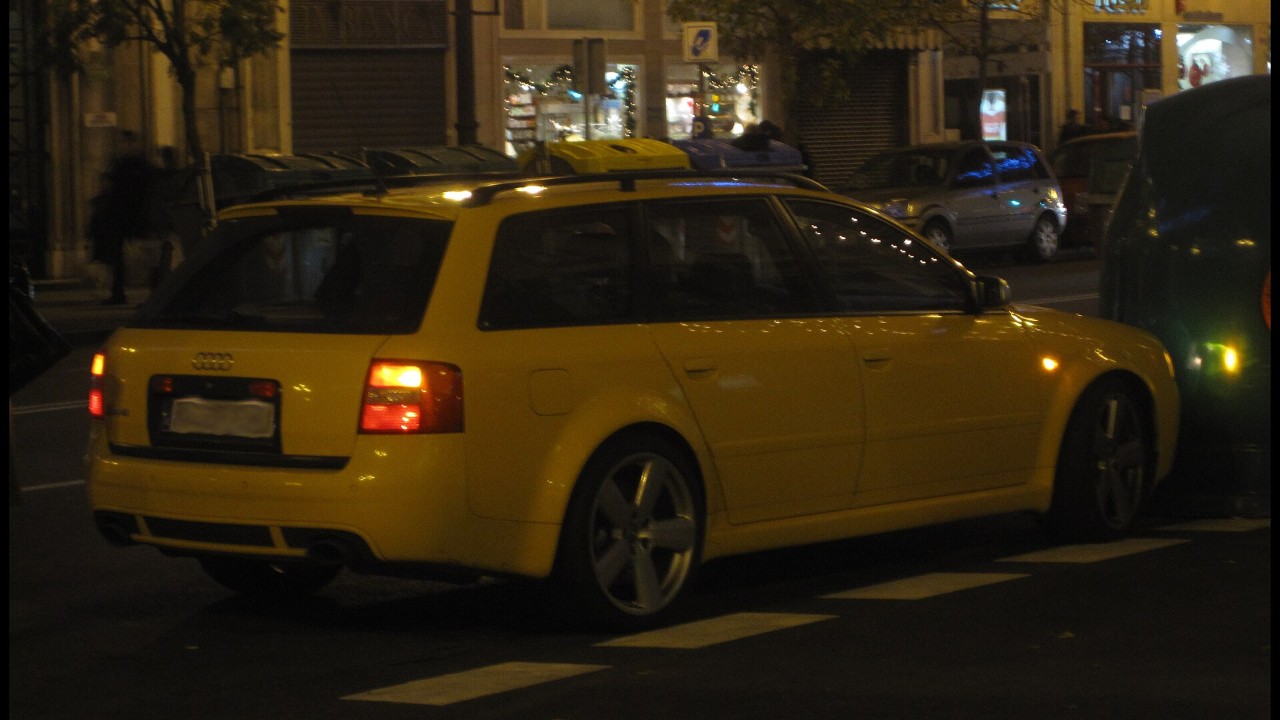
Audi built the first RS6 from July 2002 to September 2004, and the Avant wagon reached the market before the sedan. Its 4.2-liter V8 used two turbochargers to make 450 PS, or 444 bhp, with 560 Nm of torque. Cosworth Technology in England helped develop and build the engine with quattro GmbH in Germany.
The C5 RS6 was the first Audi RS model exported to North America. It also debuted Audi’s Dynamic Ride Control, which uses a pump to add pressure to individual dampers and cut body roll and pitch. Its known weak point is that those dampers can leak fluid and fail. Practicality was real, though. The Avant held 455 to 1,590 liters of cargo, and it still reached 200 km/h in 17.8 seconds.
Our take: this is the wagon that taught Audi how to build a family supercar. Late in the run, the RS6 Plus raised output to 480 PS, and Audi built only 999 of them, all Avants for Europe. If you shop for one, check the Dynamic Ride Control dampers first, because leaks are the system’s known weak spot.
12. 2007 BMW M5 Touring (E61)
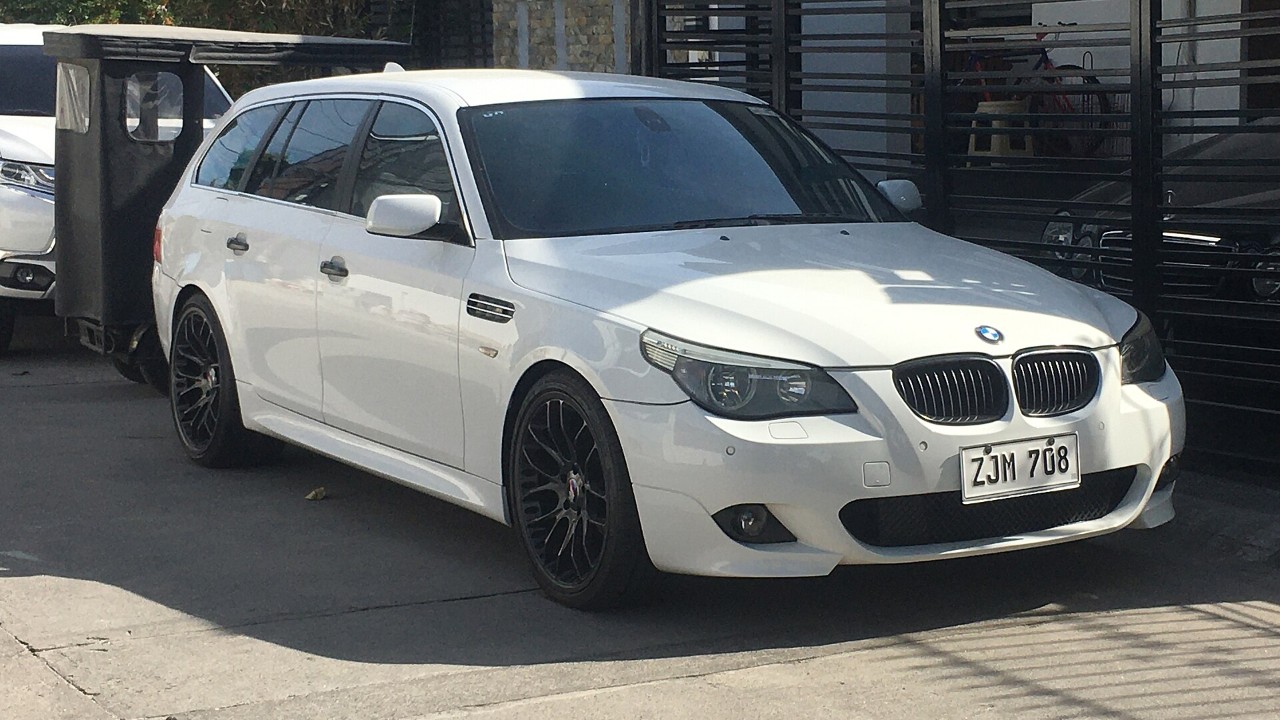
BMW’s M Division had built a wagon before. The E34 M5 Touring arrived in 1992 as a left-hand-drive car, and BMW made 891 of them. That made it the M Division’s first estate. The E60 generation followed in 2004, and the division tried again with the E61 Touring. This time, it fitted the same 5.0-liter S85 V10 that powered the sedan.
That engine made 507 PS, or 500 hp, at 7,750 rpm, plus 520 Nm of torque at 6,100 rpm. It drove the rear wheels through a seven-speed SMG III automated manual with paddle shifters. As a result, the M5 Touring was a family wagon with a high-revving V10. BMW sold it only in Europe, so it never reached American showrooms.
We think the E61 is the most unusual M car of its era. The V10 was a special engine, and BMW put it in very few long-roof bodies. If you live in North America, you would have to import one to own it. Out of 20,589 E60 and E61 M5s, BMW built just 1,025 Tourings.
More from Fast Lane Only