The AMC Matador Barcelona occupies a tiny but fascinating corner of 1970s American car culture, combining personal luxury styling with the contrarian instincts of American Motors Corporation. Collectors today are drawn to it precisely because it was built in small numbers at the very end of the Matador’s run, and because values still lag far behind more obvious muscle and luxury nameplates. Understanding when AMC produced the Barcelona editions, and how the market now prices them, is essential context for anyone considering a purchase or restoration.
Based on available production histories, the Matador itself ran through most of the 1970s, while the Barcelona package appeared only in the final years of the coupe’s life. That short window, combined with low surviving numbers, now shapes both the car’s rarity and its pricing on the classic market.
When AMC built the Matador and how the Barcelona fit in
The AMC Matador was introduced as a new line of mid and full size cars for the 1971 model year, replacing the Rebel and giving American Motors Corporation a fresh nameplate in a fiercely competitive segment. Production of what sources describe as The AMC Matador ran from 1971 through 1978, with sedans and wagons offered early on and a dramatically styled coupe arriving later in the decade. That timeline is important, because the Barcelona was not a standalone model, but a trim and appearance package layered onto the existing Matador coupe.
Reporting on the coupe’s special editions notes that AMC experimented with several upscale trims before settling on the Barcelona as the final flourish. One detailed account of the personal luxury variants explains that The Barcelona trim followed up for 1977 and 1978, rounding out the remainder of the Matador’s lifespan, and that Both of these years used the package to push the Matador upmarket in the Personal Luxury Coupe segment, a move that aligned with broader industry trends in the late 1970s. That same narrative places the Barcelona squarely in the last two model years of Matador production, which matches the broader AMC Matador production window that ended after 1978.
The Barcelona years: 1977 and 1978, with earlier roots
For collectors trying to pin down exactly which years AMC produced the Matador Barcelona, the most consistent evidence points to 1977 and 1978 as the official Barcelona model years. The personal luxury overview that tracks the coupe’s special trims states that The Barcelona trim followed up for 1977 and 1978, rounding out the remainder of the Matador’s lifespan, which means the package arrived only after earlier dress up versions had tested the market. In other words, if a car is described as a factory Matador Barcelona, it should be a 1977 or 1978 coupe, not an earlier sedan or wagon.
There is, however, some suggestion that Barcelona style cues or branding may have appeared slightly earlier in enthusiast circles. A dedicated community post refers to an AMC Matador Barcelona edition spanning 1974 to 1978, which hints at either dealer level packages, owner terminology, or a broader use of the Barcelona name than the two year factory window described in other reporting. Because that 1974 to 1978 range is not corroborated by the more formal production histories, I treat it as an enthusiast perspective rather than definitive proof of a four year factory Barcelona run. The most firmly supported conclusion is that AMC built the Matador Barcelona as a distinct, cataloged trim for 1977 and 1978, within an overall Matador production span that began From 1971 and ended after the 1978 model year.
How rare the Matador Barcelona really is
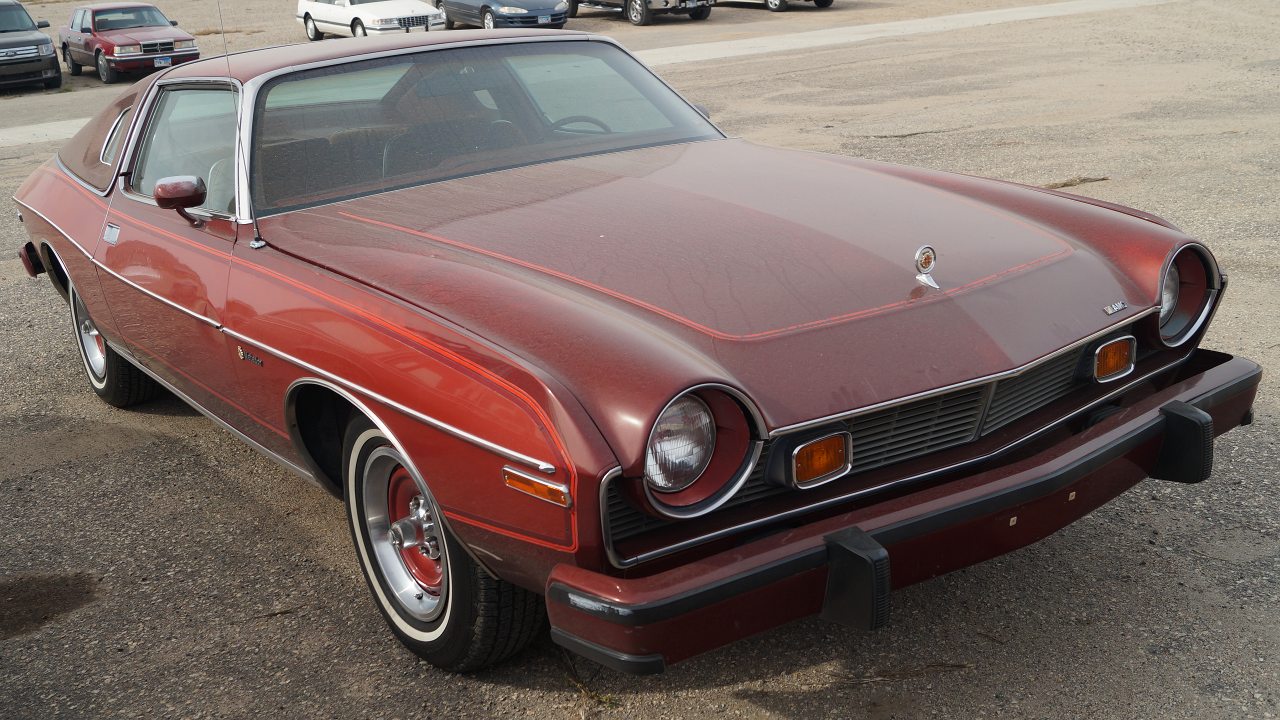
Rarity is a major part of the Barcelona’s appeal, and the numbers that surface in recent reporting underscore just how scarce these cars have become. A detailed look at a surviving 1978 coupe notes that production of that specification was limited enough that we are looking at fewer than 700 examples, and that many of them are no longer around. That figure is not presented as a full, audited production total for all Barcelona years, but it does give a sense of scale: even at the high end of that estimate, the Barcelona sits among the rarest AMCs ever produced.
Market tracking sites reinforce the impression of scarcity by how few Barcelonas appear in their databases compared with more common Matador variants. A broad overview of the AMC Matador market, which covers cars from 1971 to 1978, lists numerous sedans, wagons, and base coupes, but only a small handful of Barcelona tagged sales. One example is a 1978 AMC Matador Barcelona Coupe that appears in a set of Comps as a 1977 AMC Matador Barcelona, described as Original & Highly Original, with 92k mi, Automatic transmission, and a sale price of $12,000 on Jul 10 in Kissimmee, Florida, USA. The fact that a single Barcelona sale is singled out in this way, and that it is framed as one of the rarest AMCs ever produced, supports the view that genuine Barcelonas are thin on the ground compared with other 1970s personal luxury coupes.
Current collector values and recent sale benchmarks
Values for the Matador Barcelona sit at an interesting intersection of rarity and brand recognition. On one hand, the car is objectively scarce, with fewer than 700 examples cited for certain 1978 configurations and a short two year production window for the Barcelona trim itself. On the other hand, AMC does not command the same mainstream premium as period rivals from General Motors or Ford, which keeps prices relatively accessible. A valuation snapshot for a 1976 American Motors Matador 2dr Coupe with an 8 cyl 304cid/120hp 2bbl engine lists a benchmark of $9,800 and notes a 15.3% change, which gives a baseline for non Barcelona coupes in solid condition.
Against that backdrop, the documented Barcelona sale at $12,000 for an Original & Highly Original Automatic coupe with 92k mi shows that the special trim can command a modest premium over a standard Matador Coupe, but not an order of magnitude jump. Broader commentary on Matador pricing points out that even with the coupe’s outlandish looks and its appearances in cinema and on track, a clean example can still trade for what one source characterizes as a measly figure compared with more celebrated classics, a sentiment echoed in a Feb 3, 2021 analysis that frames the Matador as undervalued relative to its character. When I compare these data points, the pattern is clear: typical Matador coupes cluster around the high four to low five figure range, while Barcelonas, when they surface, edge higher but remain within reach of dedicated enthusiasts rather than speculative investors.
What drives demand for the Barcelona today
Demand for the Matador Barcelona is shaped by more than just production numbers and price guides. The car’s styling, especially in coupe form, is polarizing, which has long made it a “love it or hate it” proposition among collectors. A recent overview of the Matador Coupe’s place in the hobby, framed around the idea that collectors care regardless of public opinion, traces the Production Timeline for Matador Coupe Years and highlights how AMC used bold design and generous options like air conditioning and power windows to compete in the personal luxury space. The Barcelona package, with its distinctive color schemes and trim, sits at the top of that pyramid, which helps explain why it attracts attention even from people who might not normally seek out an AMC.
There is also a narrative element that boosts the Barcelona’s appeal. Enthusiast coverage of a surviving 1978 example emphasizes its link to NASCAR heritage and its status as one of the rarest AMCs ever produced, while earlier commentary from Apr 19, 2018 on the Matador’s baroque personal luxury variants underscores how The Barcelona and its sibling trims represented AMC’s final push to stay relevant in a crowded segment. When I put these threads together, the picture that emerges is of a car that sells as much on story as on specification: a short lived, highly styled package built at the end of The AMC Matador run, rare enough to stand out at any show, yet still priced in a way that rewards enthusiasts who appreciate American Motors Corporation’s offbeat approach to the 1970s coupe wars.