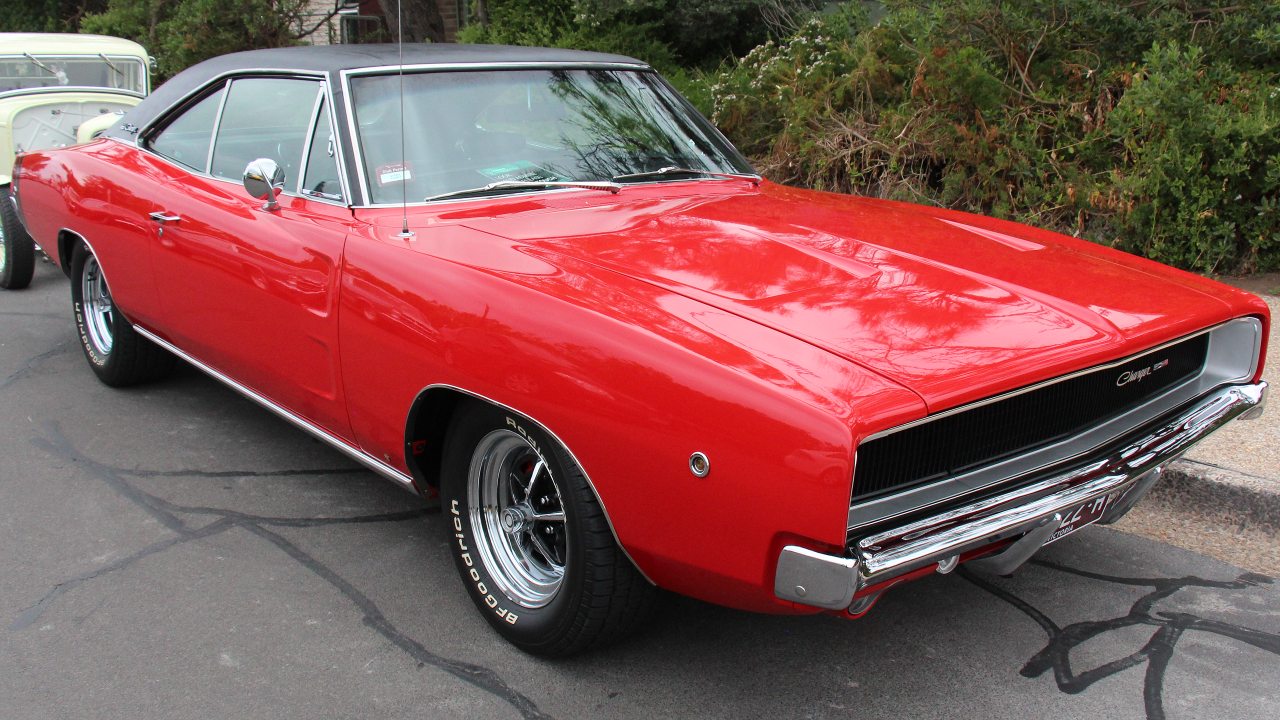
The Charger SE 383 arrived just as Dodge was reshaping its muscle car for a new decade, pairing luxury trim with big-block power at a moment when performance and insurance pressures were starting to collide. Understanding when that specific combination appeared, and how it fits into the broader Charger timeline, is essential context for anyone trying to judge what these cars are worth in today’s market. I want to trace that arc from the first big-block Chargers to the third-generation SE and then anchor it in current price data from recent sales and valuation tools.
From early big-block Chargers to the SE formula
The story of the Charger SE 383 really starts with the first big-block B-body fastbacks that put Dodge on the muscle map. By the late 1960s, the Charger name was already tied to serious power, with engines like the 440 M and the 426 that were marketed together as “Magnum and the” and “Hemi” options in performance trims of the Dodge Charger and Daytona. That pairing of upscale styling with serious displacement set the template for later luxury-oriented variants, even before the SE badge appeared. A first-year Year Dodge Charger with a 383, highlighted in one report as “This Rare First” example that “Is Too Cool” to “Go Unnoticed,” shows how quickly the 383 became part of the model’s identity, long before the SE package was formalized in the early 1970s, and underscores how central that displacement was to the car’s appeal.
By 1968 and 1969, the 383-powered Charger had become a core configuration rather than a niche choice, which is why modern pricing data for those cars is so useful as a baseline. A valuation snapshot for a 1969 Hardtop Coupe Charger lists a 2dr Hardtop with an 8-cyl. 383cid/290hp 2bbl in #3 Condition at exactly $47,100, and also tracks a higher output 8-cyl. 383cid/330hp 4bbl Hi-Perf version in the same body style. Another pricing tool that looks at a 1968 Dodge Charger 383 notes that “What” it is “Worth” can be inferred from 30 comparable sales, with a price range “from $38,475 – $69,699” for similar 383 cars. Those figures show that even non-SE 383 Chargers from the late 1960s now sit firmly in the serious-collector bracket, and they provide a useful contrast to the later SE 383 values that often come in lower despite the added luxury trim.
When the Charger SE 383 arrived
The SE badge, paired with the 383, is most closely associated with the third generation of the Charger, which arrived for the 1971 model year. One detailed listing notes that the 1971 model year introduced the third generation of the Charger, with styling changes that included a split grille and other visual updates that clearly separated it from the 1968–1970 shape. Within that new body, Dodge offered the Charger SE as a more upscale take on the familiar formula, and a specific 1971 Dodge Charger SE 383 is documented as a period-correct example of that configuration. The listing identifies it as a Dodge Charger SE, part of the Charger line, built in the 1970s, with American origin and located in the United States, and it confirms the 383 engine as the heart of the package.
Contemporary and later coverage of 1971 cars reinforces that the SE 383 was a product of a transitional moment in muscle car history. A feature on a survivor-grade 1971 Dodge Charger SE points out that “Even” though compression ratios started falling “in 1971,” the 383ci Magnum engine still produced “300” horsepower, a figure that kept the SE 383 competitive even as emissions and insurance pressures mounted. That same piece underscores how the Magnum branding tied back to the earlier 440 M and 426 Hemi era, even if the numbers were starting to slide. Taken together, these reports make it clear that the Charger SE 383 configuration was introduced with the third-generation Charger for 1971, combining the new body style with a 383 Magnum V8 and a more luxurious SE interior and trim package.
How the SE 383 fits into the broader Charger evolution
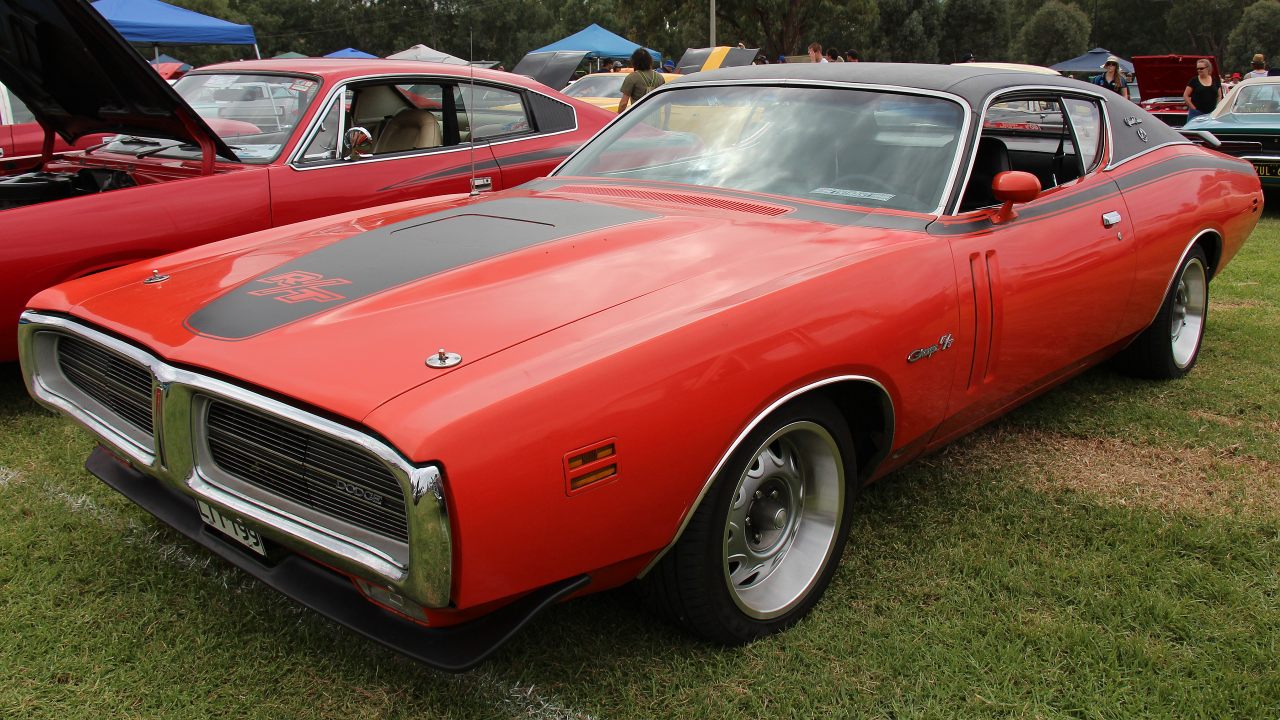
To understand why the SE 383 matters, I have to place it within the broader evolution of the Charger nameplate from the late 1960s into the early 1970s. Earlier coverage of Dodge Charger history notes that by the time the 1971–1974 cars arrived, the brand had already established a performance hierarchy that included the 440 M and the 426, with the “Magnum and the” and “Hemi” labels signaling serious intent on the Dodge Charger and Daytona. The SE 383 slotted below those top-tier engines but above the small-block options, offering a blend of usable torque and relative affordability that appealed to buyers who wanted comfort and style as much as raw quarter-mile numbers. In that sense, the SE 383 was a bridge between the stripped-down muscle of the late 1960s and the more personal-luxury focus that would define many American coupes as the decade wore on.
Survivor stories and enthusiast finds show how that positioning has aged. A social media post dated Sep 2, 2023 highlights a 1971 Charger SE 383-4 in its original “Curious” yellow paint, described as one of “Val”’s prize discoveries and a true “Barn” or garage find that needed careful recommissioning. The post identifies the car as a Charger SE and confirms the 383 engine, and the fact that such a car can sit untouched for decades and then be celebrated as a major find speaks to how the SE 383 has gained stature over time. Another feature on a mint 1971 Dodge Charger SE, again emphasizing the 300 horsepower output of the 383 Magnum “in 1971,” reinforces that these cars occupy a sweet spot: they are more refined than the earliest big-block Chargers but still carry enough performance and period-correct detail to satisfy serious collectors.
Current market values for 383-powered Chargers
Modern pricing for 383-powered Chargers splits along generational lines, with late 1960s cars commanding a premium and early 1970s SE models often trading for less, even when they share similar mechanical specifications. The valuation for a 1969 Hardtop Coupe Charger with the 8-cyl. 383cid/290hp 2bbl in #3 Condition at $47,100 shows how strong demand is for second-generation cars in driver-quality shape. When that same body style is paired with the 8-cyl. 383cid/330hp 4bbl Hi-Perf engine, the pricing climbs further, reflecting the market’s preference for higher output and more overt performance cues. The 1968 Dodge Charger 383 range, with 30 comparable sales indicating values from $38,475 to $69,699, confirms that first- and second-generation 383 cars have moved into a higher tier, especially when originality and documentation are strong.
By contrast, recent auction activity for 1971 Charger SE 383 examples suggests that third-generation cars still lag behind their late 1960s counterparts in headline prices, even as interest grows. One documented Auction Result for a 1971 Dodge Charger SE 383 shows a High Bid listed in USD at exactly $15,000, with the note “Reserve Not Met” and the status “Auction Ended,” which means the seller chose not to let the car go at that level. That figure, less than half of the $47,100 benchmark for a 1969 383 Hardtop in #3 Condition, illustrates the gap between second- and third-generation values. It also hints at a rising floor, because a no-sale at $15,000 suggests that owners of solid SE 383 cars now expect more, especially as awareness of their 300 horsepower output and relative rarity increases.
What the numbers mean for buyers and owners today
For anyone considering a Charger SE 383 today, the available data points to a market that still undervalues these cars relative to their late 1960s siblings, but that is slowly catching up as enthusiasts look beyond the most obvious icons. The documented 1968 Dodge Charger 383 range from $38,475 to $69,699 and the 1969 Hardtop 383 #3 Condition value of $47,100 show where the ceiling and midrange sit for earlier big-block cars. Against that backdrop, a 1971 Charger SE 383 that draws a High Bid of $15,000 in USD, even with the Reserve Not Met and Auction Ended outcome, looks like a relative bargain for buyers who appreciate the third-generation styling and the SE’s comfort features. Survivor stories like the Curious yellow Charger SE 383-4 “Barn” find and the mint 1971 SE with its 300 horsepower Magnum engine suggest that well-preserved examples are out there, and that they are increasingly being treated as significant pieces of the Charger story rather than mere curiosities.
From an ownership perspective, I see the SE 383 as a strategic middle ground. It carries the same 383 displacement that anchors so many high-value late 1960s Chargers, it benefits from the more refined interiors and options that came with the SE badge, and it still delivers the 300 horsepower output documented for the Magnum engine in 1971. At the same time, current pricing, as reflected in the $15,000 no-sale auction and the gap to the $38,475 to $69,699 range for earlier 383 cars, leaves room for appreciation if the market continues to reassess third-generation Chargers. For buyers willing to look past the most famous model years, and for owners who understand the historical moment when Dodge paired the SE trim with the 383, the numbers suggest that this is a car whose story, and value, are still being written.