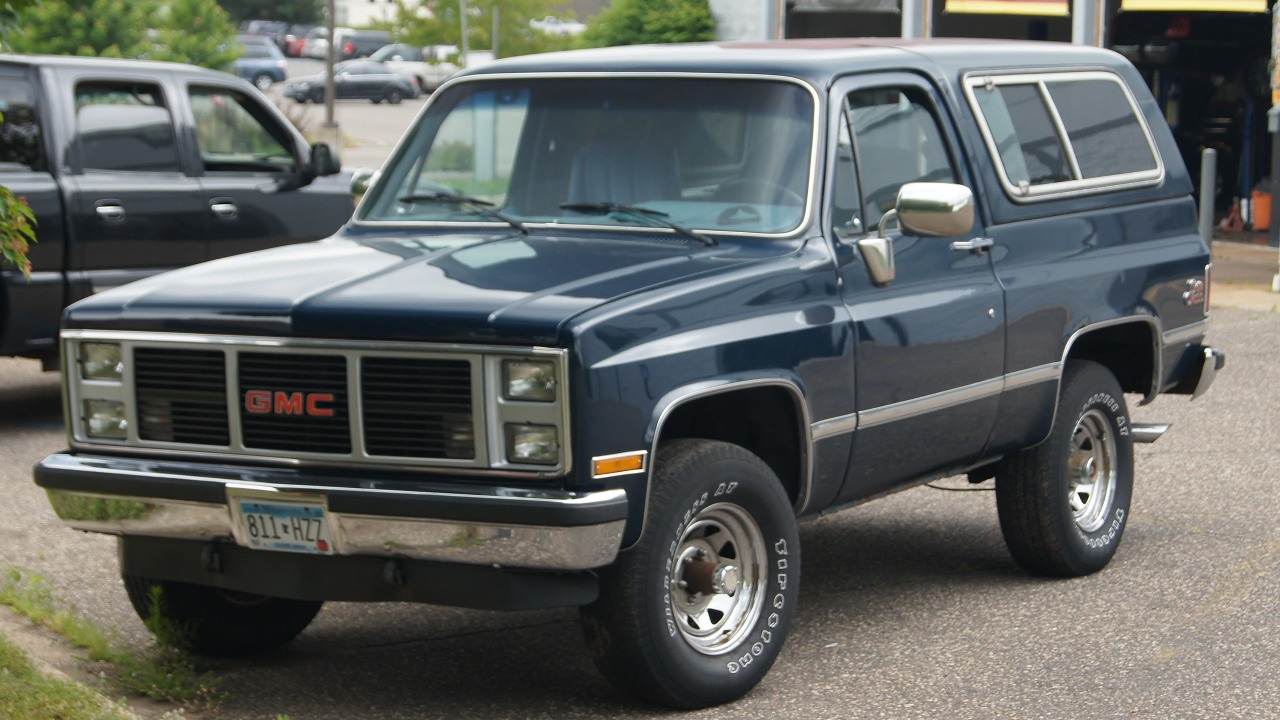
The GMC Jimmy High Sierra 4×4 sits at the crossroads of two powerful trends in the collector market: the rise of vintage SUVs and renewed interest in period-correct trim packages. To understand when this particular configuration appeared, and why values have sharpened in recent years, I need to trace the Jimmy’s evolution from upscale truck-based utility vehicle to blue-chip classic.
Looking at how the High Sierra trim fit into the broader Jimmy lineup also helps explain today’s pricing spread, from driver-grade trucks to carefully restored examples that command strong money at auction. The story starts in the early Sport Utility Vehicle era, then narrows to the late‑1970s window when the High Sierra badge became a key part of GMC’s 4×4 identity.
From early Sport Utility Vehicle to upscale sibling
The Jimmy arrived as GMC’s entry in the emerging Sport Utility Vehicle segment in 1970, built on the rugged truck underpinnings that defined the brand. Contemporary histories describe the introduction of the Jimmy in 1970 as a turning point, placing the model at the front of what was then called the Sport Utility Vehicle market and pairing a short wheelbase with the durability GMC was already known for. That early positioning as a purpose-built SUV, rather than a wagon derivative, laid the groundwork for later off‑road oriented trims like the High Sierra.
From the outset, the Jimmy was not just another truck, it was the upscale counterpart to the Chevrolet K5 Blazer. Period accounts of the first generation note that GMC Jimmy The Jimmy was introduced as an upscale version of the Chevy Blazer in 1970, sharing the same basic architecture but marketed as the more premium choice. Market data on The GMC Jimmy reinforces that identity, describing The Jimmy as an upmarket version of the Chevrolet K5 Blazer and tracking the model’s production run from 1970 to 1991. That combination of shared hardware and elevated positioning is exactly what later made a well‑optioned High Sierra 4×4 so appealing to buyers who wanted comfort and capability in one package.
How the High Sierra trim entered the Jimmy lineup
To pinpoint when the Jimmy High Sierra 4×4 appeared, I have to look at how GMC used the Sierra name before it became a standalone pickup model. In the late 1970s, Sierra denoted trim levels rather than a separate vehicle line, and by Oct 30, 2025, enthusiasts were still highlighting that history with references to a 1979 GMC Jimmy K-1500 “High Sierra.” That discussion notes that “High Sierra” was a mid-level trim option available for the 1979 Jimmy, confirming that by the 1979 model year the badge was firmly established on GMC’s full‑size SUV.
Factory literature for the 1979 Jimmy backs up the idea that High Sierra was more than just a nameplate. A period catalog describes the High Sierra instrument cluster, noting an INSTRUMENT CLUSTER High Sierra instrument clus- ter has bright finish with black trim, a detail that signals a more upscale interior environment than base models. Combined with exterior brightwork and additional comfort features, the High Sierra package turned a standard Jimmy into a more refined 4×4 without sacrificing its truck-based toughness. While the exact first year of the High Sierra trim on the Jimmy is unverified based on available sources, the documentation around the 1979 model year shows that by then the High Sierra 4×4 configuration was clearly part of the lineup.
What made a Jimmy High Sierra 4×4 distinct
Within the broader Jimmy family, the High Sierra 4×4 stood out as a well‑equipped, off‑road capable SUV that still leaned into comfort. The Jimmy itself was already positioned as an upmarket SUV, but the High Sierra trim layered on additional interior and exterior upgrades, from that bright-finish instrument cluster to more elaborate seat and door trim. The 1979 catalog’s focus on the High Sierra instrument cluster, with its specific bright finish and black trim, underscores how GMC used visual cues to signal that a High Sierra buyer was getting something more than a work truck.
Under the skin, the High Sierra 4×4 shared the same basic mechanical menu as other Jimmy models of the era, which, according to market overviews of The GMC Jimmy, included a range of naturally aspirated inline six and V8 engines over the course of production. Those summaries note that Over the course of production, a range of naturally aspirated inline six and V8 engines were available on both the First Generatio and later trucks, and that the Jimmy was eventually replaced by the GMC Yukon. In practice, that meant a High Sierra 4×4 could be ordered with a small‑block or big‑block V8, paired with a robust four‑wheel‑drive system that made the SUV as comfortable on a trail as it was in a suburban driveway. The combination of cosmetic upgrades and proven drivetrains is a major reason collectors now seek out High Sierra examples rather than base‑trim trucks.
Production era and generational context
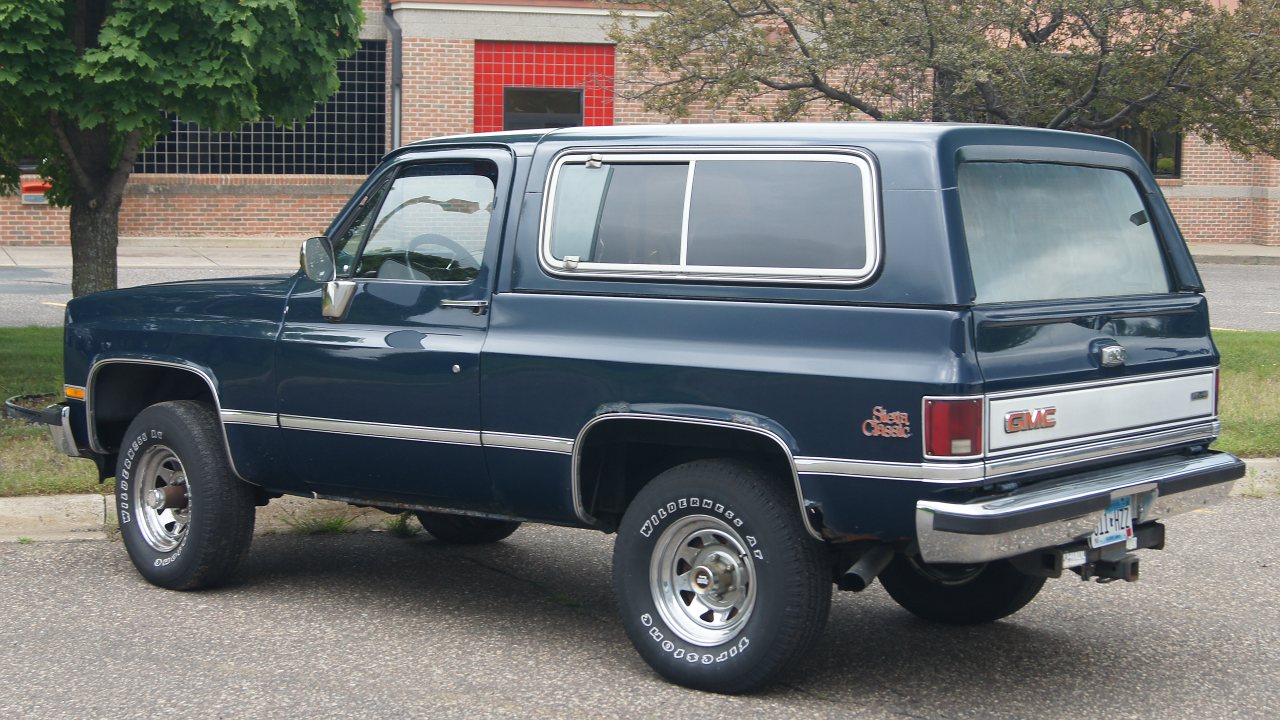
Understanding when the High Sierra 4×4 appeared also requires placing it within the Jimmy’s generational timeline. Market data on the GMC Jimmy – 1st Gen (1970 to 1972) shows that the first generation ran from 1970 to 1972, with a removable hardtop and a clear focus on open‑air recreation. That first wave established the Jimmy’s identity but predated the late‑1970s emphasis on more luxurious trim hierarchies. The High Sierra badge, as documented on the 1979 GMC Jimmy K-1500 “High Sierra,” therefore belongs to the later, more refined phase of the Jimmy story rather than the bare‑bones early years.
By the time the 1979 Jimmy 4×4 was on sale, the SUV market had matured, and GMC was leaning into the idea of a full-size SUV built for both rugged off-roading and everyday driving. A later enthusiast description of a 1979 GMC Jimmy 4×4 characterizes it as a full-size SUV built for both rugged off-roading and everyday driving, capturing how the model straddled utility and comfort. That same balance defined the High Sierra 4×4 configuration: it was still a body‑on‑frame truck with serious off‑road hardware, but it carried the kind of interior and exterior detailing that made it feel at home in a driveway next to luxury sedans. The High Sierra trim, in other words, reflects the moment when the Jimmy evolved from a simple Sport Utility Vehicle into a more broadly appealing family 4×4.
Collector values for the Jimmy High Sierra today
On the collector side, the Jimmy’s long production run from 1970 to 1991 means values vary widely by generation, condition, and specification. Aggregated auction data for The GMC Jimmy tracks the model as a whole, noting its status as an upmarket counterpart to the Chevrolet K5 Blazer and following sales across both early and later trucks. Within that broader picture, the High Sierra 4×4 occupies a sweet spot: it offers the classic square‑body look and analog driving experience that collectors want, while also delivering the comfort and visual flair that make a truck feel special on modern roads.
More granular valuation tools now break out specific configurations, including the 1979 GMC K1500 Jimmy High Sierra. In the Past sales section for that model, records show a 1986 GMC K1500 Jimmy Sierra that Sold for $24,937 in North America, and another 1985 GMC example that brought $26,400 on Nov 6, 2025. Those figures, both tied to Jimmy Sierra variants, illustrate how well‑optioned trucks with the Sierra or High Sierra trim can command mid‑five‑figure prices when they present well. The same valuation resource’s Common Questions section, which asks How much is a 1979 GMC K1500 Jimmy High Sierra worth, emphasizes that condition, originality, and documentation all play a major role in determining where a given truck lands within that range.
Why the High Sierra 4×4 is gaining attention
The renewed focus on the Jimmy High Sierra 4×4 reflects broader enthusiasm for vintage SUVs, but it also stems from the truck’s specific mix of usability and nostalgia. Enthusiast posts about a 1977 or 1979 GMC Jimmy 4×4 describe these trucks as loaded with options, exciting to drive, and powered by stout V8 engines, echoing the appeal that modern buyers see in them. One example from Jul 30, 2022 highlights a 1977 GMC Jimmy 1500 4×4 with a 400 V8 engine, underscoring how a well‑equipped Jimmy can still feel lively and capable decades after it left the factory. When that kind of mechanical charm is wrapped in the High Sierra’s brighter trim and more polished interior, the result is a truck that feels special without being fragile.
At the same time, the Jimmy’s role in the early Sport Utility Vehicle market gives it historical weight that newer SUVs cannot match. Histories that describe the introduction of the Jimmy in 1970 as a key moment in the Sport Utility Vehicle segment remind collectors that this was one of the foundational nameplates in the category. Later reflections on GMC, Jimmy The Jimmy, and its relationship to the Chevy Blazer reinforce that the model was always intended as an upscale choice, not a stripped‑down workhorse. For collectors who want a truck that helped define the SUV template and still looks at home in modern traffic, a well‑preserved Jimmy High Sierra 4×4 offers a compelling mix of provenance, drivability, and rising market recognition.