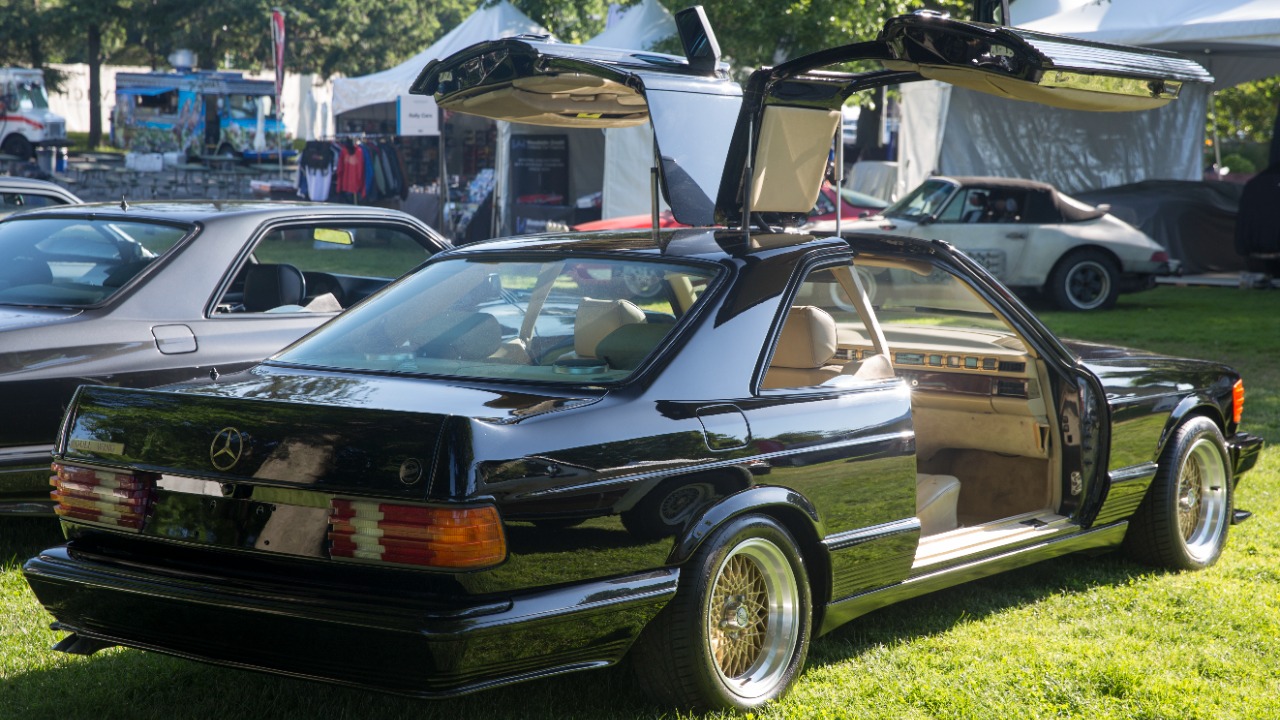
The early 1980s were not short on powerful coupes, but few cars projected authority quite like the 1983 Mercedes-Benz 500SEC. Long before performance badges and oversized screens became shorthand for status, this pillarless two-door managed to look both understated and unarguable, the kind of machine that told the world its driver had already arrived. I see that era as the moment when Mercedes wrapped its most serious engineering in a shape that could glide from boardroom to boulevard without raising its voice.
From sober sedan to power coupe
To understand why the 500SEC felt so commanding, I start with its roots in the W126 S-Class, a car engineered first for durability and safety, then for speed. In sedan form, the big chassis could be surprisingly modest, and the 380 SEL in particular left a lot of American drivers cold, with reports that, “However, American consumers found the 380 SEL severely underpowered with slow acceleration (0–60 mph in 11 seconds)” compared with what they expected from a flagship, a frustration that helped fuel demand for stronger engines and even grey-market imports of higher-spec models, as documented in the broader W126 history. The 500SEC answered that complaint by taking the same platform and giving it a muscular V8, a shorter wheelbase, and a more intimate cabin, turning the S-Class from a chauffeured office into a car you actually wanted to drive yourself.
What fascinates me is how deliberately Mercedes separated this coupe from the sedans without losing the sense of gravitas. The SEC body style arrived as a clean-sheet two-door, not just a sedan with fewer doors, and it was marketed as a more exclusive grand tourer that still carried the full weight of the brand’s engineering reputation. Later retrospectives describe how it was positioned as a car that combined flagship technology with a rarer silhouette, a balance of comfort and presence that made the Mercedes C126 SEC feel like a reward for those who had already owned the sedans. In that context, the 500SEC was not just a faster S-Class, it was the one that signaled you were done riding in the back.
The SEC as a status symbol
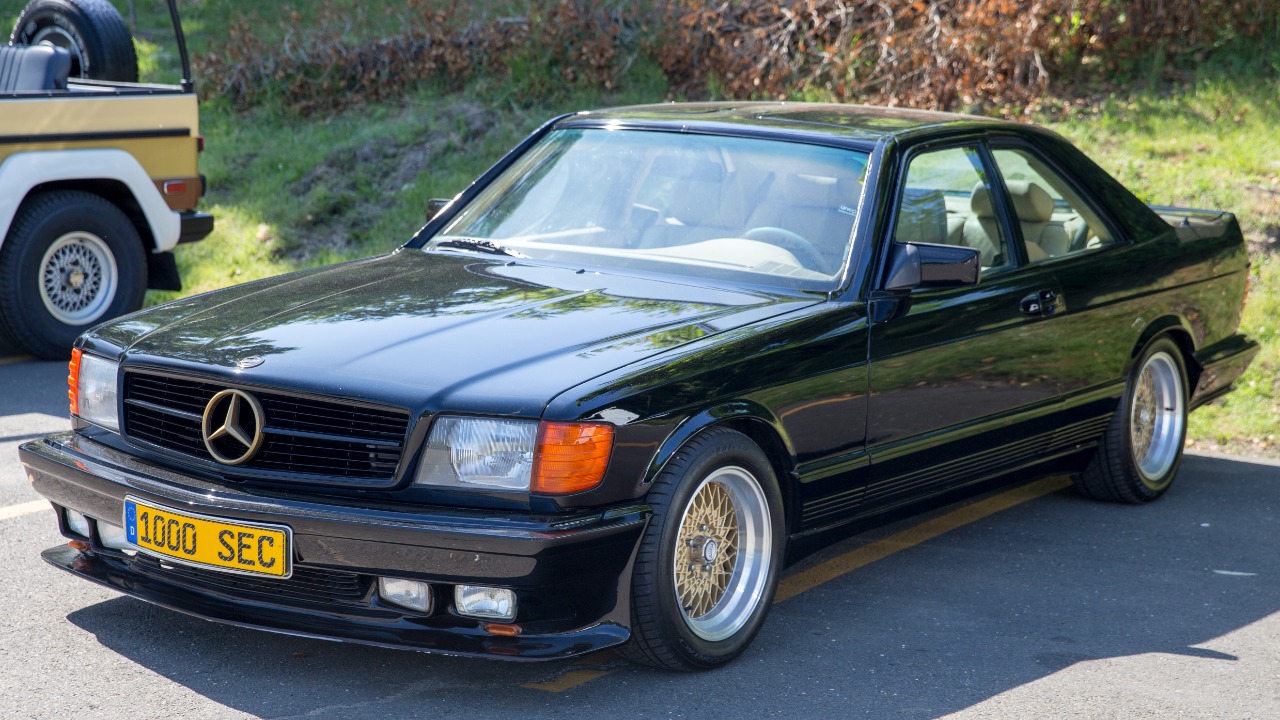
By the time the 500SEC arrived, Mercedes had already built a reputation for unburstable sedans, but this coupe added a layer of theater that made it a natural choice for people who needed to project control. The SEC was produced between 1981 and 1991, with a facelift in 1986, and at the time of introduction Mercedes-Benz rolled out a new fuel-injected V8 that gave the car the effortless stride its shape promised, a specification that period overviews of The SEC still highlight. At the top of the range sat the 560SEC, but the 500SEC hit a sweet spot, powerful enough to feel authoritative yet not so ostentatious that it shouted about it, which is exactly the balance that appealed to executives and officials who preferred their influence to speak quietly.
Even today, when I watch enthusiasts take these cars out, that aura is still there. In a recent drive clip, a presenter walks around a 1983 Mercedes-Benz 500 SEC finished in a sober color and treats it less like a classic toy and more like a dignified partner, noting how the car still feels composed and complete as it heads out for a morning run, a tone that comes through clearly in the Jan SEC drive footage. That kind of respect is not nostalgia alone, it is a recognition that the 500SEC was built to carry serious people, and that even decades later it still wears that responsibility in the way it sits on the road and the way its doors close with a bank-vault thud.
Peak Benz engineering in coupe form
When I look at the 500SEC as an object, I see what some commentators have called “peak Benz,” a moment when the company’s obsession with engineering quality was at its height and had not yet been diluted by cost-cutting or gadget overload. One detailed retrospective on a first-series 1983 car, described as “Our feature car is a first series model (1981-85), but the 500 SEC was carried over after the obligatory (but muted) facelift,” makes the case that this generation represented a high point in build quality and design restraint, with the same basic coupe shape and mechanical package existing for the entire production run, a continuity that the Curbside SEC profile underlines. That stability gave the 500SEC an almost institutional feel, as if it were less a model year and more a long-serving piece of infrastructure.
Under the skin, the numbers back up that impression of quiet capability. Period specifications list the Mercedes Benz W126 500 SEC with a top speed of 230 Km/h, or 143 m per hour, figures that put it firmly in the upper tier of grand tourers of its day while still leaving room for comfort-oriented suspension and thick sound insulation, a balance captured in the performance tables for The Mercedes Benz SEC. That combination of high-speed stability and unflappable refinement is what made the car feel so authoritative on the autobahn and on American interstates alike, the kind of machine that could cruise all day at speeds that would leave lesser cars feeling nervous.
AMG excess and the widebody myth
Of course, not every 500SEC was content to be merely dignified, and I am always drawn to the way AMG turned this already imposing coupe into something close to a supercar. Long before AMG became a fully integrated performance sub-brand, its workshops were taking big Mercedes coupes and giving them more power, louder exhausts, and dramatically flared bodywork, a transformation that later videos describe as pure 1980s excess, with one episode of The Next Big Thing explicitly calling out The Mercedes Benz 500 SEC AMG as a star of its Ep. 201, a pairing that the The Mercedes SEC AMG feature celebrates. Those cars took the underlying authority of the SEC and dialed it up into something closer to intimidation, the sort of presence that filled a rearview mirror and refused to leave.
The widebody conversions in particular have taken on a life of their own, and I find it telling that enthusiasts still single out the 500 SEC Widebody as an Iconic Supercar of its decade. One enthusiast video, framed around the idea of “Why The Mercedes 500 SEC Widebody was an Iconic 1980s Supercar,” leans into the way those cars combined massive fender flares, deep front spoilers, and serious engine upgrades to create a coupe that could hold its own with contemporary exotics, a reputation reinforced in the Why The Mercedes SEC Widebody Iconic Supercar discussion. When I connect that visual drama with the modern performance lineage that runs through today’s Mercedes-AMG models, it is clear that the 500SEC helped teach the brand how to mix luxury with overt power in a way that still feels aspirational rather than gaudy.
Grey markets, siblings, and lasting influence
Part of the 500SEC’s mystique, at least in the United States, comes from the way some of the most desirable versions arrived through side doors. Before official imports of the higher-output V8s were fully sorted, enthusiasts turned to so-called grey-market cars, including sedans like the 1983 Mercedes-Benz 500SEL that shared much of the coupe’s mechanical heart. Period commentary on that 500SEL notes how owners would often upgrade to 15” alloys in the same style available from the Mercedes-Benz Classic Center, while others settled for knockoffs from companies like Tire Rack, a detail that shows how even the four-door versions inspired careful attention to authenticity, as recounted in the 500SEL grey-market story. For me, that culture of importing and preserving the “right” specification underscores how strongly people felt about getting the full-strength V8 experience that the 500SEC embodied.
The coupe’s influence also stretches sideways into other 500-badged Mercedes that enthusiasts now treat as modern classics. The 500 E, for instance, has earned a reputation of its own, and contemporary summaries point out that, “Because of its appearance, limited numbers, hand-built construction, and unique pedigree, the 500 E is already considered a ‘modern classic,’ even within Mercedes-Benz,” a status that the Because of 500 E entry underlines. When I line up the 500SEC, the 500SEL, and the 500 E in my mind, I see a family of cars that taught Mercedes how to blend big-displacement authority with subtle design, a lesson that still shapes how the brand builds its most serious machines today.