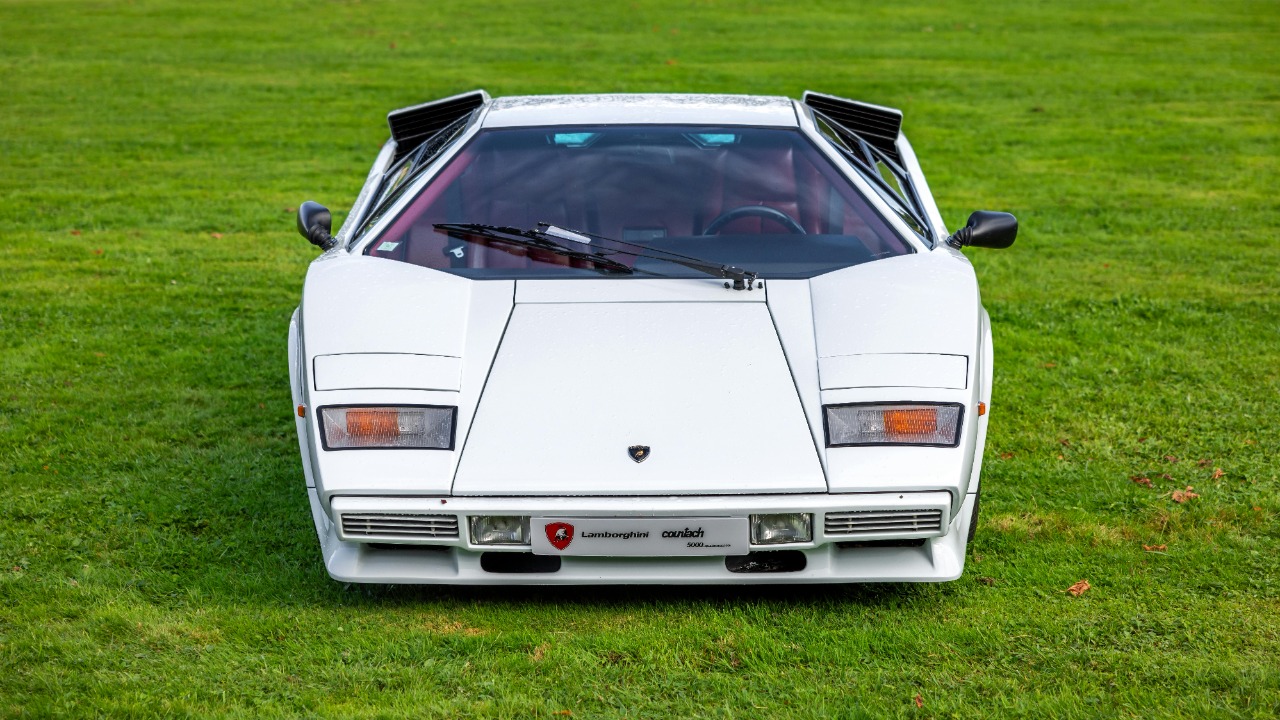
The 1986 Lamborghini Countach did not just flirt with excess, it treated restraint as an insult. By the time this wedge-shaped missile reached its 5000 QV form, it had evolved from radical concept to rolling spectacle, a car that turned every highway into a stage and every fuel stop into a crowd scene. I see that specific year as the moment the Countach stopped merely shocking people and started defining what automotive overindulgence could look and feel like.
To understand why, you have to look past the posters and the nostalgia and study how the Countach’s design, engineering, and cultural footprint all converged in the mid‑1980s. The 1986 car sat at the crossroads between the purer early versions and the even more outrageous late editions, capturing the decade’s appetite for power, drama, and attention in a single, unapologetic package.
The wild idea that refused to calm down
When I trace the Countach story back to its origins, I see a car that was never meant to be polite. The original LP400 arrived in the 1970s as a low, sharp wedge that looked like it had slipped out of a science‑fiction storyboard, the work of a designer who clearly had no interest in blending in. That designer was Designed Marcello Gandini of Bertone, the same mind behind the Miura and the Lancia Stratos, and his vision for the Countach was a flat, cab‑forward dart that made everything else on the road look old overnight. Even in its earliest form, the car’s scissor doors, periscope‑style roof channel, and impossibly low roofline announced that this was not just another fast coupe, it was a manifesto on wheels.
As the years went on, that manifesto only grew louder. Later versions layered on wider tires, flared arches, and towering rear wings until the car looked less like a clean design study and more like a cartoon drawn by someone who had been handed a blank check. A detailed Lamborghini Countach history shows how each generation added more vents, scoops, and displacement, turning the original LP400 into a family of ever more aggressive variants. By the time the 5000 QV arrived, the Countach had become a rolling argument that subtlety was overrated.
Why 1986 was peak Countach excess
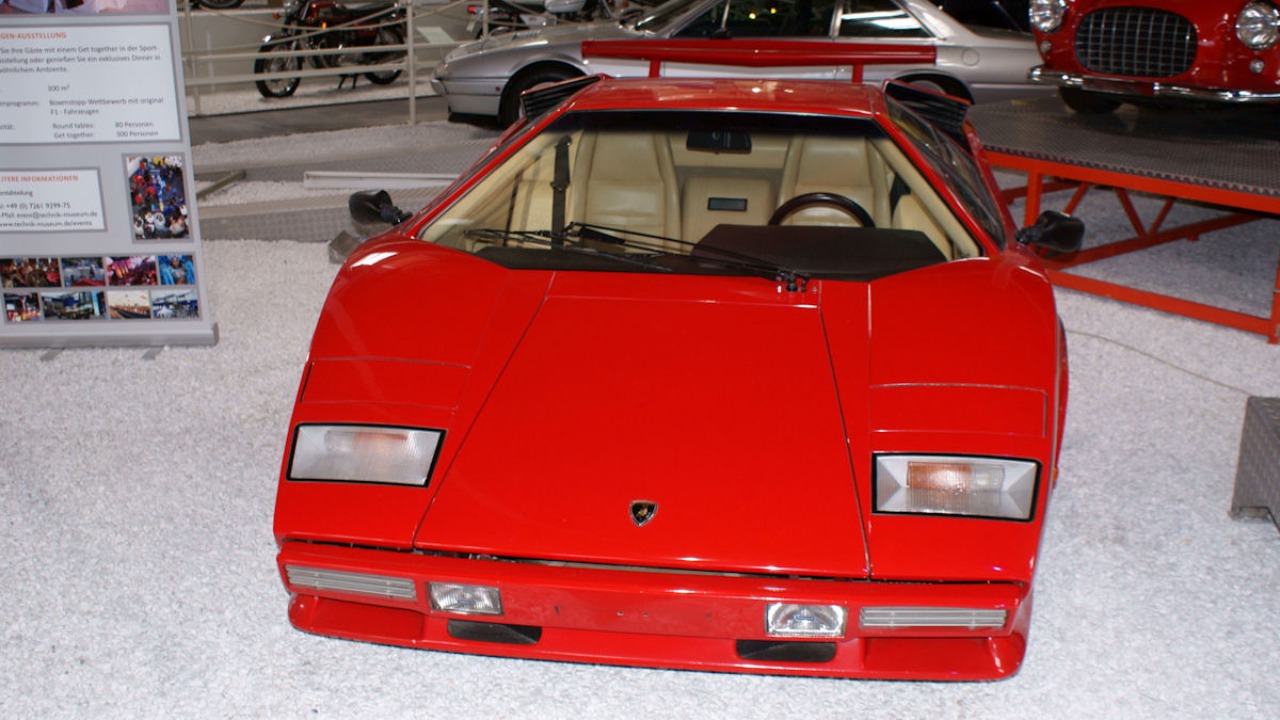
For me, the 1986 Lamborghini Countach 5000 QV is the point where that argument hit its loudest note. The “QV” stood for quattrovalvole, a reference to the four‑valve cylinder heads that helped the big V12 breathe harder and push power into territory that matched its visual drama. The bodywork had swollen into a wide, angular shell with deep side intakes and a rear wing that looked like it belonged on a race car, not a road‑legal machine. In period footage, including a MotorWeek test recorded 50 years after the Countach first shocked the world, the 5000 QV still comes across as barely contained energy, all sharp edges and mechanical noise.
Owners felt that difference too. One driver, DAVID WALTOS, described coming to the Countach after a Lotus and realizing that this car operated on a completely different emotional frequency. Where the Lotus was lithe and precise, the Lamborghini was outrageous, a machine that demanded attention and rewarded commitment. Hearing someone who already loved a Lotus talk about how the Countach felt “just so different” underlines how far into excess the 5000 QV had pushed the supercar formula by the mid‑1980s.
From bedroom wall to blacktop menace
By the time the 5000 QV was prowling city streets, the Countach had already conquered bedroom walls. I grew up seeing that silhouette on posters, often in bright red or white, parked in front of glass houses or neon skylines, a shorthand for success and rebellion in the same frame. That poster status was not accidental, it was the result of a shape that photographers loved and kids could sketch from memory, a wedge with a few key lines that instantly read as exotic. A deep dive into the car’s evolution notes how the Lamborghini Countach became a cinematic villain in its own right, with a menacing black LP400 S playing cat and mouse with Nevada Highway Patrol in a now‑legendary opening sequence that cemented its outlaw image.
On real roads, the 1986 car carried that same aura of mischief. The combination of low seating position, limited rear visibility, and a clutch that required real effort meant you did not simply commute in a Countach, you braced for it. Yet that difficulty was part of the appeal. The car made every mundane task feel like a stunt, from backing out of a parking space to merging onto a highway. When I watch period reviews and owner interviews, I see people who are not just driving a fast car, they are performing a role, and the 5000 QV’s swollen bodywork and booming V12 soundtrack give them the perfect costume.
Pagani, the 25th Anniversary, and the slippery slope of more
What makes 1986 so fascinating is that it sits right before the Countach took an even bigger leap into visual excess. A couple of years later, the factory introduced the 25th Anniversary Edition, a car that arrived with an even more elaborate restyle. Reporting on the model’s evolution notes that Arriving in 1988, the 25th Anniversary Edition Countach gained reworked body panels and additional aero pieces that pushed the design closer to the edge of caricature. Some of those changes came from a young talent who would later become famous in his own right, a reminder that even legends are constantly being reinterpreted.
That talent was Horacio Pagani, who was working for Lamborghini at the time and later became Pagani CEO and founder of his own hypercar brand. The 25th Anniversary Edition he helped shape is distinguished by unique front and side spoilers and modified air vents that make the car look even more aggressive than the 5000 QV. I see that later version as the Countach on its final lap of extravagance, while the 1986 car captures the moment just before the design tipped fully into self‑parody, still wild but not yet overwhelmed by add‑ons.
Why the 1986 Countach still feels like too much, in the best way
Looking back from today, when supercars routinely top 200 miles per hour and wear complex active aero, it might be tempting to see the 1986 Countach as quaint. I never quite get there. The car’s analog brutality, from its gated shifter to its unassisted steering, keeps it feeling raw in a way that modern performance machines rarely match. The fact that it traces its lineage to a concept shaped by Marcello Gandini of Bertone, the same creative force behind the Miura and Lancia Stratos, gives it a design pedigree that still commands respect in any company. When I imagine threading a 5000 QV through modern traffic, I do not picture it blending in, I picture it turning every smartphone camera in its direction.
That is why I keep coming back to 1986 as the year the Countach owned excess rather than being owned by it. The car was already a cultural icon, already a poster star, already a symbol of 1980s bravado, yet it still felt like a driver’s machine that demanded skill and rewarded nerve. Later versions and successors would chase higher numbers and more complex technology, but the 5000 QV sits at a sweet spot where outrageous styling, serious performance, and raw mechanical feel all intersect. In a world that often tries to smooth the edges off everything, the 1986 Lamborghini Countach remains a reminder that sometimes the most memorable experiences come from machines that refuse to apologize for being too much.