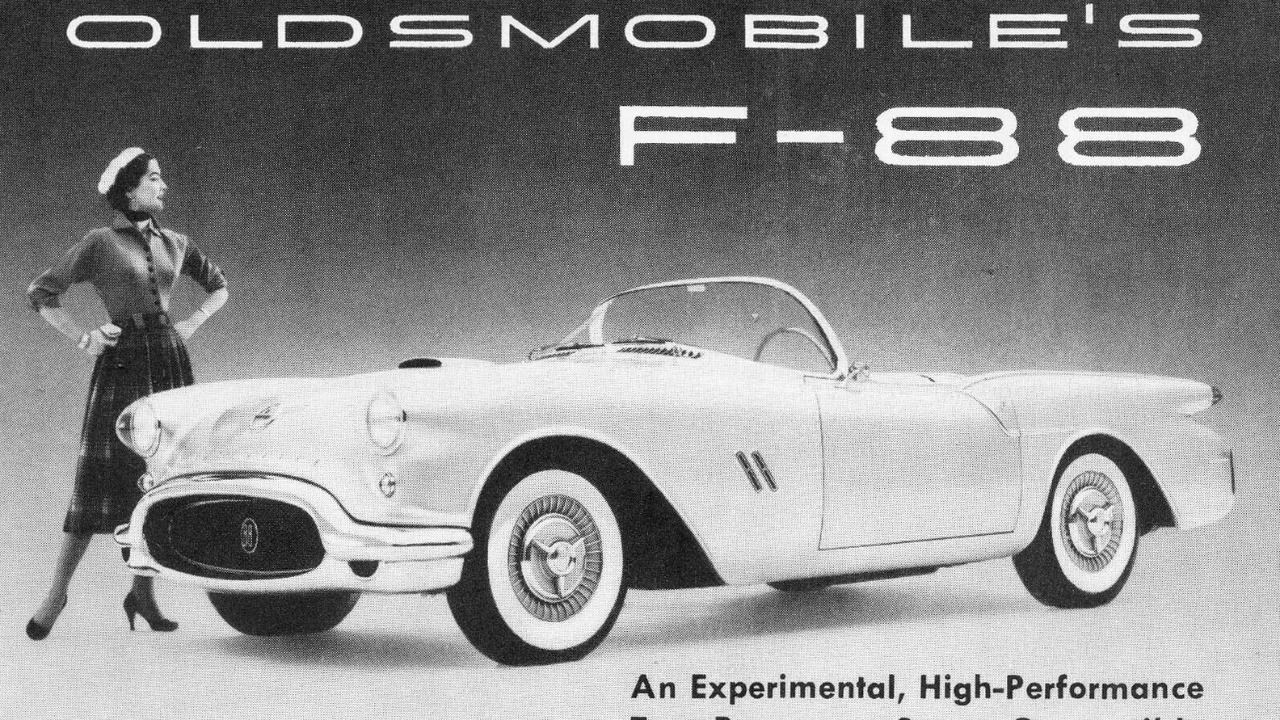
The 1954 Oldsmobile F-88 is a fascinating chapter in automotive history, celebrated for its innovative design and performance. Despite its initial promise, the F-88 seemingly vanished from the public eye for decades, raising questions about its legacy and the circumstances surrounding its disappearance.
The Birth of the F-88: A Revolutionary Concept
The Oldsmobile F-88 first emerged as a prototype in 1954, showcasing a design that was nothing short of revolutionary for its time. Crafted under the guidance of designer Harley Earl, the car featured a stunning fiberglass body that set it apart from the traditional steel constructions of the era. This approach not only contributed to the vehicle’s sleek aesthetics but also advanced the concept of lightweight construction in automotive design. The F-88’s exterior was a blend of curves and sharp angles, embodying the futuristic vision that defined many cars in the 1950s.
The automotive culture of the 1950s was characterized by a significant push toward innovation, with manufacturers vying to capture the imagination of consumers eager for new technologies and performance. The F-88 was positioned as a leader in this movement, integrating Oldsmobile’s vision of creating a car that would not only perform well but also look like something out of a science fiction movie. The introduction of the Rocket V8 engine, which provided impressive power for its time, further underscored Oldsmobile’s commitment to performance. This innovative engine was capable of delivering a thrilling driving experience, making the F-88 a promising contender in the increasingly competitive market.
The F-88’s Limited Production Run
Despite the excitement surrounding its debut, the production of the F-88 was alarmingly limited. Only a few prototypes were constructed, with estimates suggesting that as few as four to six units made it to the roads. The decision to restrict production was influenced by multiple factors, including market conditions and the overarching corporate strategy of General Motors during the mid-1950s. Executives were concerned about the economic viability of launching such a radical vehicle amidst an increasingly crowded automotive landscape.
This exclusivity has only fueled the desirability of the F-88 among collectors and automotive enthusiasts. The rarity of the model means that it has become a sought-after piece of automotive history, often fetching high prices at auctions and drawing significant attention at car shows. The F-88 stands as a symbol of what could have been, representing a bold vision that was never fully realized. Its limited production run has transformed it into a legend, celebrated for its design and engineering even as it remained largely absent from the market.
Corporate Decisions and Market Shifts
The corporate decisions made by Oldsmobile in the wake of the F-88’s introduction played a critical role in determining its fate. During the 1950s, the automotive industry was undergoing rapid transformation, marked by the rise of competition from both domestic and foreign manufacturers. To remain viable, Oldsmobile had to adapt its strategy, focusing on more mainstream models that appealed to a broader range of consumers. This shift in focus meant that innovative prototypes like the F-88 were left behind, as the company prioritized models that promised immediate sales and profitability.
Moreover, changing consumer preferences during this period influenced the fate of the F-88. As families sought more practical vehicles, and the market began to favor sedans and station wagons over sports cars, the demand for a high-performance vehicle like the F-88 waned. Financial considerations also played a role, as the costs associated with launching a new model were immense. Oldsmobile’s leadership ultimately decided to channel resources into vehicles with guaranteed sales potential, sidelining the F-88 as a prototype that would never see mass production.
The F-88’s Legacy and Rediscovery
For decades, the F-88 fell into relative obscurity, remembered only by a select group of enthusiasts and collectors. However, as the classic car movement gained momentum in the late 20th century, interest in the F-88 began to rekindle. Car shows and auto auctions became pivotal platforms for showcasing the surviving prototypes, reigniting the passion for this unique vehicle. The F-88 was not just a car; it was a part of a narrative that connected automotive innovation with nostalgia.
Notable restorations of the F-88 have helped solidify its place in modern automotive culture. Enthusiasts have worked tirelessly to bring these rare vehicles back to their former glory, showcasing the craftsmanship and performance that made them stand out in their era. The role of online communities and social media has also been significant in promoting awareness of the F-88, allowing fans to share their passion and knowledge about this extraordinary car. Groups dedicated to classic cars have proliferated, with platforms like Facebook hosting numerous discussions and posts about the F-88’s history and significance, allowing a broader audience to appreciate its legacy.
The Impact of Nostalgia and Collecting Trends
The growing interest in classic cars over the past few decades has been fueled in part by nostalgia, as many individuals long for the design and craftsmanship of vehicles from eras gone by. This emotional connection to the past has made cars like the F-88 increasingly popular among collectors. The car’s unique characteristics and limited availability contribute to its allure, as collectors seek vehicles that not only represent a bygone era but also serve as investments.
As trends in collecting have shifted, the F-88 has found a prominent place within this landscape. Classic cars are not just about transportation; they are symbols of history, culture, and personal identity. The emergence of online marketplaces and auction sites has made it easier for collectors to buy and sell rare models, including the F-88. Social media platforms have also played a crucial role in fostering communities of enthusiasts who share information, restoration tips, and stories about their experiences with classic vehicles. This interconnectedness has amplified the F-88’s visibility and helped it reclaim its status in automotive history.
The F-88’s Place in Automotive History
The story of the 1954 Oldsmobile F-88 is a compelling reflection of the tensions between innovation and market demands in the automotive industry. Despite its disappearance from the public eye for decades, the F-88 has left an indelible mark on automotive design and culture. Its unique combination of style, performance, and engineering serves as a testament to the bold vision that characterized the 1950s.
Looking at the F-88 today, we can appreciate it not only as a historical artifact but as a symbol of the potential that exists when creativity is allowed to flourish. The F-88’s legacy endures, not just through the few surviving models, but also in the ongoing conversations about automotive design and the importance of innovation in an ever-evolving market. The resurgence of interest in vehicles like the F-88 speaks to a broader appreciation for classic cars as vital pieces of our cultural heritage, inviting new generations to discover and celebrate what makes them special.
More from Fast Lane Only
- Unboxing the WWII Jeep in a Crate
- 15 rare Chevys collectors are quietly buying
- 10 underrated V8s still worth hunting down
- Police notice this before you even roll window down
*Research for this article included AI assistance, with all final content reviewed by human editors.