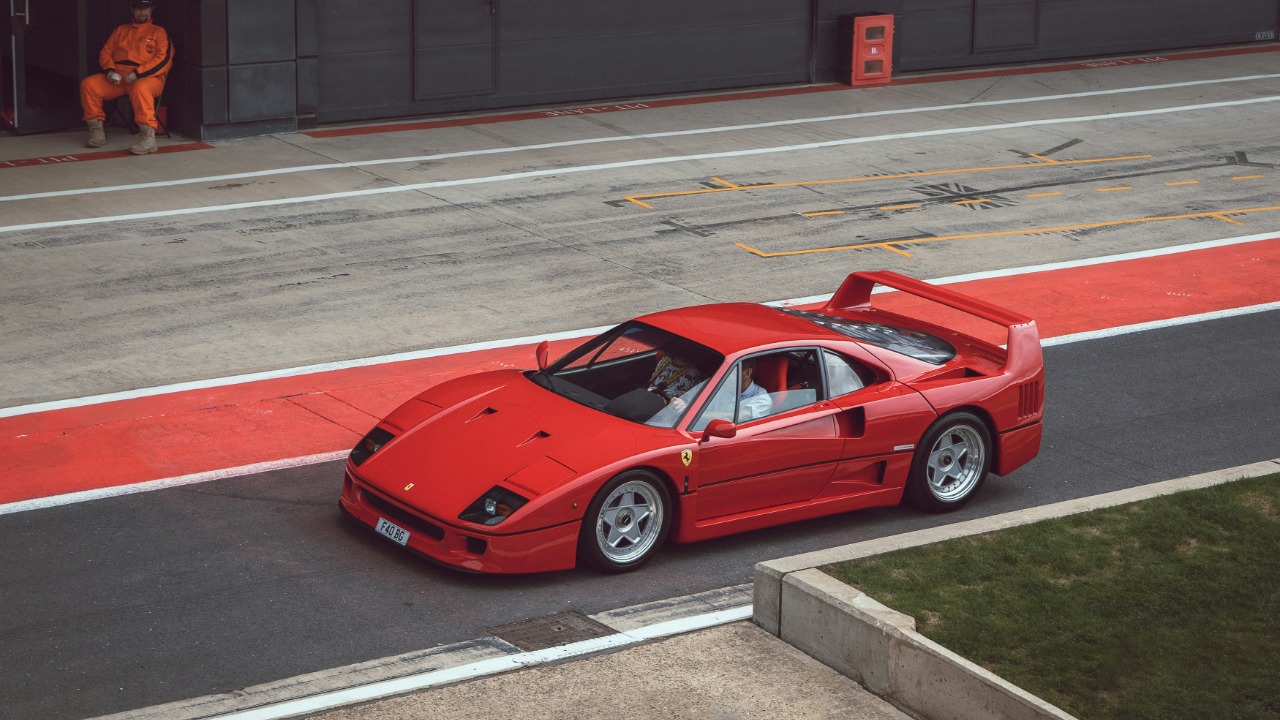
The Ferrari F40 arrived as a farewell statement to an era of raw, mechanical performance, yet it still feels illicitly fast in a world of launch-control supercars and semi-autonomous daily drivers. Its blend of stripped-back construction, explosive power delivery, and unforgiving dynamics means that, even today, it reads less like a collectible and more like a barely tamed racing prototype. I see the car’s enduring pull not as nostalgia, but as proof that genuine speed still feels a little dangerous when the engineering refuses to cushion the experience.
The last word from Enzo Ferrari
The F40 carries a weight that no amount of carbon fiber or horsepower can replicate, because it was conceived as the final road-going statement under Enzo Ferrari himself. That context matters: this was not a marketing exercise, it was a closing argument about what a supercar should be when the person whose name is on the nose is still dictating the terms. In that light, the car’s uncompromising stance, from its skeletal interior to its towering rear wing, reads as a deliberate refusal to soften the brand’s racing instincts, a point underscored in Ferrari’s own reflections on the model’s lasting legacy.
That sense of purpose is baked into the way the F40 looks and feels before the engine even fires. The bodywork is a study in function, with vents, ducts, and that vast rear clamshell all serving cooling and stability rather than ornament. Ferrari’s own description of the car notes how the F40 is presented as a machine that “clearly means business,” a phrase that captures the way its stance and proportions signal intent long before the turbos spool, a detail highlighted in the official account of Lasting Legacy and the thinking behind The Ferrari F40.
Design that prioritizes danger over comfort
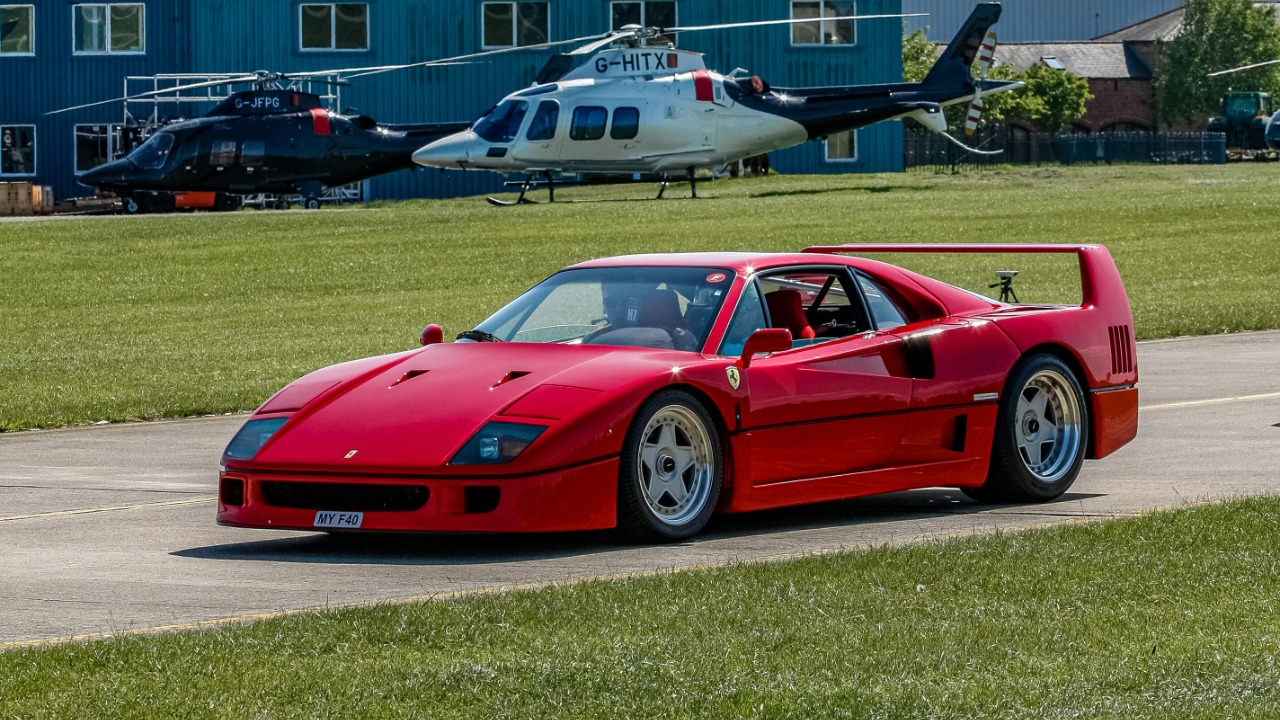
Modern supercars often work hard to hide their speed, insulating drivers with thick sound deadening, adaptive dampers, and a wall of software. The F40 does the opposite, and that is why it still feels transgressive. Its cabin is sparse, with exposed composites, simple pull cords, and thinly padded seats that leave little doubt about the car’s priorities. Contemporary analysis of The Design makes clear that Ferrari focused obsessively on purpose, stripping away anything that did not serve speed, and the statistics tell the same story of a car built to intimidate as much as impress.
That obsession with purpose extended to the way the F40 arrived at the end of the 1980s as a road legal machine that still behaved like a race car. It set a template for how enthusiasts talk about supercars today, not as rolling status symbols but as experiences that test skill and nerve. When I look at how How the Ferrari F40 is framed in retrospective analysis, The Ferrari is consistently described as a turning point that fused danger, speed, and attitude into a single, unapologetic package.
Turbocharged violence in an age of smooth power
On paper, the F40’s twin-turbo V8 might look tame next to today’s four-figure-horsepower hypercars, but the way it delivers that power is what keeps it feeling illicit. Below everyday revs, the car can seem almost subdued, which lulls drivers into a false sense of security. Then the turbos wake up. Detailed driving impressions describe how, Below 3,500 rpm, the F40 feels almost docile, the twin IHI turbochargers sitting quietly, and then, as boost builds, the acceleration becomes immediate and absolutely intoxicating, overwhelming the cabin with noise and thrust.
That surge is not just character, it is a genuine challenge, especially on imperfect roads. Critics have long pointed to the car’s notorious Turbo Lag, arguing that the gap between off-boost calm and on-boost violence makes the F40 harder to drive smoothly than its legend suggests. I see that criticism as part of the appeal: the delay, followed by a sudden wall of torque, forces the driver to anticipate rather than react, turning every hard acceleration into a calculated risk instead of a casual flex of the right foot.
Unfiltered dynamics in a filtered world
Where modern performance cars rely on layers of electronics to keep drivers safe, the F40 offers almost none of that mediation, and that is central to why it still feels like contraband speed. The car’s reputation for being challenging to drive is not internet folklore, it is documented reality. Period and modern accounts stress that it arrived Without traction control, ABS, power steering, or brake assistance, and that its difficulty stems from its turbocharged heart and the way that power meets a relatively light, stiff chassis.
In practice, that means the F40 demands constant attention, even at speeds that would feel routine in a modern sports car. There is no electronic safety net to catch a mid-corner lift or a clumsy throttle application as the IHI turbos come on song, and the steering and brakes require real physical input. I find that this lack of filters is exactly what makes the car feel so contemporary in spirit: in an era where algorithms smooth out almost every rough edge, the F40’s insistence on direct, analog feedback turns every drive into an event that commands respect rather than casual familiarity.
A legacy that still shapes Ferrari’s future
The F40’s aura does not exist in isolation; it continues to influence how Ferrari presents its road and race programs today. Official communications about the brand’s current range still lean heavily on the idea of top-tier performance and engineering purity, inviting enthusiasts to explore the top of the range through its flagship models. When I look at the way Ferrari talks about its latest cars, I see echoes of the F40’s ethos in the emphasis on lightweight construction, track-derived aerodynamics, and engines that prioritize response as much as raw output.
That continuity is especially clear in how Ferrari and its partners highlight ongoing advances in aerodynamics and chassis control, even in the context of Formula 1. Recent coverage of the SF-25 and its active aero front wing, which is set to be used officially from 2026 onwards, encourages fans who want to understand Ferrari and their commitment to automotive engineering to learn more via the company’s official channels. I read that as a straight line from the F40’s raw, purpose-built character to today’s data-driven aero experiments: the tools have changed, but the underlying obsession with speed has not.
Even away from the track, Ferrari’s own storytelling keeps the F40 front and center as a benchmark for what a serious performance car should feel like. The brand’s magazine pieces on Lasting Legacy and The Ferrari F40 do more than celebrate a classic; they frame it as a reference point for every subsequent halo model. When I compare that narrative with the way enthusiasts still talk about the car’s danger, speed, and attitude, I see why the F40 continues to feel like forbidden speed: it is not just fast, it is a reminder that true performance should unsettle you a little, even decades after the last example left Maranello.