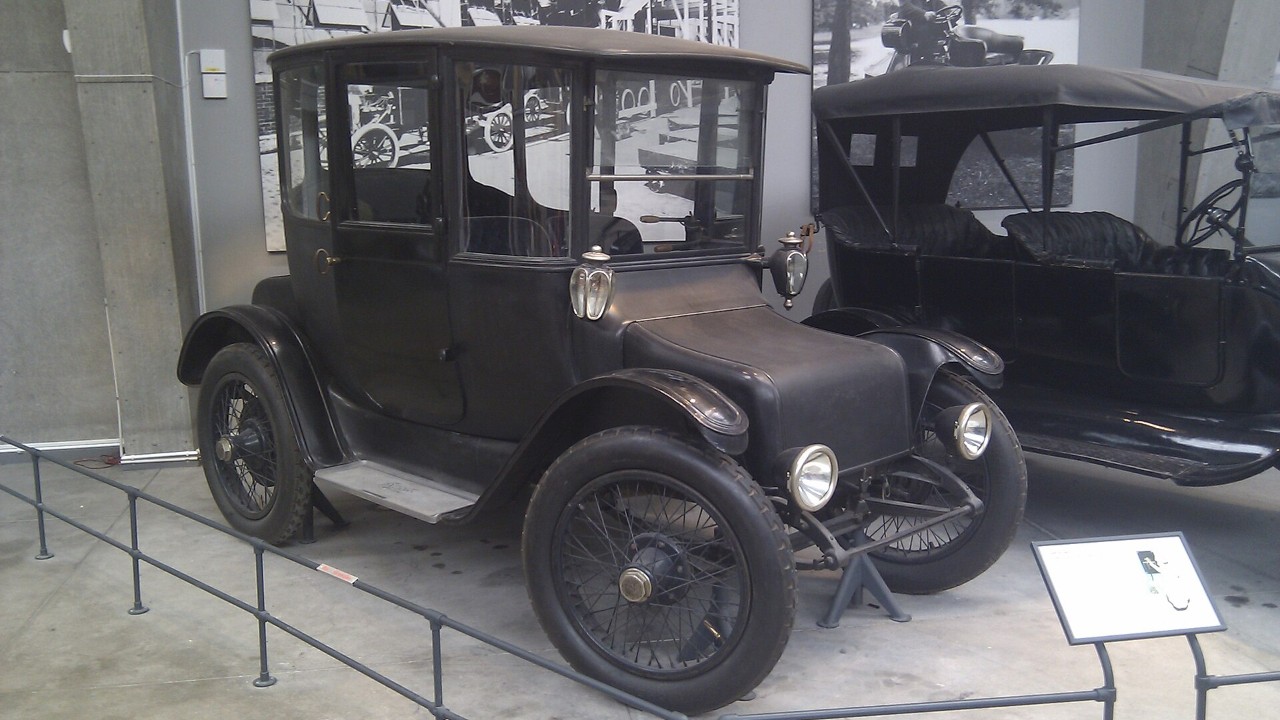
Clara Ford, the wife of Henry Ford, drove a 1914 Detroit Electric Model 47 Brougham. It cost $3,730 as outfitted, and she kept driving it into the 1930s. In other words, the woman married to the man behind the Model T chose a battery car from another Detroit company. Today, Clara Ford’s Detroit Electric sits in a museum that carries his name.
That museum is The Henry Ford. Its collection record calls the car the personal car of Clara Ford. It also gives the price, the battery pack and the weight in plain numbers.
Here is what she bought, why so many women of her day chose electrics, and what the car cost next to a Ford. Every figure comes from the museum’s records, Detroit heritage sources or the Fair Lane estate.
Clara Ford’s Detroit Electric, by the numbers
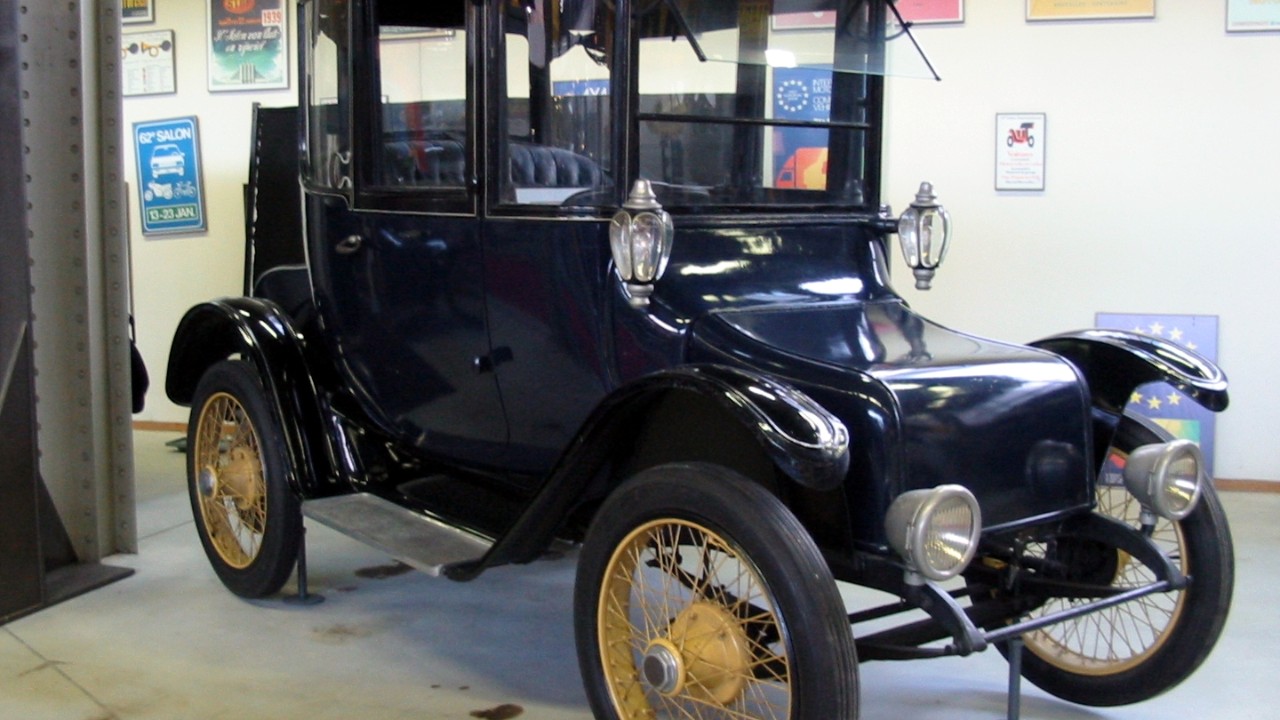
To begin with, the museum’s record for the car lists it as a 1914 Detroit Electric Model 47 Brougham. The Anderson Electric Car Company of Detroit built it. In fact, Detroit Electric was that company’s brand name, the record explains.
The car runs on 54 battery cells that together make 108 volts, according to the same record. Those batteries alone weigh 1,170 pounds. The body adds 2,466 pounds, so the whole car weighs 3,636 pounds. It rides on a 100-inch wheelbase and measures 142.5 inches long, 72 inches wide and 84.5 inches tall. As a result, it stands just over seven feet tall.
Why a Ford wife drove an electric
Before World War I, many women chose electric cars for practical reasons, the museum says. First, electrics started instantly, with no hand crank to swing. Second, they had no difficult-to-shift transmission.
Detroit Electric also sold to women directly. The superintendent of the Detroit Electric factory hired his daughter, Lillian Reynolds, to sell cars to women, the museum’s record says. One of her customers was Clara Ford. Mrs. Ford then drove this car into the 1930s.
The maker also kept in touch. In a museum set titled “Electric Cars for Well-to-do Women”, The Henry Ford shows a 1915 letter from Anderson Electric to Mrs. Ford. The company hoped she might suggest a few friends who wanted an electric car. The museum’s own caption says it plainly: “Surprisingly, Clara Ford — wife of Henry Ford — drove an electric car instead of a Ford Model T.”
A $3,730 car in a $550 Model T year
Above all, the price shows what Clara Ford’s Detroit Electric meant. The museum puts the average 1914 wage at $627 a year. At that rate, a worker would need about 5 years and 11 months of pay to buy this car.
By comparison, the museum lists a 1914 Ford Model T touring car at $550. That Ford used a 177-cubic-inch four-cylinder engine. It cost about 10 and a half months of the same average wage. In short, Clara’s electric cost more than six times as much as her husband’s best-known car.
Meanwhile, 1914 was a big year at Ford. The same record notes that Ford fully put its moving assembly line to work at the Highland Park plant that year. It also introduced the Five Dollar Day profit-sharing plan for its workers.
The company behind Detroit Electric
Detroit Electric grew out of a carriage business. William Anderson founded the Anderson Carriage Company in Port Huron, Michigan, in the 1880s to build horse-drawn vehicles, according to MotorCities National Heritage Area. Later, the firm moved to Detroit in 1895. Then, in 1907, it built the first Detroit Electric, and 125 cars left the plant that year.
In 1911, the business reorganized as the Anderson Electric Car Company, MotorCities says. Its customers included Clara Ford and Thomas Edison, a close friend of Henry Ford. Still, the electric market faded. The company went into receivership in 1929, and the last Detroit Electric left the plant in 1939, according to Sports Car Market. That same profile says Clara owned several Detroit Electrics rather than drive her husband’s product.
Charging at Fair Lane
The Fords’ home, Fair Lane, had its own powerhouse and garage. Thomas Edison joined Henry Ford there to lay its cornerstone, according to a Fair Lane restoration brochure. The estate is being restored to how it looked in 1919, the year Clara and Henry first lived there.
Part of that work is a modern touch with an old link. Soon, the restored garage will hold a working electric vehicle charging station. In fact, its planners placed it next to the spot where Clara Ford charged her Detroit Electric.
Where to see it now
Clara Ford’s 1914 Detroit Electric Model 47 Brougham is on view in the Driving America area of Henry Ford Museum, according to the museum’s record. The credit line reads “Gift of Henry and Clara Ford,” under object ID 38.372.2.
More from Fast Lane Only
- Unboxing the WWII Jeep in a Crate
- 15 rare Chevys collectors are quietly buying
- 10 underrated V8s still worth hunting down
- Police notice this before you even roll window down
This article was created with the help of AI and was reviewed and edited by Fast Lane Only editors before publication.