Hudson sold 4,508 cars in its first year, 1909, and finished 17th in the industry. Less than five decades later, on June 25, 1957, the last Hudson rolled out of the Kenosha, Wisconsin, plant. In between, Hudson built step-down sedans, NASCAR winners and solid, well-engineered Depression-era cars.
Most people today know just one Hudson, the Hornet, and mostly from racing history. That leaves a lot of good Hudsons hiding in plain sight. In our view, many of them deserve a closer look from the people who own them.
These are our picks for seven Hudsons that we think are worth more than most owners realize. Sometimes that means money. More often, it means engineering, history or a story worth telling. The verdict is our opinion, but the years, engines and sale results come from period specifications, collection records and auction listings.
1. 1930 Hudson Great Eight Model T coupe
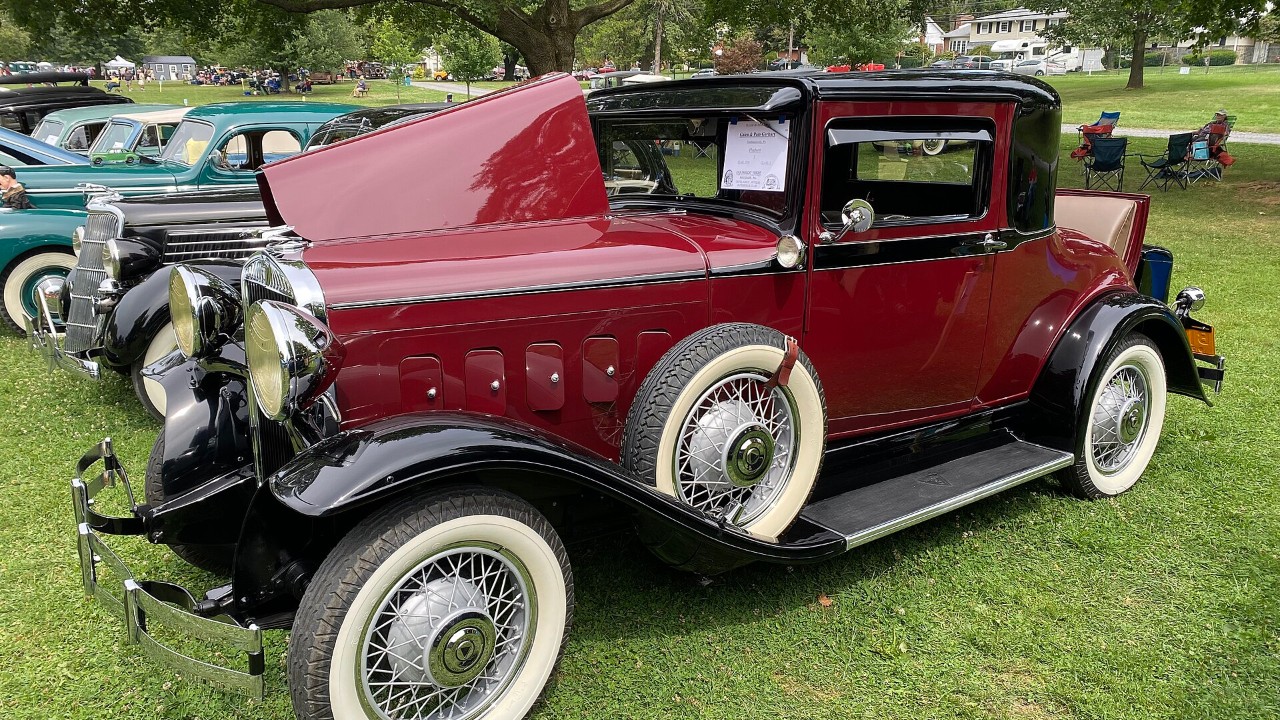
For 1930, Hudson dropped its old six and introduced a new straight-eight, the “Great Eight.” It made 80 horsepower at 3,600 rpm, and it weighed less than the engine it replaced. The Model T was the shorter-wheelbase version, riding on 119 inches. Hudson offered seven body styles that year, including a new two-door Sun Sedan.
The timing was terrible, though. According to conceptcarz’s model history, 1929 had been the company’s best year, with 300,962 shipments across Hudson, Essex and commercial vehicles. Then, in 1930, Hudson built 36,674 cars as the Depression hit, less than half its 1929 total.
That’s why we rate this coupe so highly. A 1930 Great Eight is the start of a straight-eight family that powered top Hudsons until 1952. It also survives from a year when few buyers could afford a new car. The Series T coupe that conceptcarz profiles also carries twin side-mounted spares, a period touch that looks great at any show. In our view, an owner holding one of these holds the opening chapter of Hudson’s best engine story. If you own one, keep its records together, because the early history adds real interest.
2. 1936 Hudson Model 67 touring sedan
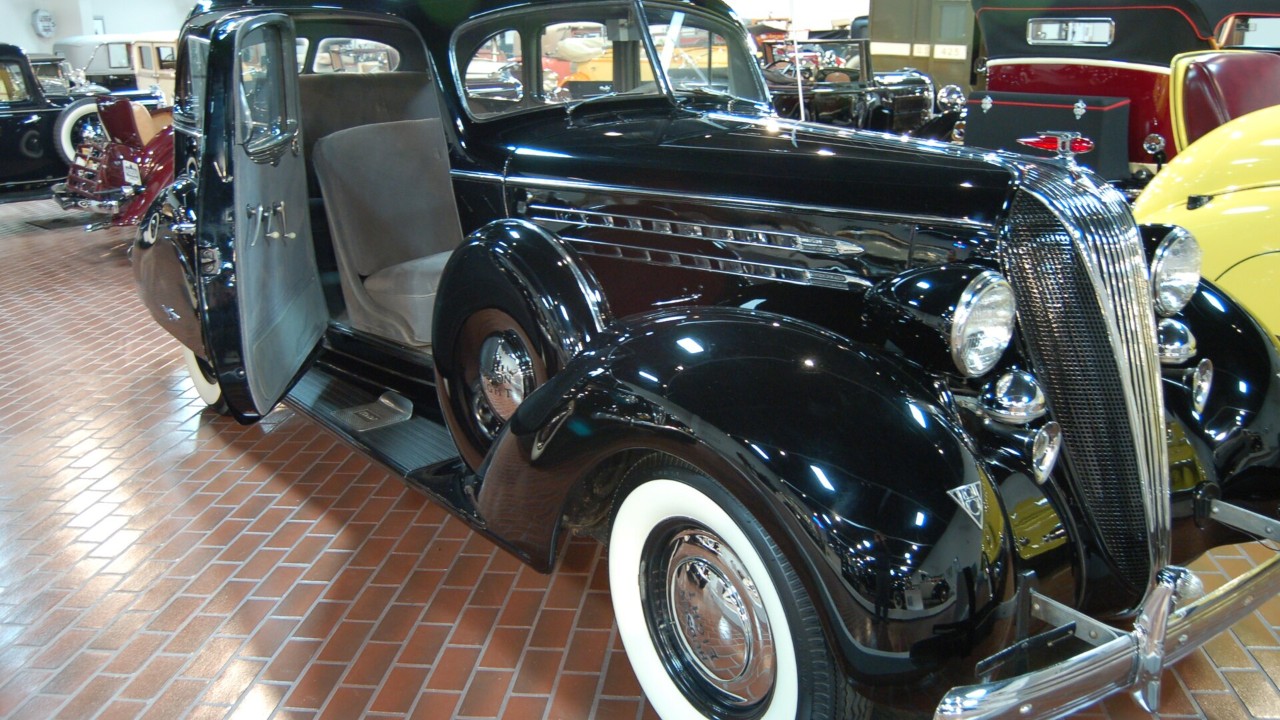
The Series 67 badge marked a 1936 Custom Eight. Under the hood sat a 254-cubic-inch L-head straight-eight rated at 113 hp. It rode on a 120-inch wheelbase. The Touring Sedan sat at the top of the Custom Eight price range at $975 when new. By comparison, the Business Coupe started at $845.
Hudson packed this car with ideas. Its front suspension used a system Hudson called “Radial Safety Control.” Buyers could also order the Electric Hand, a pre-selector for the three-speed manual gearbox. Meanwhile, Hudson built 25,409 vehicles in total for 1936, according to conceptcarz.
The car in our photo was shown at Hostetler’s Hudson museum in Shipshewana, Indiana. Hagerty described that museum’s collection as thought to be the largest and most complete of its kind. Later, Worldwide Auctioneers listed a Series 67 Touring Sedan in its 2018 Hostetler collection sale there. Our take: it’s easy to see a 1936 Hudson sedan as just another four-door. In fact, it is one of the more technically interesting American cars of its year. We’d show it with the Electric Hand working, because that one detail starts more conversations than chrome ever will.
3. 1940 Hudson coupe
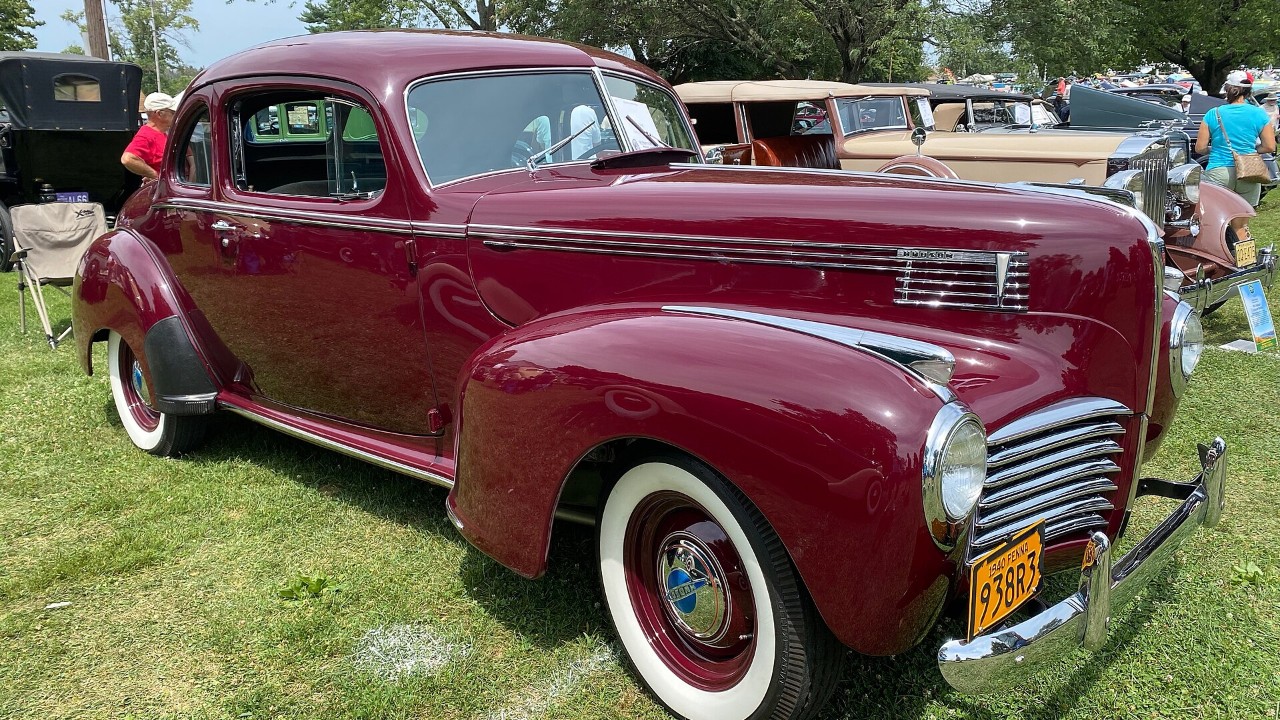
For 1940, Hudson gave its cars coil-spring independent front suspension, a real step forward for a mid-priced car. The Super Six name also returned. It used a 212-cubic-inch six rated at 102 hp, ten more than the regular Hudson Six, on a 118-inch wheelbase. A three-passenger coupe was one of its body styles.
Hudson also went looking for proof. After tests at Utah’s Bonneville Salt Flats, the 1940 Hudson Six was certified as the AAA economy and endurance winner. Hudson used that result in its ads, along with a starting price of $670. That’s according to Heritage Park’s notes on its 1940 Hudson, which has one on display.
We think the 1940 coupe is underrated for two reasons. First, it combines prewar styling with a modern front suspension, so it drives better than many owners expect. Second, a coupe is a desirable body style, yet it rarely gets the attention of a Packard or Cadillac of the same year. Our take: if you have a solid 1940 Hudson coupe, don’t treat it as a parts car. Instead, document it and drive it, because Hudson proved this car on the salt.
4. 1947 Hudson Super Six convertible
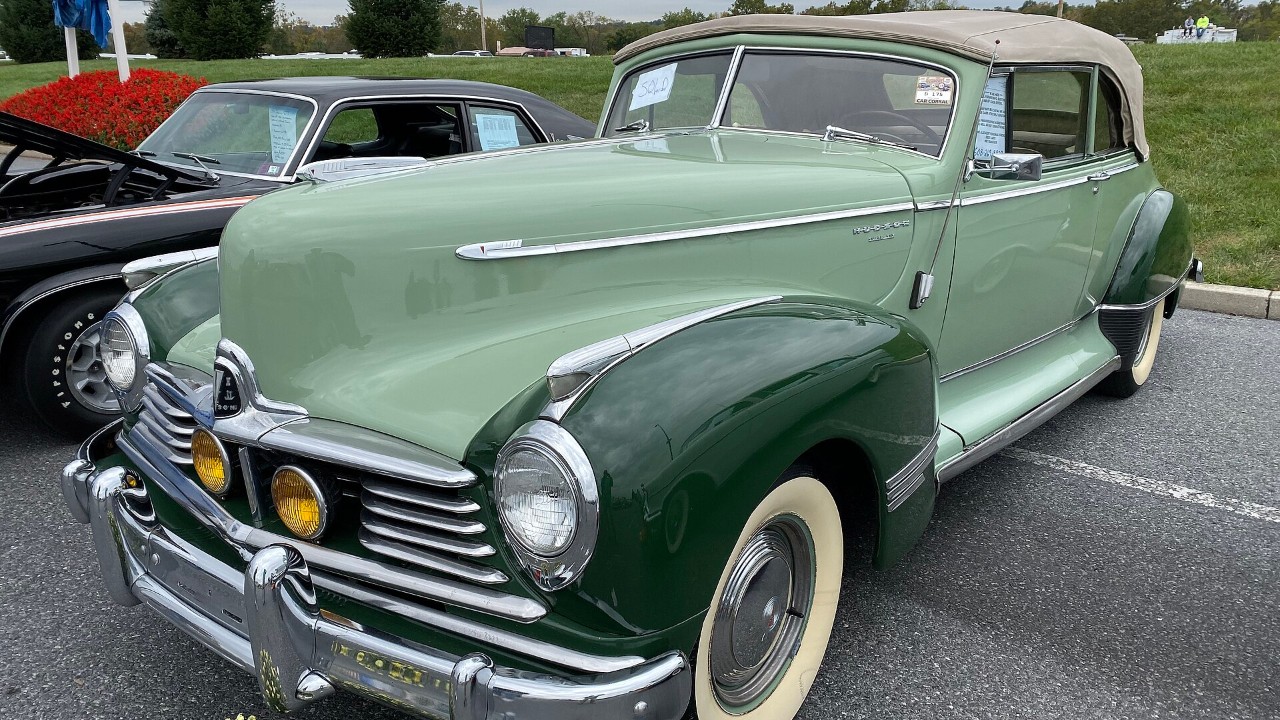
The 1947 Super Six used a 212-cubic-inch L-head six with a single Carter carburetor. All Hudsons by then shared a 121-inch wheelbase. Meanwhile, the company shipped 103,310 cars in calendar 1947, good for 11th place in American sales.
Hudson was also early to a new kind of marketing. In 1947, New York City Hudson dealers ran one of the first television advertising campaigns. Then, in November 1947, Hudson launched its step-down cars for 1948, which made the 1947 models the last of the older style.
That makes a 1947 convertible a final-year car, and that’s the hook we’d sell it on. Here are some numbers. According to conceptcarz, a 1947 Super Six convertible sold at a 2001 Kruse auction for $29,500. A 1947 Super Six Brougham from the Hostetler collection also sold for $22,000 at the 2018 Worldwide Auctioneers sale. Our take: an open Hudson from 1947 is a rare sight at most shows. If yours is complete, the top, trim and dash are worth far more than the effort it takes to keep them original.
5. 1949 Hudson Commodore Eight sedan
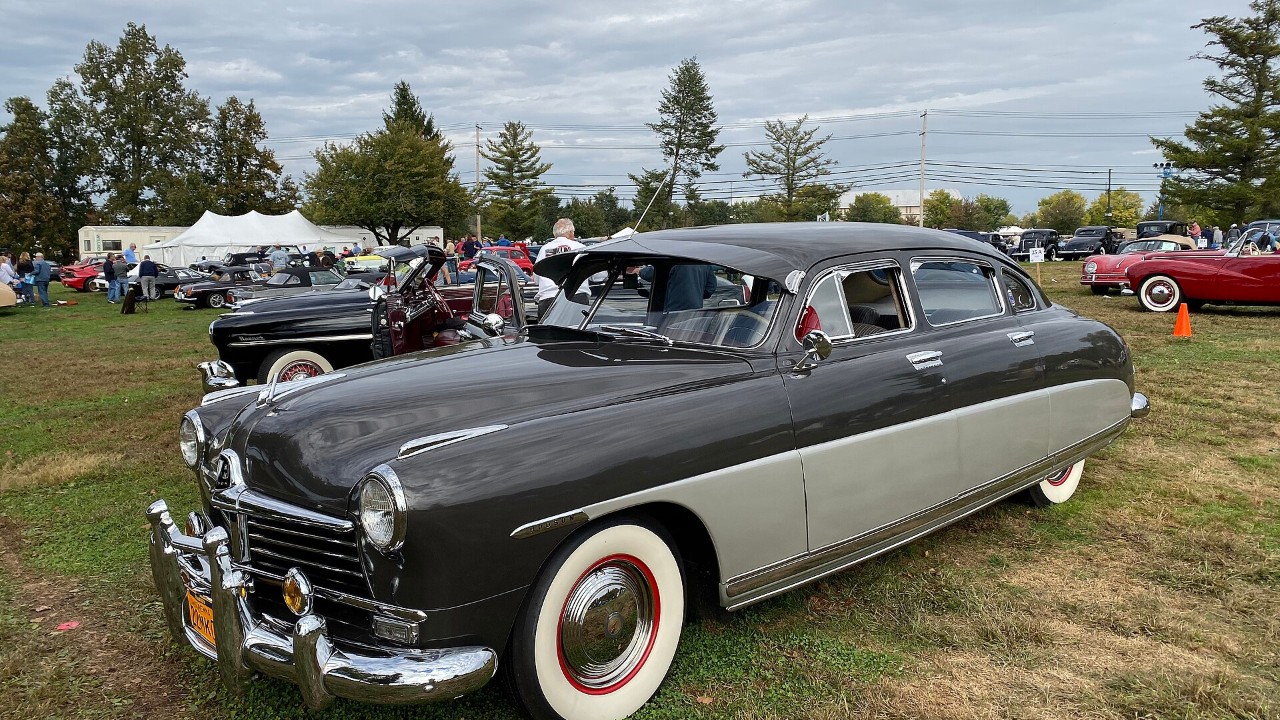
The Commodore was Hudson’s top step-down model. The step-down design put the passenger compartment inside the frame rails, so riders literally stepped down into the car. That lowered the center of gravity, and Hudson kept the design from 1948 through 1954. For 1949, Hudson added “Custom” trim to the Commodore line.
Under the hood of a Commodore Eight sat a 254-cubic-inch L-head straight-eight. Across the whole step-down run, Hudson built 62,474 Commodores, and 35,315 of them were eights. Standard equipment included foam rubber seat cushions and door-step courtesy lights. Overdrive for the three-speed manual cost $88 extra. We cover the engineering in more detail in our story on Hudson’s step-down design.
Our take: the Hornet gets the headlines, but the Commodore Eight was the luxury flagship of the same body. It also carries a straight-eight bloodline that started with the 1930 Great Eight. In our view, a four-door Commodore Eight is easy to undervalue simply because it is a Hudson sedan rather than a coupe. Yet it may be the most comfortable way to experience the step-down design.
6. 1956 Hudson Hornet sedan
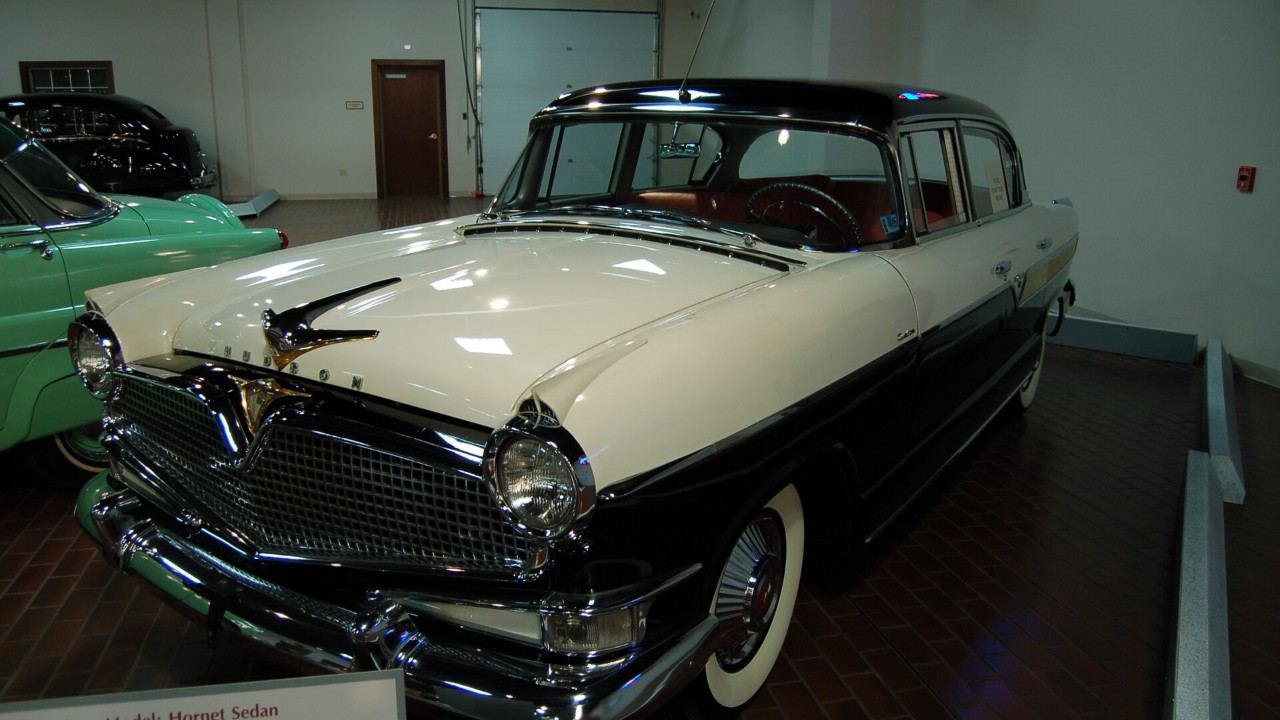
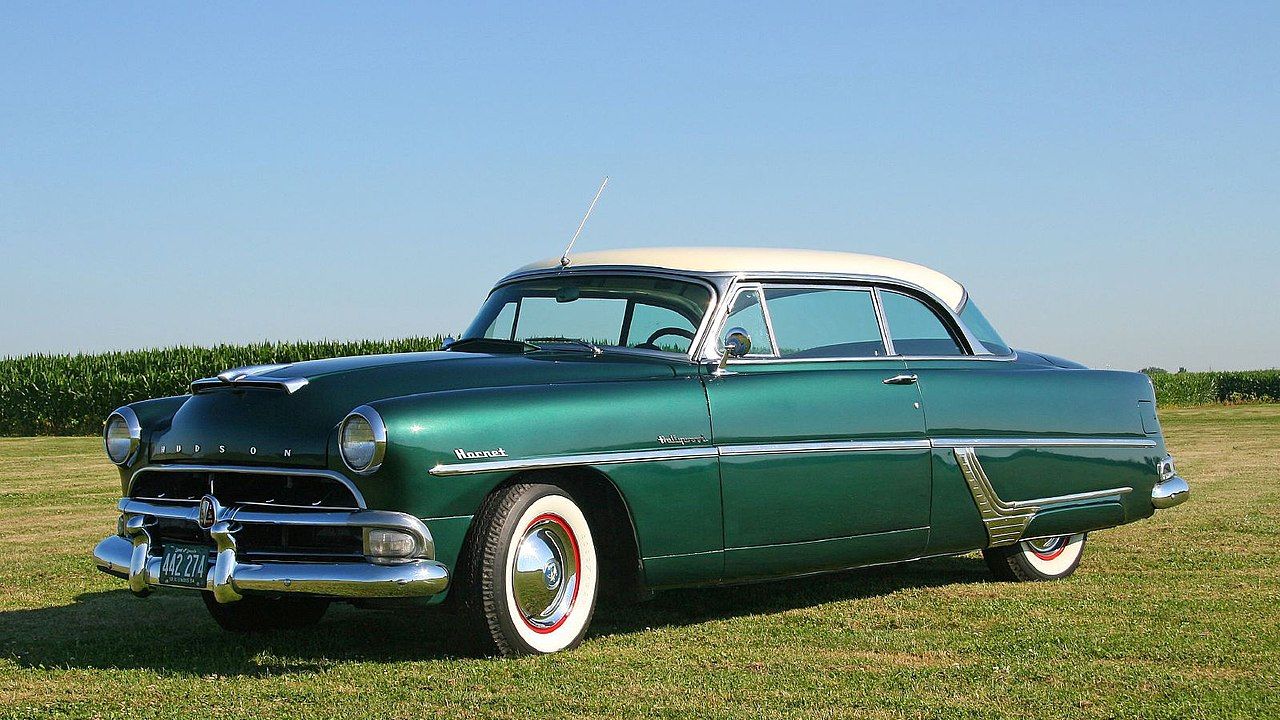
By 1956, Hudson had merged with Nash-Kelvinator to form American Motors, and production had moved to Kenosha. The Hornet now shared its body with Nash. However, it wore its own “V-Line” styling by Richard Arbib, with V shapes inside and out and, often, three-tone paint.
Engines varied through the year. The 308-cubic-inch Hornet six gained five horsepower for 1956, and a Packard-built 320-cubic-inch V8 was offered in the first half of the year. Then, mid-year, the cheaper Hornet Special arrived with AMC’s new 250-cubic-inch V8, rated at 190 hp. Hudson built 8,152 Hornets that year, and the four-door Hudson sedan accounted for 6,512 of them.
It’s easy to see these Kenosha cars as Nashes in disguise. We disagree. The V-Line look is bold, and the low production makes them uncommon at shows. Notably, Hagerty’s visit to Hostetler’s Hudson Auto Museum found that its display ran from a 1909 Model 20 to a 1956 Hornet. Our take: if a museum dedicated to Hudson chose a 1956 Hornet as its closing car, owners shouldn’t sell theirs short. For more on Hudson’s racing side, see our list of forgotten Hudsons that outran their class.
7. 1957 Hudson Metropolitan hardtop
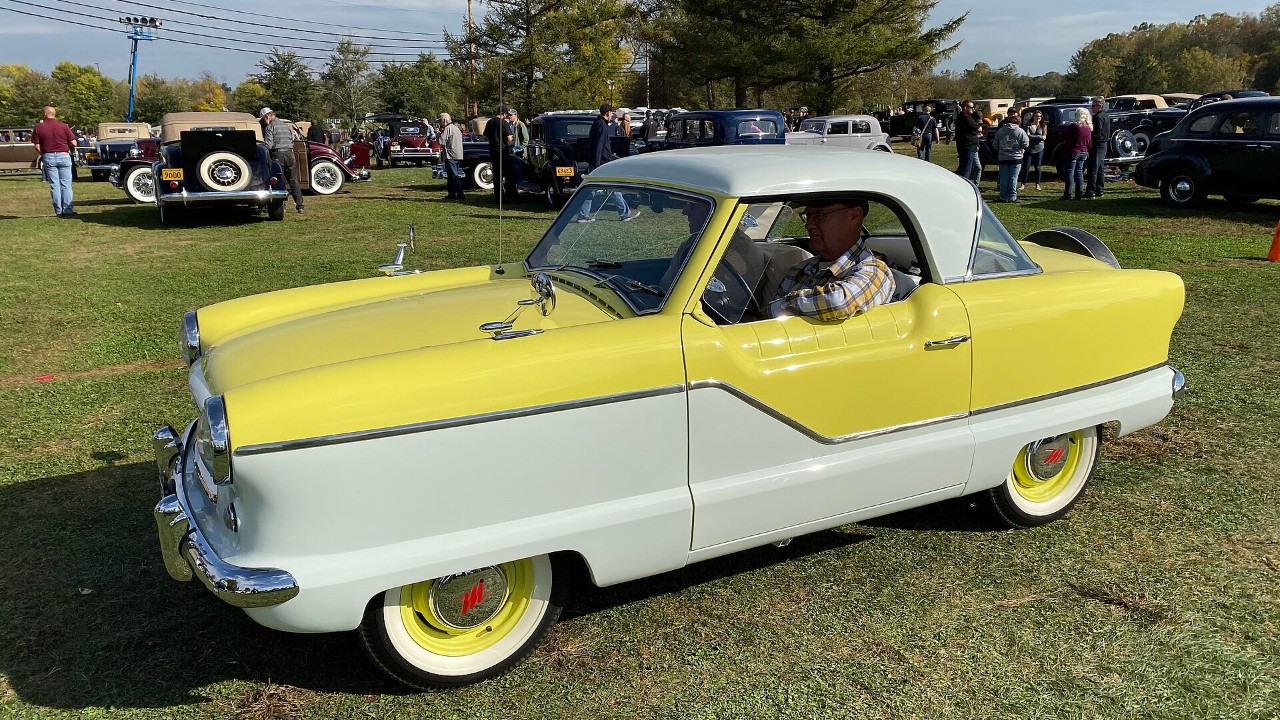
The Metropolitan was Nash’s small car, built in England. Austin assembled it at Longbridge, and Fisher & Ludlow built the bodies. Hudson dealers began selling it in August 1954, after the merger. The Series III cars, built from November 1955, used a 1,489 cc B-Series four-cylinder shared with the Austin A50 Cambridge.
The hardtop listed at $1,527. Sales grew quickly, too, from 6,096 in 1955 to 15,317 in 1957 across the U.S. and Canada. However, AMC began replacing the Nash and Hudson grille medallions with a plain “M” around October 1956. Then, in September 1957, AMC dropped the Hudson and Nash names for good, and the Metropolitan carried on under its own name.
That short window is the reason we like this one. A Metropolitan sold through Hudson dealers is a small, cheerful link to a brand in its final months. Our take: owners often see a Metropolitan as a novelty. Instead, keep any Hudson dealer paperwork with the car. It shows where your Metropolitan sits in a story that ended in Kenosha on June 25, 1957.
More from Fast Lane Only