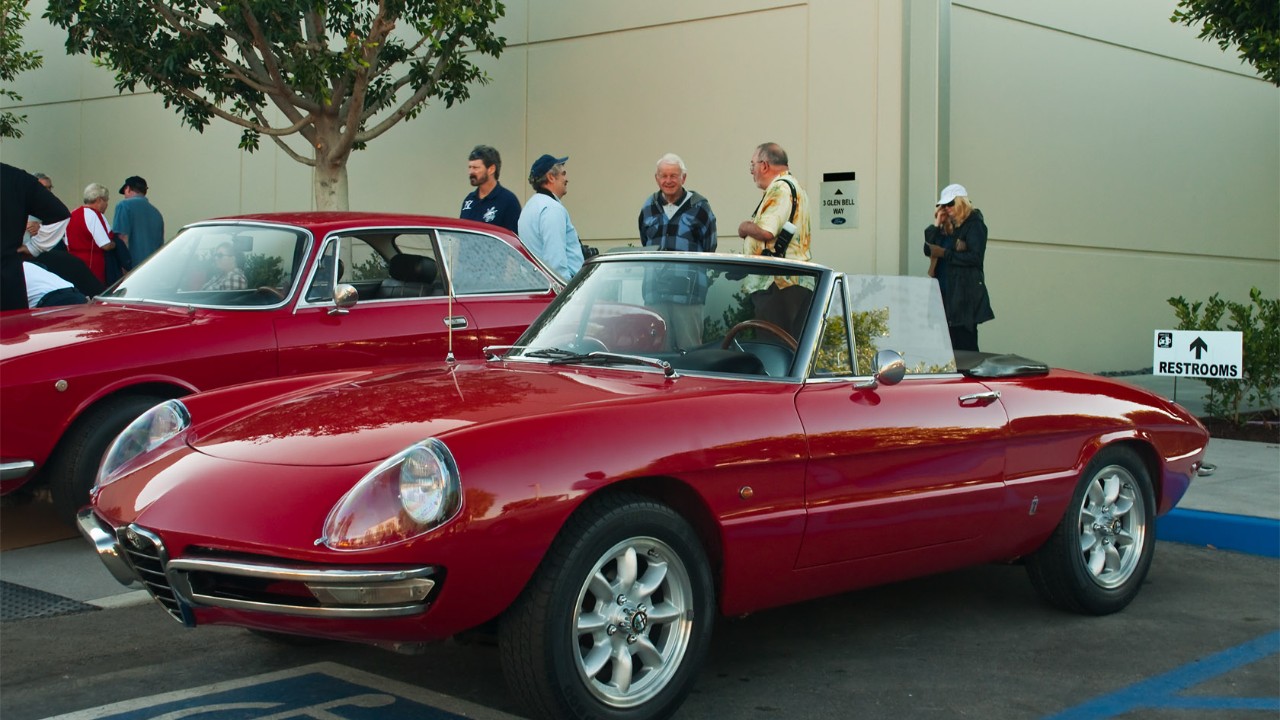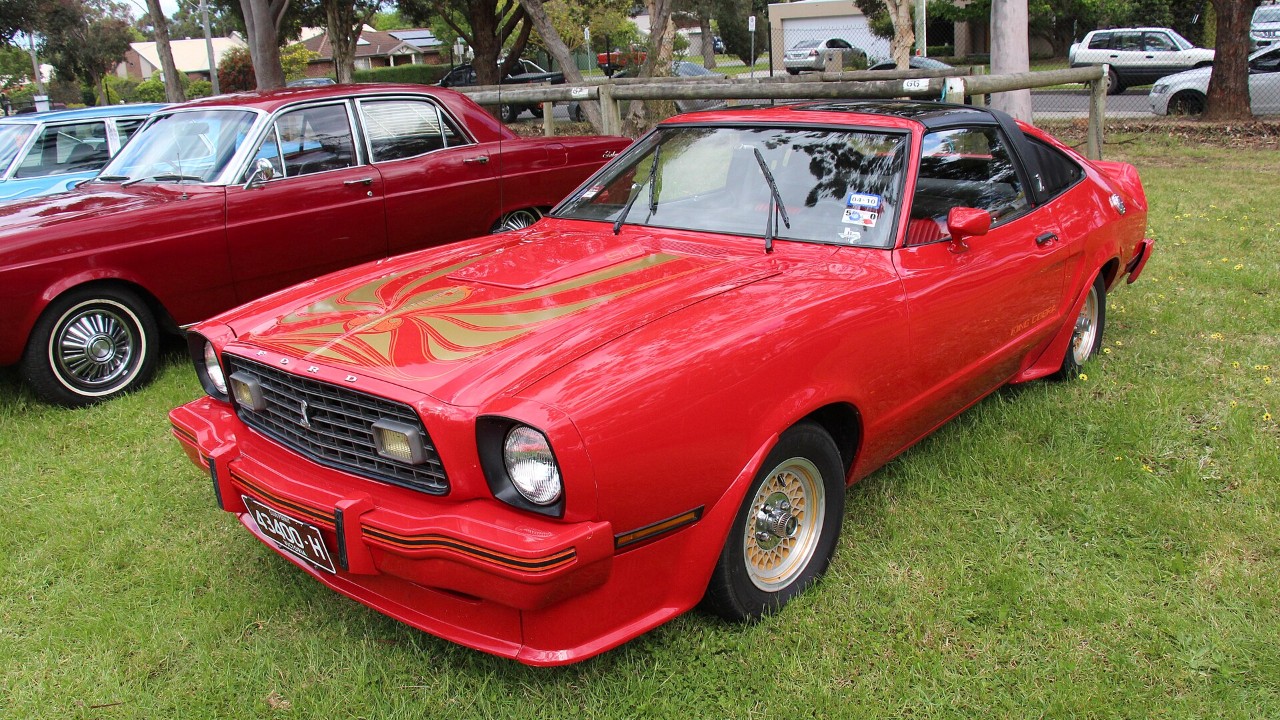
Ford launched the Mustang II on September 21, 1973, just as the Arab oil embargo hit. Five years later, the Mustang II King Cobra arrived with a giant snake on the hood and a V8 under it. It looked like a muscle car, yet the era it was dressed for had already ended.
That gap between the look and the go runs through a whole run of cars from the 1970s and early 1980s. Many of them are fun to own and easy to love. However, a full restoration costs the same whatever the badge says. When a car’s value or performance can’t carry that bill, the numbers turn against you.
These are our picks for seven muscle-era cars we wouldn’t restore from the ground up. The verdict is our opinion, and it’s no knock on the cars or the people who keep them on the road. Every fact behind it comes from period specs and market guides, and each entry closes with what we’d do instead.
1. 1978 Ford Mustang II King Cobra
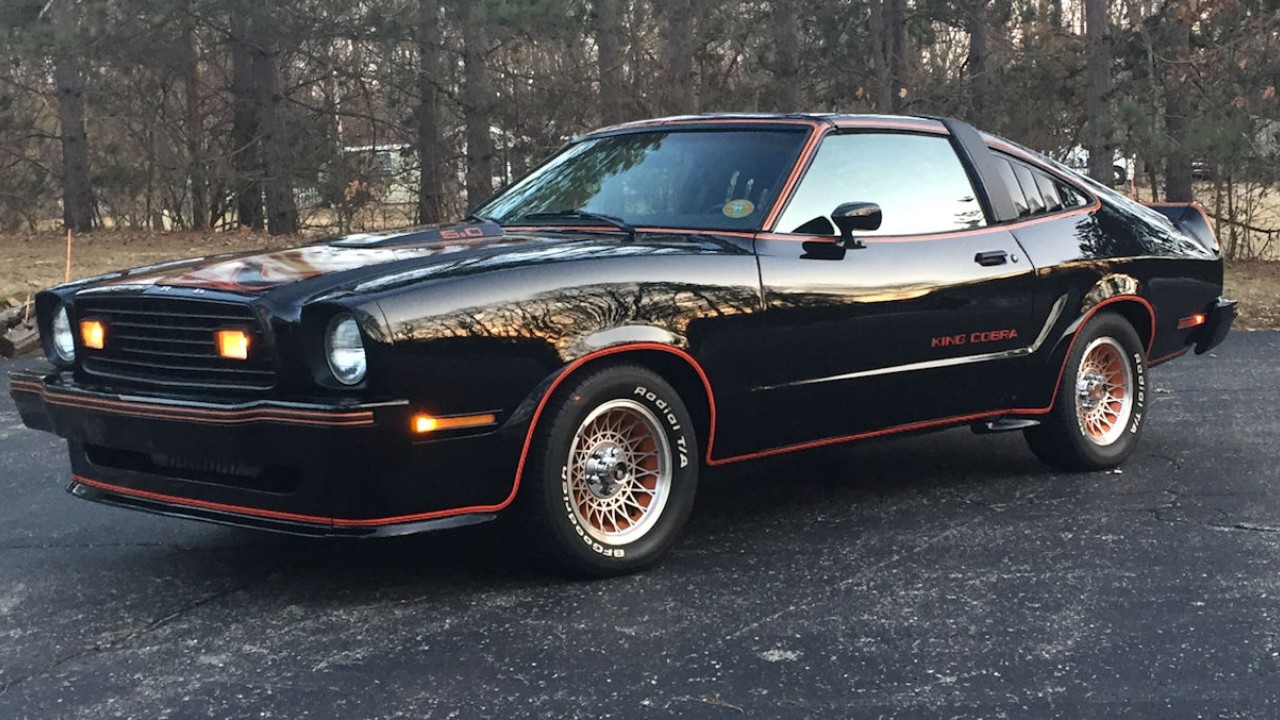
Ford built 4,313 King Cobras, and every one had a V8. The package brought a deep air dam, stripes and that Trans Am-style cobra decal on the hood. According to Hagerty, buyers could pick from seven color schemes. The car rode on 13-inch lace wheels, and its hood scoop wore Ford’s first 5.0 graphic. Hagerty also singles out a black-and-gold version that echoed the Bandit-era Trans Am.
The trouble is that the show is mostly in the trim. Underneath, the Mustang II King Cobra still sat on the Pinto-based Mustang II platform. In our view, that makes it a dress-up package first and a performance car second. Stripes, decals and special wheels are exactly the parts that cost money to replace on a tired example.
Our take: we’d pass on a frame-up restoration of a rough King Cobra. Hagerty notes that few survive, which makes it a fun find. Still, a rare decal kit doesn’t make a fast car. Buyer advice: buy one that has already been restored, with its original graphics package intact, and keep it as a weekend cruiser.
2. 1975 Ford Mustang II Mach 1
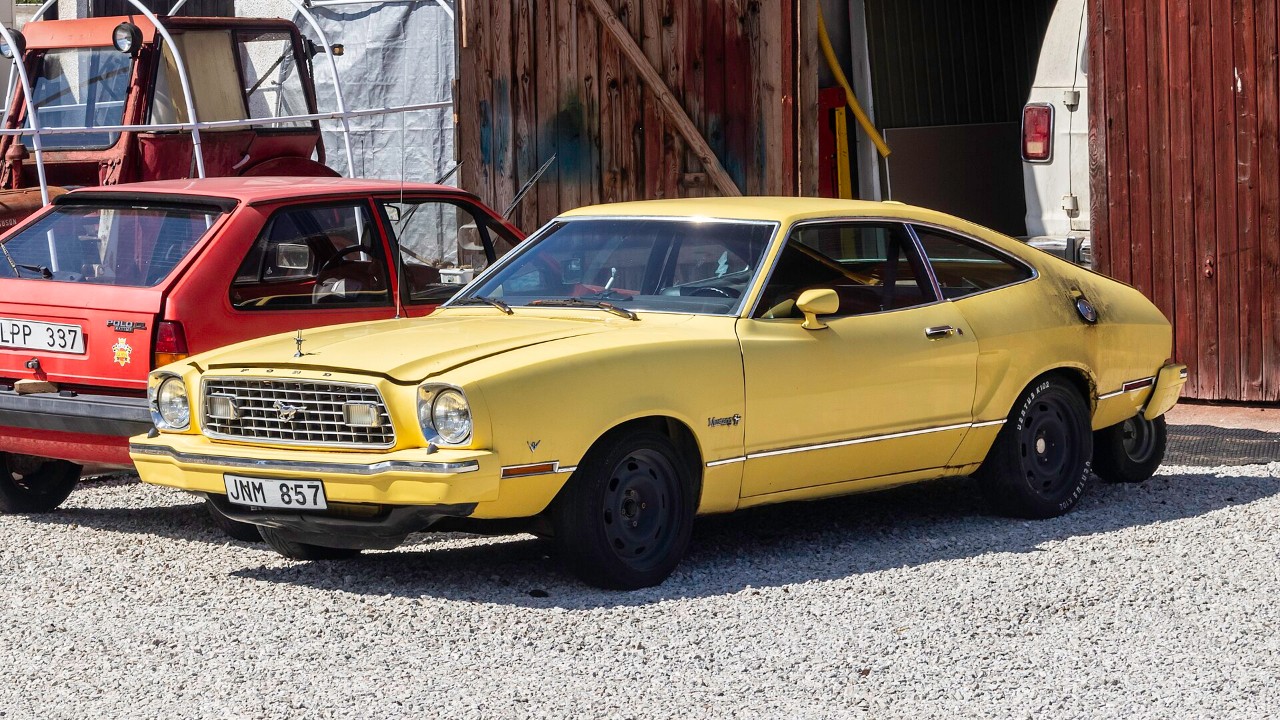
The Mach 1 name once meant a big-block Mustang. For the Mustang II, though, it marked the top model, and Ford launched it in 1974 with a V6. That 2.8-liter engine made 105 horsepower in its first year.
Then the 1975 models got catalytic converters, and the V6 fell to 97 horsepower. For the first time, Ford also offered a 302 V8 in the Mustang II. However, it came only with a two-barrel carburetor and a net rating of 140 horsepower. So even the best 1975 Mach 1 could not match the badge’s old reputation. Even so, buyers liked the Mustang II overall, and first-year sales reached 385,993.
In our view, a 1975 Mach 1 is a pleasant, light coupe with a famous name. Yet the name is the most valuable part of it, and restoration won’t add the power it never had. We’d keep one as a driver. Buyer advice: if you want a 1975 Mach 1, find a V8 car that runs well and spend your budget on brakes, suspension and rust repair, not show paint.
3. 1982 Chevrolet Camaro Z28
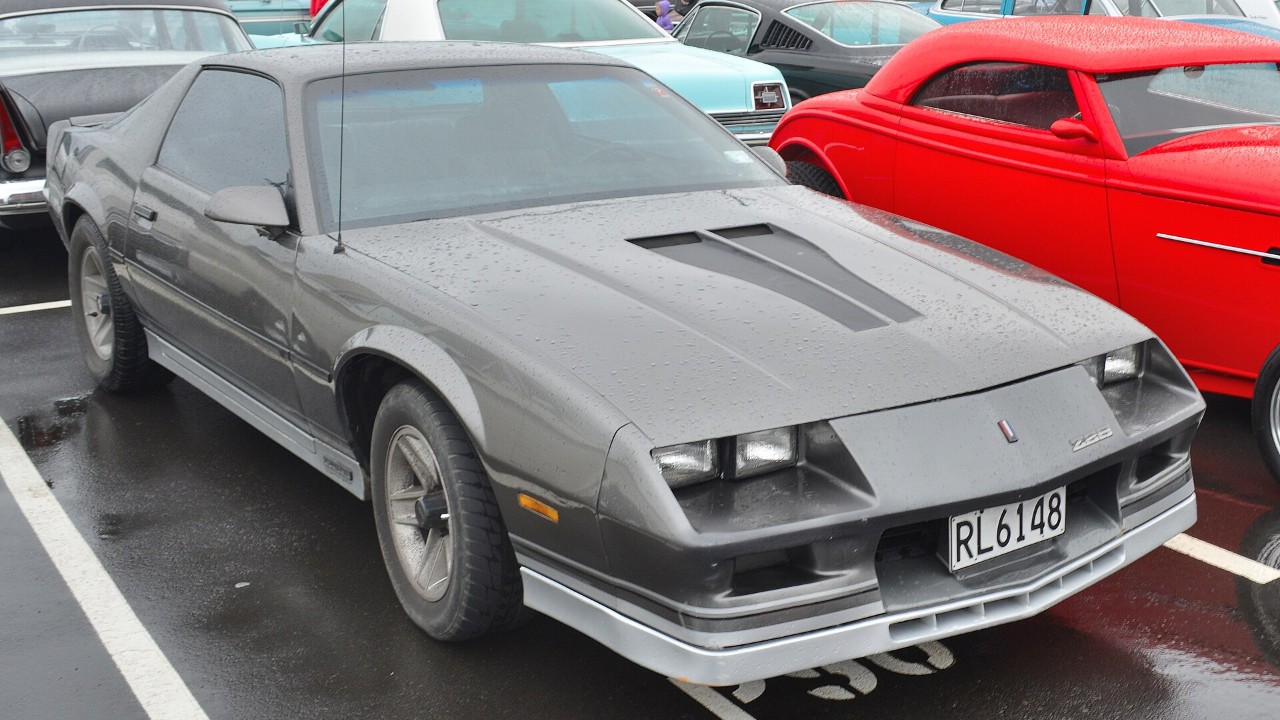
The 1982 Z28 had a big first year. It paced the Indianapolis 500, and Motor Trend named it Car of the Year. Under the hood, the standard engine was a 305 four-barrel V8 rated at 145 horsepower. The optional LU5 Cross-Fire Injection 305 made 165, and it came only with an automatic. Chevrolet also sold more than 6,000 pace car replicas through its dealers.
Hagerty’s look at the third-generation Camaro says the early Z28 needed close to 10 seconds to reach 60 mph. It also rates the build quality from “suspect to depressing,” and it notes that many surviving cars show heavy wear. By contrast, a perfect later IROC with fuel injection can bring more than $40,000.
Our take: a 1982 Z28 has history, and we’d happily own one. However, we’d skip a ground-up rebuild, because the later cars hold the values and the power. Buyer advice: if you want a third-gen Camaro to restore, start with a later IROC-Z. If you love the 1982, buy a clean original and fix only what it needs.
4. 1981 Ford Mustang Cobra hatchback
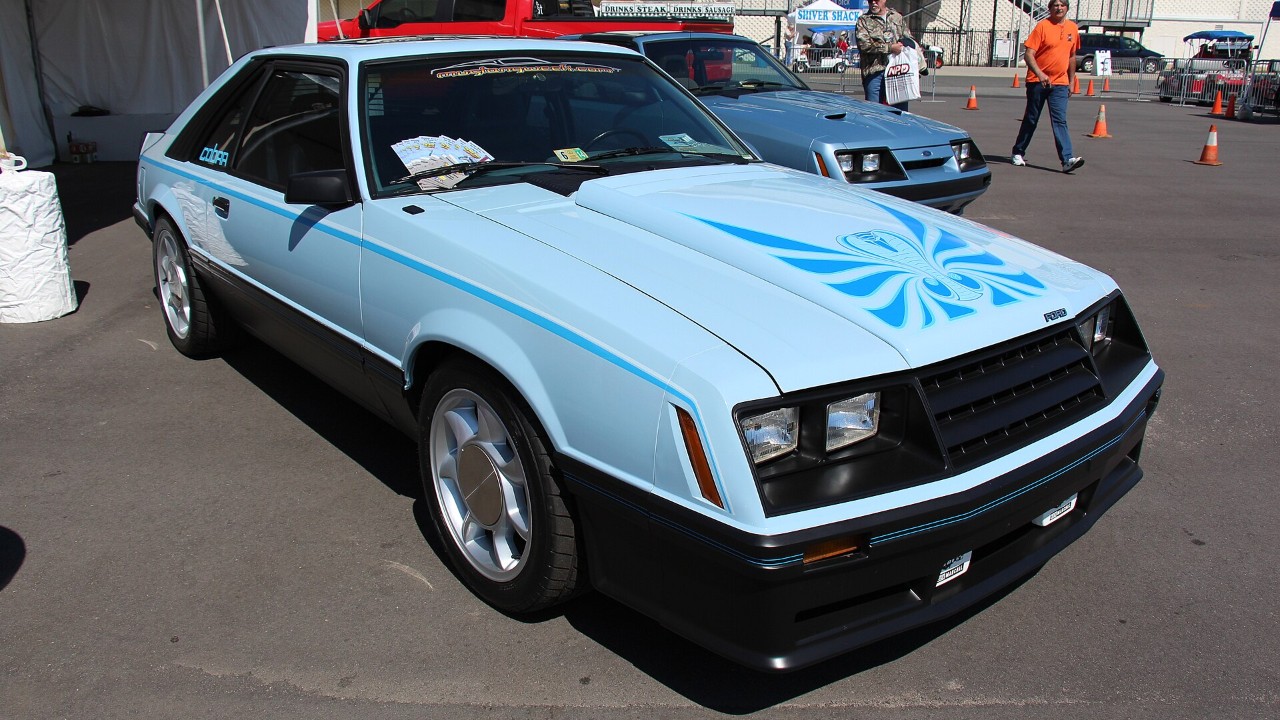
When the Fox-body Mustang arrived, the Cobra became an appearance package. For 1981, it carried a front air dam with fog lights, a cowl-style hood scoop that didn’t work and a rear spoiler. Ford built just 1,821 Cobras that year. In fact, the numbers had fallen fast, from 17,579 Cobras in 1979 to 5,550 in 1980.
The engines tell the rest of the story. After the 1979 oil crisis, Ford replaced the 302 with a 4.2-liter V8 of 255 cubic inches. In 1981, that engine made 120 horsepower. Meanwhile, the 2.3-liter turbo four had been plagued with reliability issues, and that year it was limited to Canada. So the 1981 Cobra’s only V8 made 19 horsepower less than the 1979 car’s 302.
We think the 1981 Cobra is a curiosity, not a restoration project. Its low build number sounds appealing, but low output caps what it can become. On the plus side, 1981 did bring a five-speed manual and an optional Traction-Lok limited-slip rear. Buyer advice: if you want a Fox Cobra, find a 1979 car with the 139-horsepower 302, and leave the 255 cars for drivers.
5. 1977 AMC Hornet AMX
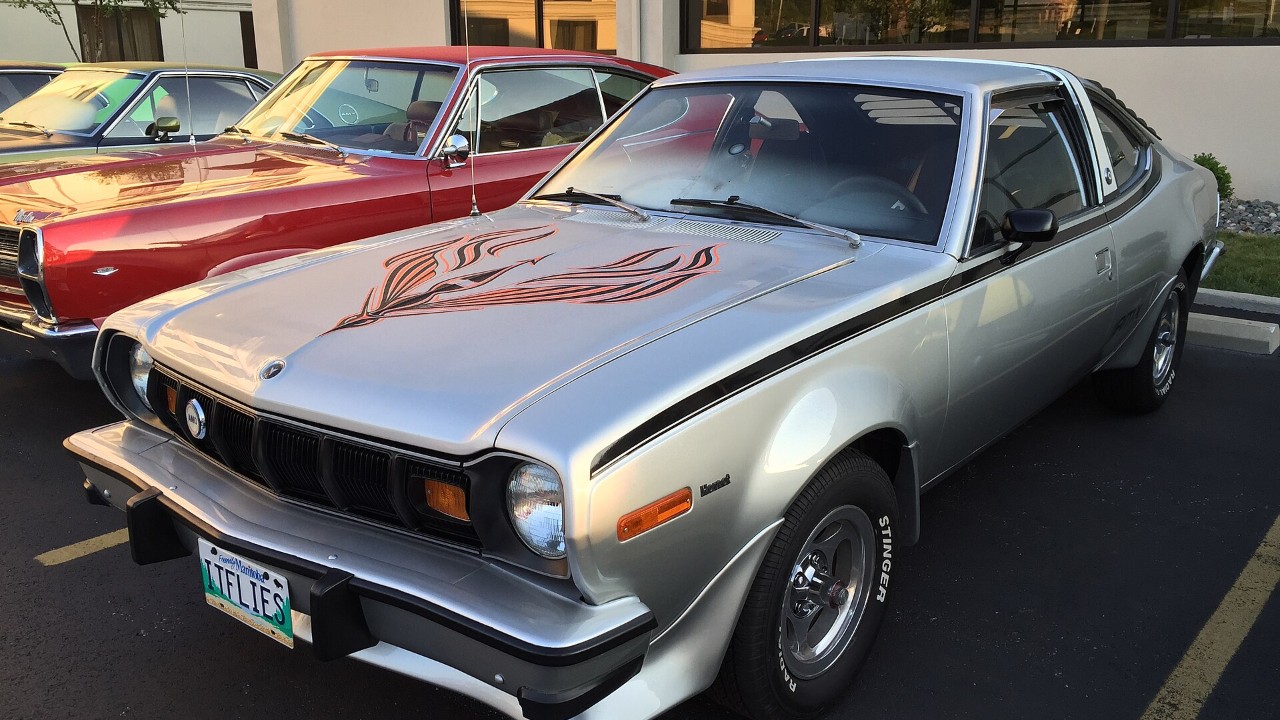
AMC revived the AMX name for 1977 on the Hornet hatchback. The car wore spoilers, airfoils and body-colored louvers on the rear window. It was aimed at young, performance-minded buyers, and it was the Hornet’s final year. Even so, the styling did its job, and the car looked the part of a real performance machine.
AMC built 5,207 Hornet AMXs, and most of them were sixes. The split was 3,196 cars with the inline-six and 2,011 with the 304 V8. In other words, the typical survivor is a styling package on an economy hatchback. The original AMX was a very different car, as our story on why the 1968 AMC AMX was unusual shows.
Our take: we like the Hornet AMX as a slice of late-1970s AMC, but we wouldn’t sink restoration money into a six-cylinder car. On this model, the trim is the whole point, so a car with missing pieces means a long hunt. Buyer advice: hold out for a V8 car with its louvers and spoilers complete, and treat it as a fun driver rather than a concours project.
6. 1974 Pontiac Ventura Custom GTO
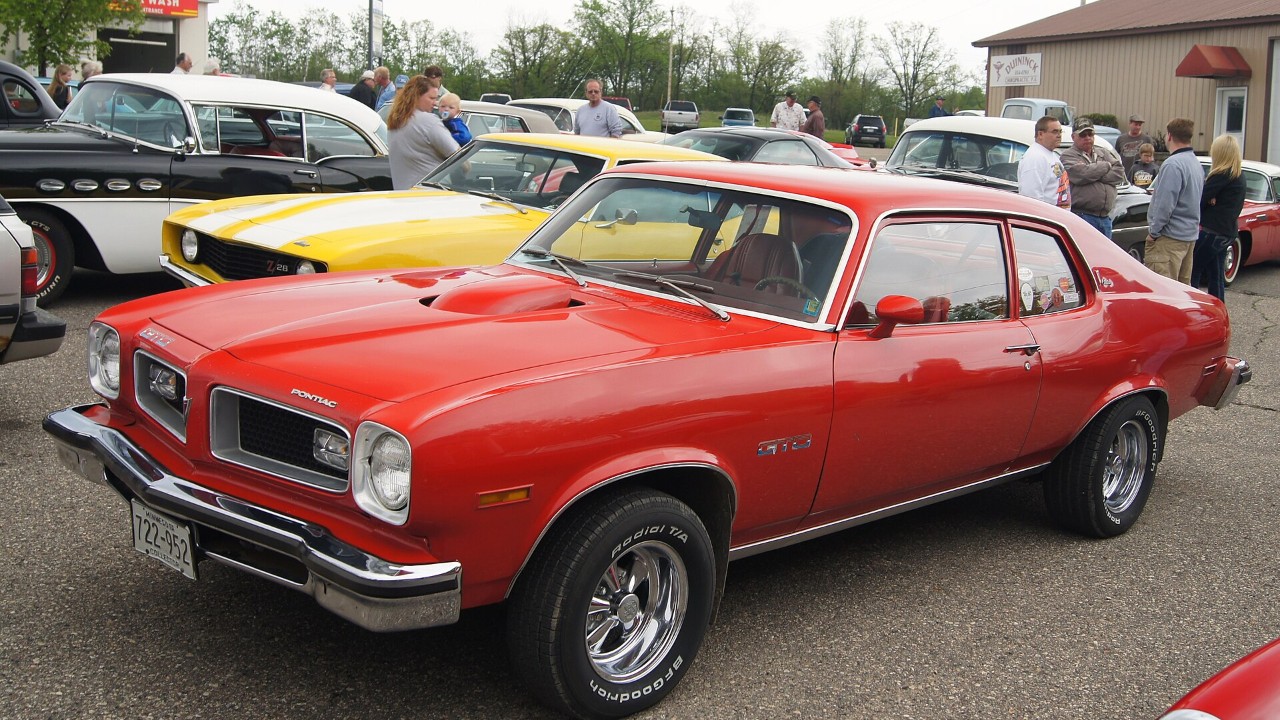
For 1974, the GTO became a package on the compact Ventura, a car that shared its body with the Chevrolet Nova. According to Hagerty, the option cost $414 to $461. It added a 350 V8 rated at 200 net horsepower and a shaker hood. Unlike the Trans Am’s, that shaker actually worked. Pontiac also made the F41 suspension standard, but front disc brakes and power steering cost extra.
Pontiac sold 7,058 of these GTOs, and Motor Trend timed one at 9.4 seconds to 60 mph. Hagerty also points out that a Ventura Sprint with the right options was essentially the same car without the GTO trim. That’s the catch for restorers. A real GTO and a well-dressed Ventura can look almost alike.
In our view, the 1974 GTO deserves more respect than it gets. Even so, we wouldn’t restore a rough one. Its value rests on paperwork and trim, and a tidy Ventura can copy the trim. Buyer advice: confirm the GTO option code before you pay a GTO price, and favor a solid car that needs little bodywork.
7. 1978 Chevrolet Monza Spyder
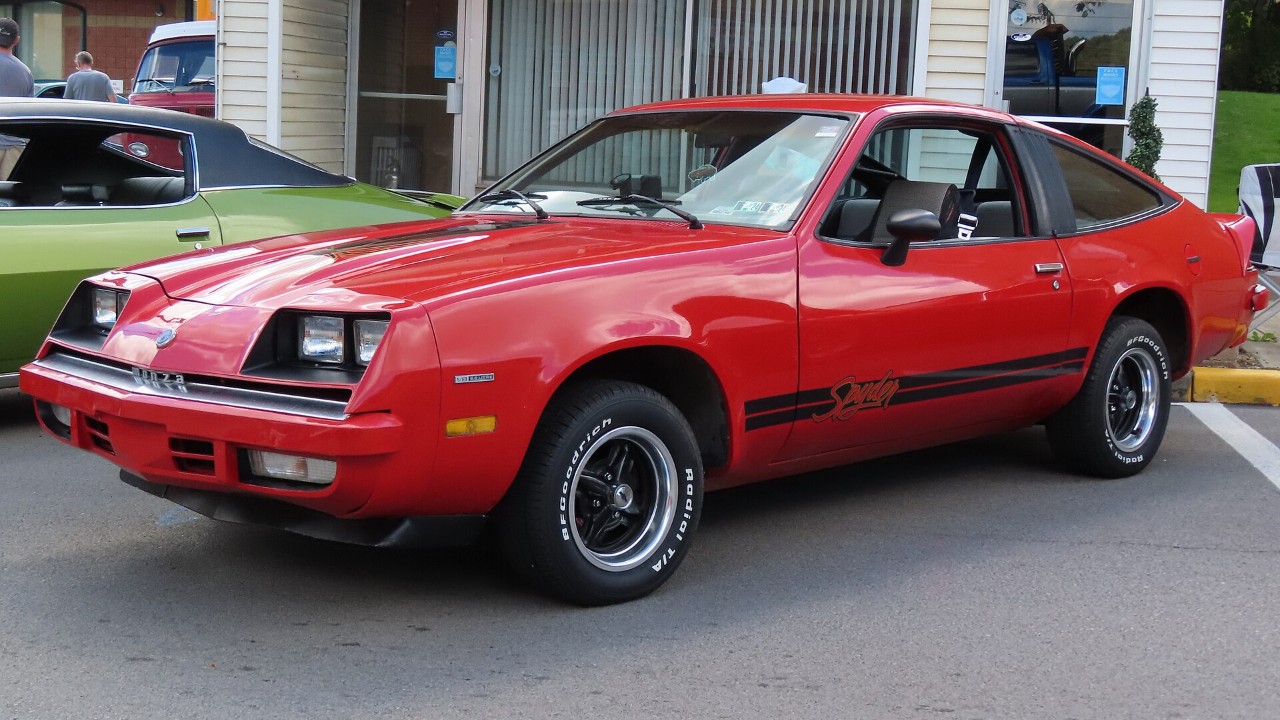
Chevrolet designed the Monza to take GM’s rotary engine, then the Wankel program was canceled. You can read more in our story on how the Wankel-powered Monza nearly changed GM. Instead, the car got conventional engines. For 1978, the base engine was the 2.5-liter Iron Duke four, and the optional 305 V8 made 145 horsepower. Between them sat a 90-horsepower 3.2-liter V6 and a 105-horsepower 3.8-liter V6.
The Spyder name is where things get tricky. From 1977, Chevrolet split it into two packages on the 2+2 hatchback. One was the Z01 performance package, and the other was the Z02 appearance package. So a Monza Spyder can look fast without any of the hardware. GM built 731,504 Monzas in all, so this is far from a rare car. Production covered the 1975 to 1980 model years.
Our take: we enjoy the Monza’s sleek shape, but we’d never restore a four-cylinder appearance car to show standard. Buyer advice: look for a Spyder with both packages and the V8, check its paperwork, and expect to pay more for one that is already done.
More from Fast Lane Only