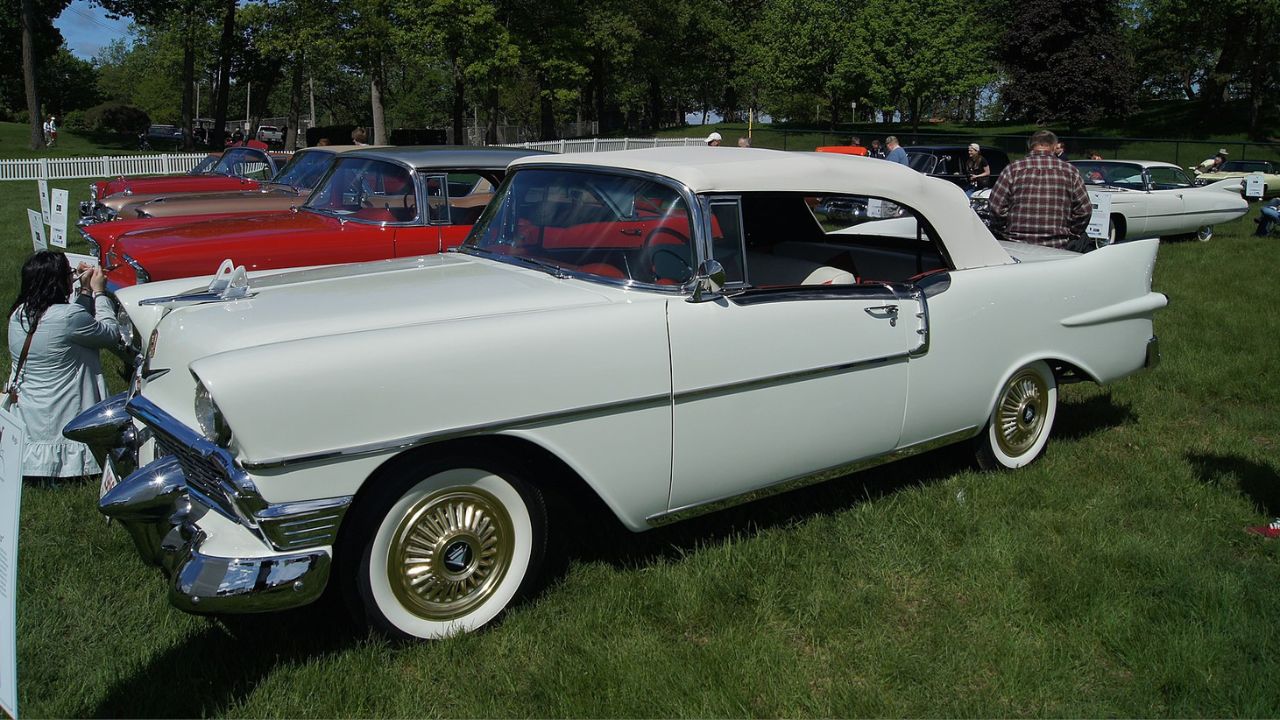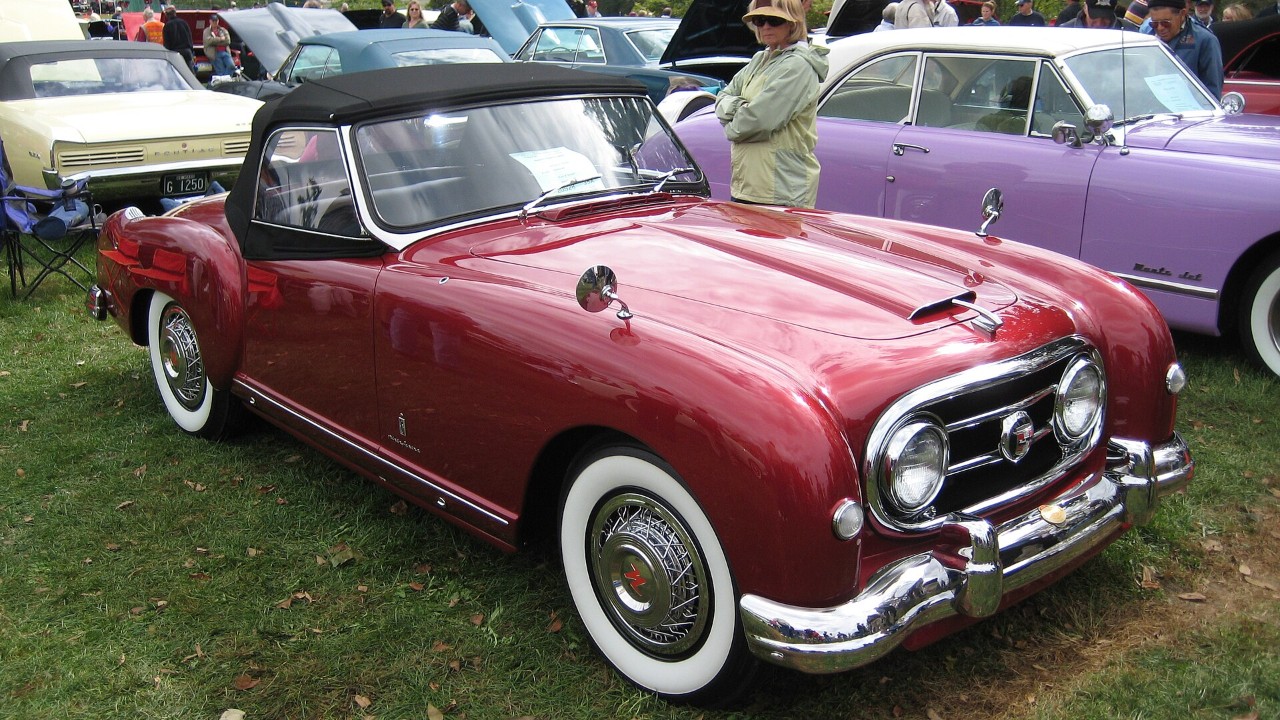
A Nash-Healey roadster finished third overall at Le Mans in 1952, and that’s only one reason this Kenosha brand deserves more love. Nash also gave America its first mass-produced unibody car, an upscale compact and a tiny British-built city car that people adore today.
Nash was never a giant. Even in its busy 1952 model year, it built 152,141 cars, about 3.5% of American sales. As a result, many younger enthusiasts barely know the name, which is a shame, because the brand built some of the most interesting cars of its time.
These seven are our picks, the Nash models we’d never sell if one landed in our garage. This is our opinion, built on the facts below. Each car on the list has something rare about it, from Italian bodywork to a roof that rolled back at the touch of a switch.
1. 1952 Nash-Healey Roadster
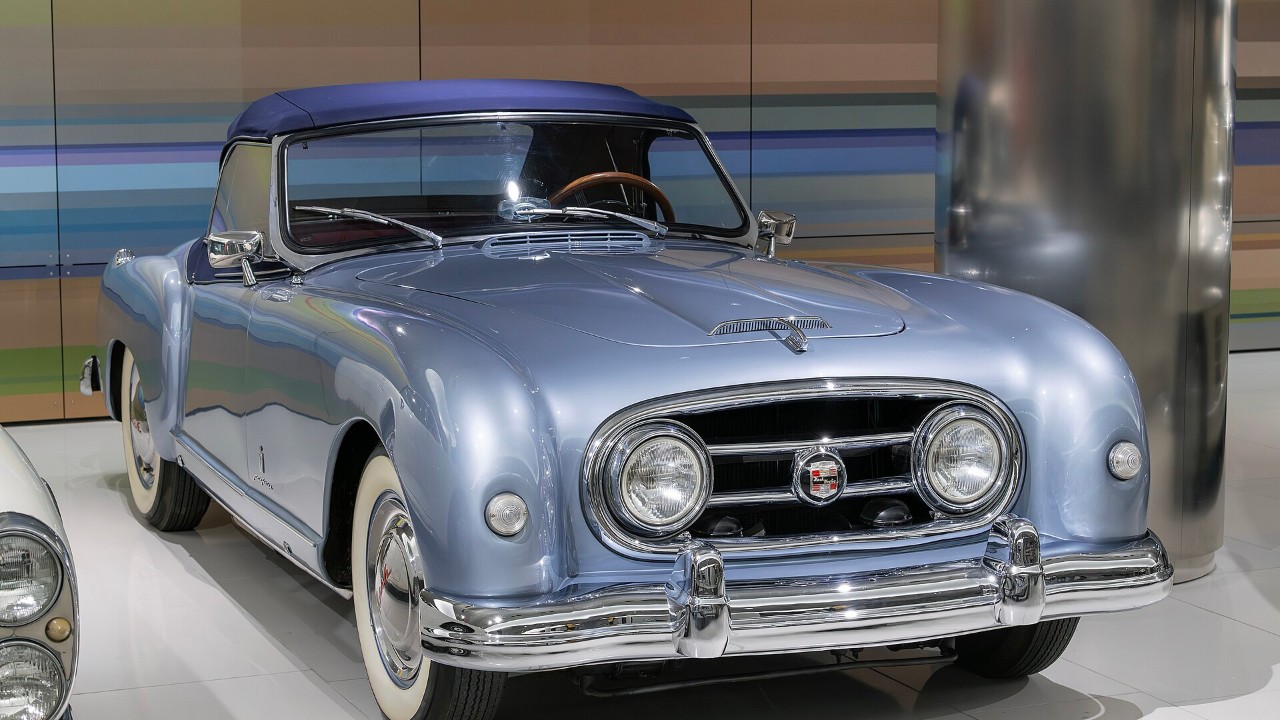
The Nash-Healey paired British engineer Donald Healey’s sports car know-how with the six from Nash’s big Ambassador. For 1952, Nash moved the bodywork to Pinin Farina in Turin, Italy, which turned a handsome car into a stunning one. In addition, final assembly moved to Italy, so every 1952 Nash-Healey roadster took a long route from Healey’s works in England to a buyer in America.
According to Hagerty’s Nash-Healey buyer’s profile, Nash built 104 aluminum-bodied cars for 1951. Then 402 steel-bodied Pinin Farina cars followed from 1952 to 1954. Later engines grew to 4.1 liters with dual Carter carburetors and 140 horsepower, and a three-speed with overdrive was standard. At Le Mans in 1952, a Nash-Healey took first in class and third overall.
That’s the racing pedigree, Italian design and American muscle in one car. In our view, nothing else Nash built comes close as a collectible. After all, how many early-1950s American cars can claim a Le Mans podium? If you ever own a Nash-Healey roadster, keep it. For more on the brand’s forward thinking, see our list of Nash models that were decades ahead of their time.
2. 1953 Nash-Healey Le Mans Coupe
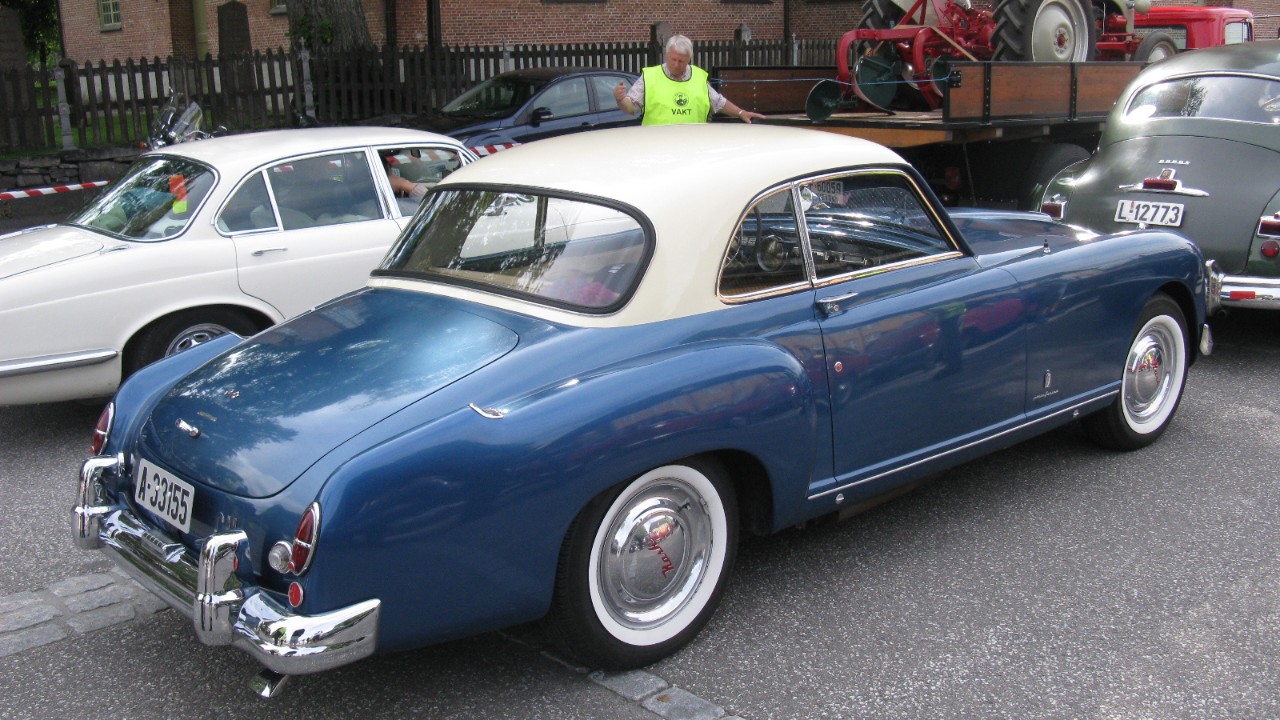
The roadster got the headlines, but Nash added a closed coupe for 1953. Its name tied it to the race that made the Nash-Healey famous. Like the roadster, it wore Pinin Farina bodywork, and final assembly took place in Italy, which made it an expensive car to build and ship.
That cost is part of the story. Old Cars Weekly lists the 1952 second-version roadster at $5,909, far above a big Nash sedan. In our view, the coupe made the most sense of the lot, because it added a roof for year-round driving. That was a rare mix for an American sports car of the era. Still, the closed body also makes it the easier Nash-Healey to live with, in our view.
Hagerty notes that body parts are scarce and costly for every Nash-Healey, and that the steel bodies can rust. That’s exactly why we’d never sell a good one. Finding another would take years, and restoring a rough one would cost a fortune. In our opinion, the Le Mans coupe is the most overlooked car Pinin Farina touched in the 1950s.
3. 1954 Nash Metropolitan Convertible
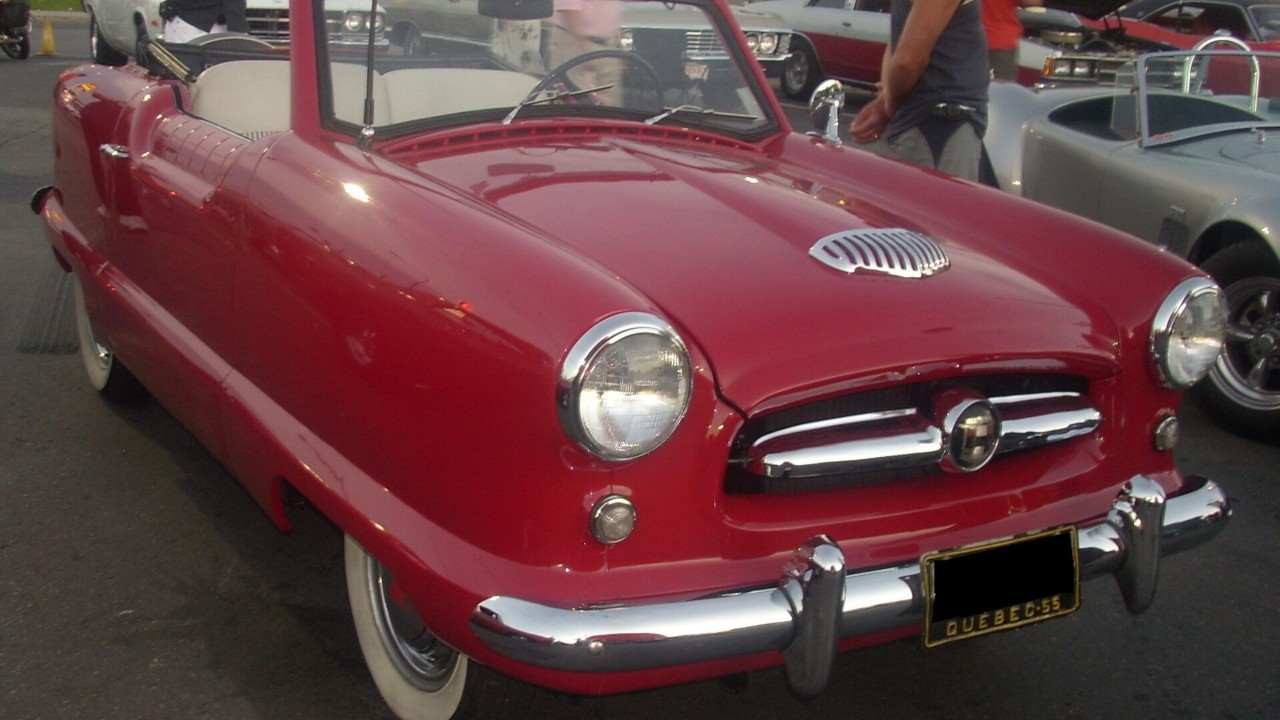
The Metropolitan was an American idea built in Britain. As the Metropolitan Owners Club of North America explains, production began in October 1953 and the car went on sale on March 19, 1954. Austin assembled it at Longbridge, England, with bodies from Fisher & Ludlow of Birmingham.
Early cars used a 1,200 cc Austin A40 engine, and buyers could pick a hardtop or a convertible. Later, Austin switched to its B-series engine of the same size and changed the clutch from mechanical to hydraulic. Convertible tops came in tan or black to match the paint. However, a tired top is costly to redo, so check it first. Nash placed an initial order for 10,000 cars. Then strong early sales led to a second order for 10,000 more.
Today, the convertible is the one everybody smiles at, and we’d hold onto a 1954 model for its first-year details. Just know what you’re getting into. Before you buy, our earlier piece on why the Metropolitan’s small size doesn’t mean simple repairs lays out the work involved. In our view, that effort is worth it every time someone waves.
4. 1950 Nash Rambler Landau Convertible
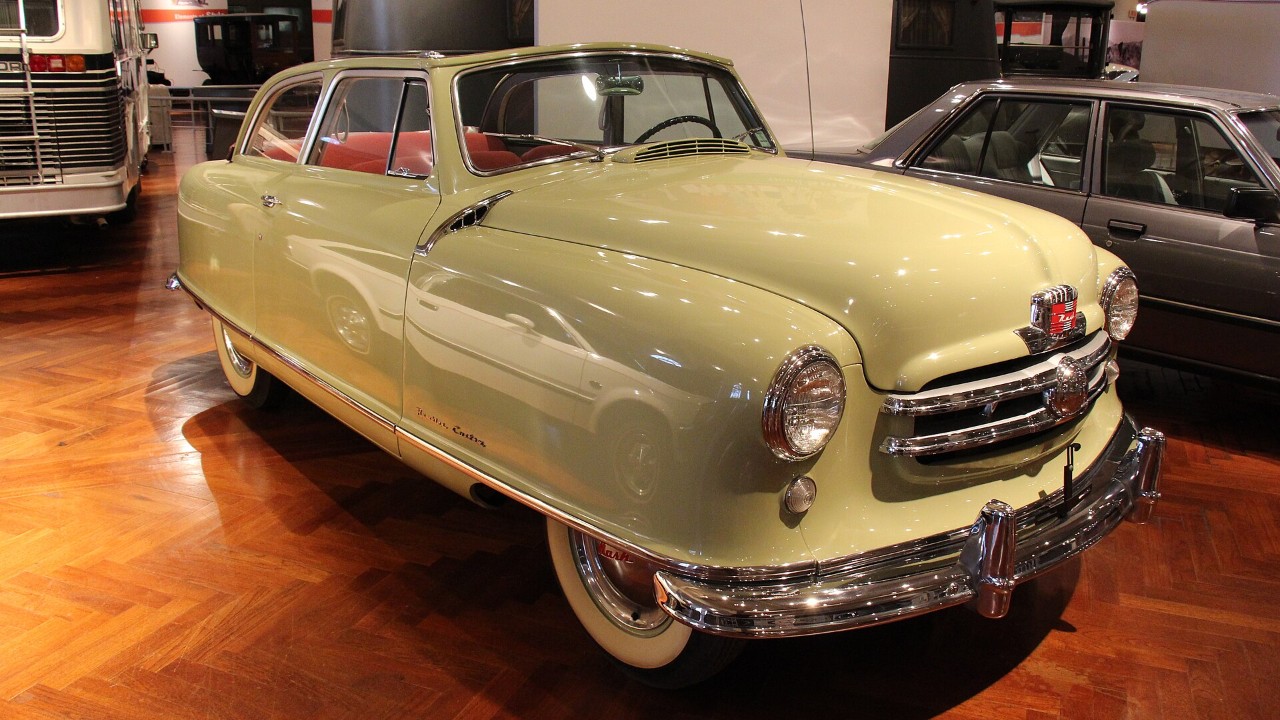
Nash launched the Rambler in April 1950 with a clever twist. Rather than a cheap stripper, the first compact came only as an upscale two-door convertible called the Landau. The side window frames stayed fixed, and the fabric roof folded back under power from a switch on the dash.
According to Curbside Classic’s Rambler Landau history, it cost $1,808 and rode on a 100-inch wheelbase. Power came from a 172.6-cubic-inch L-head six with 82 horsepower. Moreover, a radio, clock, turn signals and the Nash Weather Eye heater were all standard. Nash built 9,708 Convertible Landaus for the 1950 model year. By comparison, Rambler sales jumped to 70,002 in 1951, the first full model year, including 19,367 Custom Country Club hardtops.
Nash called it “the smartest, safest convertible in the world,” and we can see why buyers believed it. Our take: it proved a small American car could feel upscale, and it does so with charm. Then again, at $1,808 it was hardly cheap, so buyers paid for the style. A first-year 1950 example is the one we’d keep forever.
5. 1941 Nash 600
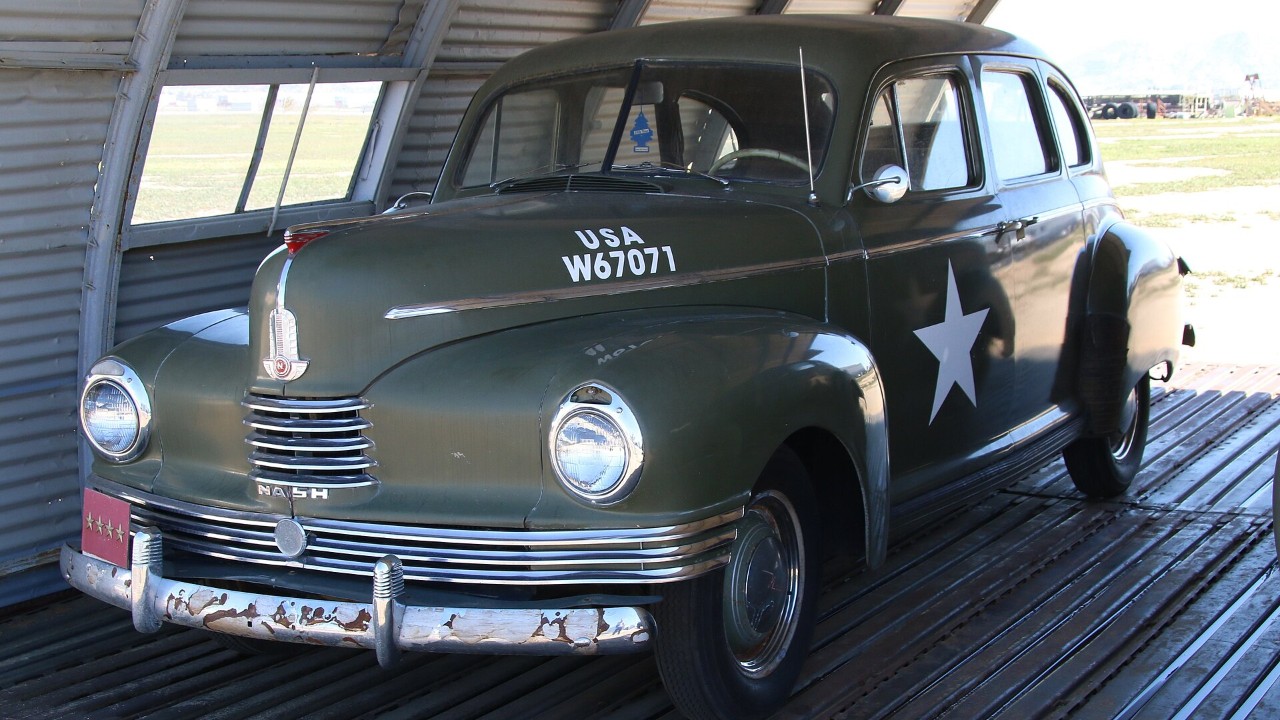
The 600 changed how American cars were built, even if few people noticed then. It arrived for the 1941 model year as America’s first mass-produced unit-body car. Instead of bolting a body to a separate frame, Nash welded the whole structure together with more than 8,000 spot welds.
That saved weight, about 400 pounds compared with Big Three rivals, according to Curbside Classic’s look at the Nash 600. The engine was a 172.6-cubic-inch flathead six with 82 horsepower. Nash claimed up to 30 mpg, and with a 20-gallon tank, the name came from the idea of 600 miles between fill-ups.
Nash kept the 600 name going through 1949. Meanwhile, the long range became a selling point, and later Nash ads cited 500 to 600 miles per tank. In our view, every unibody car on the road today owes something to this plain-looking sedan. Because of that, we’d rank it as the most important Nash ever built, even if it’s the least glamorous one here. We’d never part with a clean 1941, because it’s the first of its kind.
6. 1952 Nash Ambassador Custom Golden Airflyte
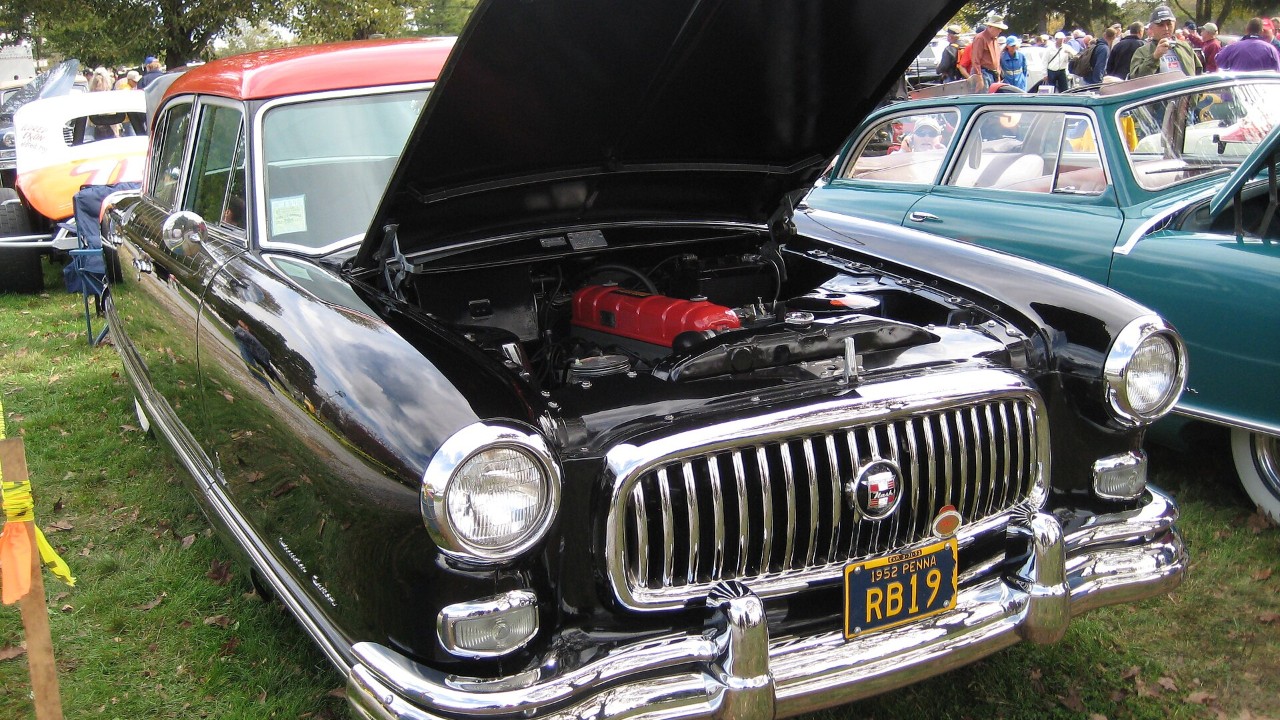
For 1952, Nash celebrated 50 years of building cars in Kenosha, a lineage that traced back to the Thomas B. Jeffery Company in 1902. To mark it, the big Nashes got a new look and a new name, the Golden Airflyte. Nash’s ads called it “America’s first car styled by Pinin Farina.”
As Old Cars Weekly’s history of the 1952 Nash points out, the Italian firm only partly styled the car. Even so, the new look was far more conventional than the rounded 1949–51 Nashes. The Ambassador’s six grew to 252.6 cubic inches, and its five models ran from $2,521 to $2,829. Nash introduced the line on March 14, 1952, and built about 40,700 Ambassadors that year.
Buyers also embraced options that year, since Nash fitted GM’s Hydra-Matic automatic to 28,950 cars and overdrive to 74,535. Our take: an anniversary car with an Italian design credit is exactly the kind of Nash we’d keep in the family. If you find one, check the trim and badges closely, since replacement parts for these big Nashes take patience to track down.
7. 1934 Nash Ambassador Eight
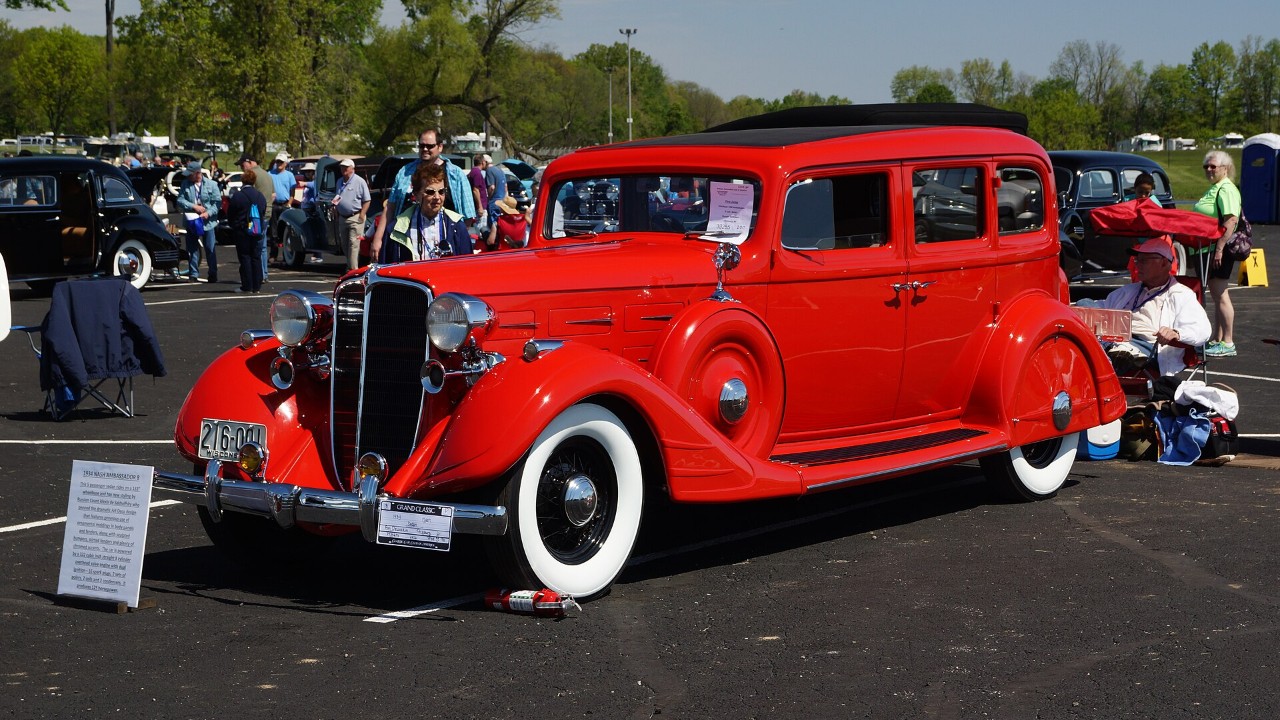
In the early 1930s, Nash aimed squarely at the luxury market. The Ambassador Eight became its own model in mid-1932. Under the hood sat a 322-cubic-inch overhead-valve straight-eight with twin ignition, meaning two spark plugs per cylinder, rated at 125 horsepower.
For 1934, Nash restyled the car in what it called the Speedstream look. The design drew on the influence of Count Alexis de Sakhnoffsky and added bullet-shaped headlights, horizontal hood ribs, rear-wheel spats and a beaver-tail rear end with a built-in trunk. That year, the Ambassador Eight came only as a four-door sedan, on wheelbases of 133 or 142 inches. As a result, these are big, stately cars, and they feel far more expensive than the Nash name suggests today.
The Classic Car Club of America lists the 1934 Ambassador Eight as an Approved Classic. Fans even nicknamed the big Nash the “Kenosha Duesenberg.” In our opinion, that’s high praise it earned, and it’s why this is the Nash we’d hand down rather than sell. However, a car this big needs room, so plan your garage before you buy.
More from Fast Lane Only