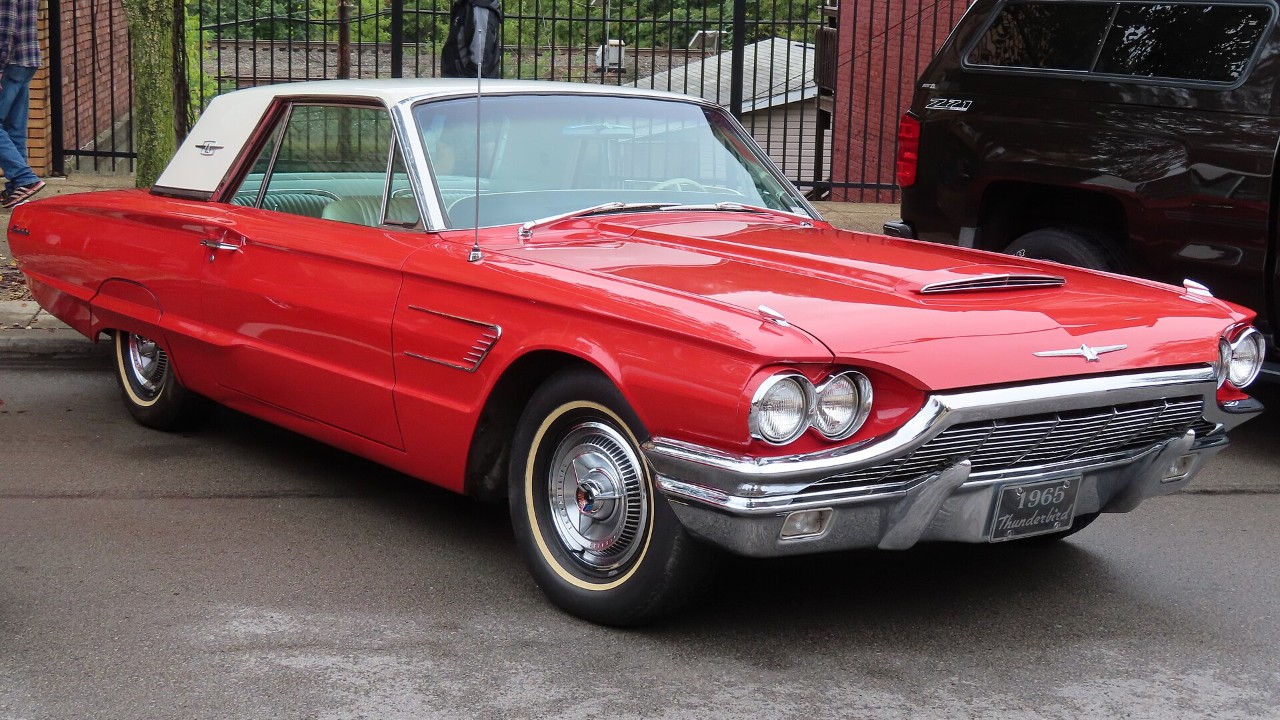
The 1965 Thunderbird Special Landau came with a dash plaque engraved with its first owner’s name. That was the personal-luxury coupe in one detail. From the 1960s to the 1980s, Detroit built a whole class of two-door cars around comfort, style and a feeling that the car was made just for you.
The famous ones are easy to find at any cruise night. However, the special trims, anniversary models and designer editions are a different story. Many were built in small numbers and then forgotten when the next model arrived.
These twelve are our picks for the personal-luxury coupes we would most like to see on the road again. The years, engines and production numbers come from period reports, owners’ clubs, auction records and published production figures. The picks themselves, however, are our opinion.
1. 1965 Ford Thunderbird Special Landau
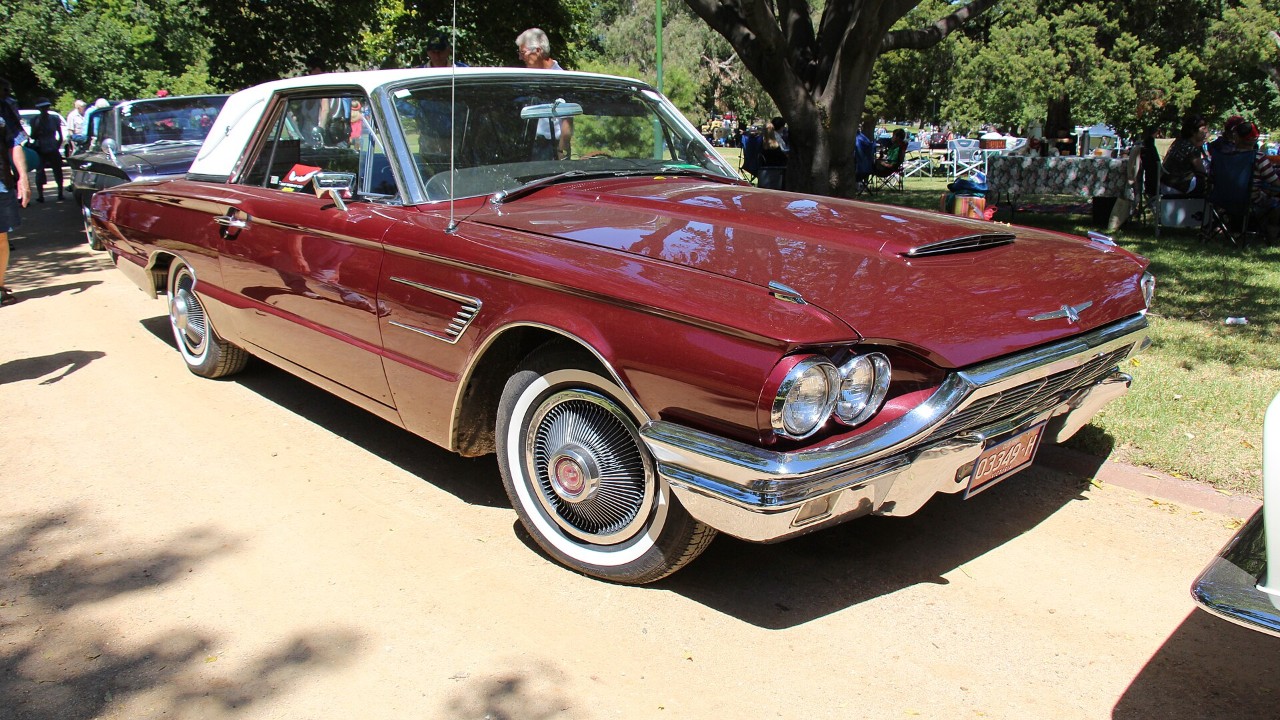
Ford released the limited Special Landau in March 1965. It wore Ember-Glo metallic paint, a matching vinyl top and a parchment interior. It also got its own woodgrain trim and that numbered, engraved dash plaque. According to Old Cars Weekly’s feature on the 1965 Thunderbird, the package added only about $50 to the Landau’s $4,495 base price.
The rest of the car was good news too. Under the hood, a four-barrel 390-cubic-inch V8 also made 300 horsepower. For 1965, front disc brakes became standard, and new sequential turn signals flashed three bulbs from the inside out. In addition, the steering wheel swung to the right to make getting in easier. Ford built 74,972 Thunderbirds in all for 1965, and 25,474 of them were Landau models, but the Special Landau was only a slice of that total.
Our take: the Thunderbird Special Landau is the most personal of personal-luxury cars, because Ford literally put your name on it. For the wider story of the year, see how Ford’s 1965 Thunderbird blended V8 performance with upscale luxury. We would choose this one over any other 1960s Thunderbird.
2. 1970 Pontiac Grand Prix SJ 455
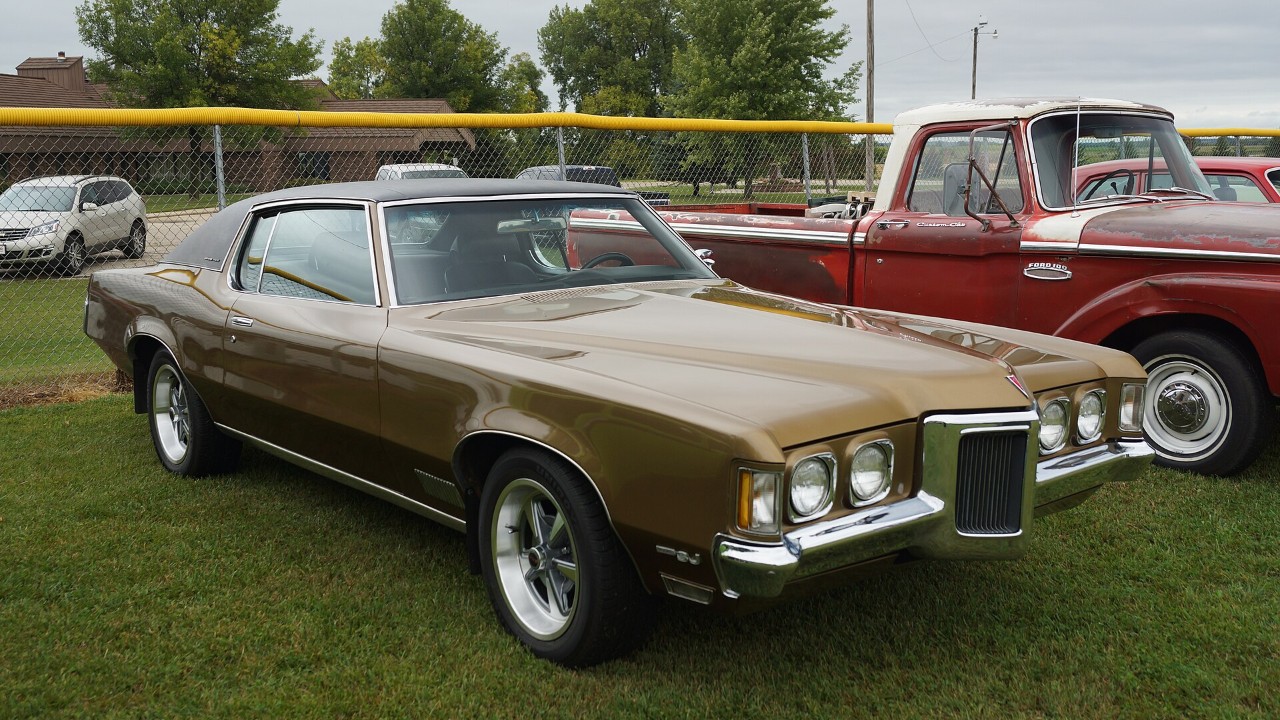
John DeLorean, Pontiac’s general manager, ordered the all-new Grand Prix for 1969. It rode on a shorter wheelbase than the Catalina, yet it had Pontiac’s longest-ever hood. Inside, a wraparound cockpit dash curved toward the driver. The top trim was the SJ, a name borrowed from the Duesenberg Model SJ. In 1969, the SJ listed at $4,182, above a Bonneville hardtop coupe.
For 1970, Pontiac added a bigger option. At that point, the new 455-cubic-inch V8 made 370 horsepower and 500 pound-feet of torque at 3,100 rpm. That is serious muscle for a car with a long-hood luxury look. Meanwhile, Grand Prix production fell to 65,750 for the 1970 model year, down from 112,486 in 1969.
In other words, the 1970 SJ 455 was the strongest version of a car that fewer people bought. We have written before about how luxury met real speed in the 1969 Grand Prix SJ. In our view, the 1970 car with the 455 completes that thought. It is a gentleman’s express with a big-block heart, and we would love to hear one on a quiet back road.
3. 1976 Ford Elite

Ford launched the Elite in February 1974 as the Gran Torino Elite. For 1975 and 1976, the Elite name stood on its own. Ford meant it as a junior Thunderbird, aimed straight at the Chevrolet Monte Carlo.
The recipe was familiar but well judged. The Elite shared its Torino roots with the Mercury Cougar XR-7, and both used two-door bodies from the Mercury Montego. Meanwhile, twin opera windows sat in the vinyl roof. Under the hood, buyers could choose 351, 400 or 460 V8s. Altogether, Ford sold about 366,000 Elites across three model years. As a result, the car placed third in the personal-luxury segment each year.
So why do you never see one? Partly because the name disappeared. After 1976, Ford moved the Thunderbird name onto the Torino-based platform, and the Elite simply faded out. Our take: the 1976 Elite is the forgotten middle child of 1970s Ford. It sold well, looked the part, and then vanished from memory. A clean one at a show today would turn more heads than a Thunderbird of the same year, because almost nobody remembers what it is.
4. 1977 Pontiac Grand Prix LJ
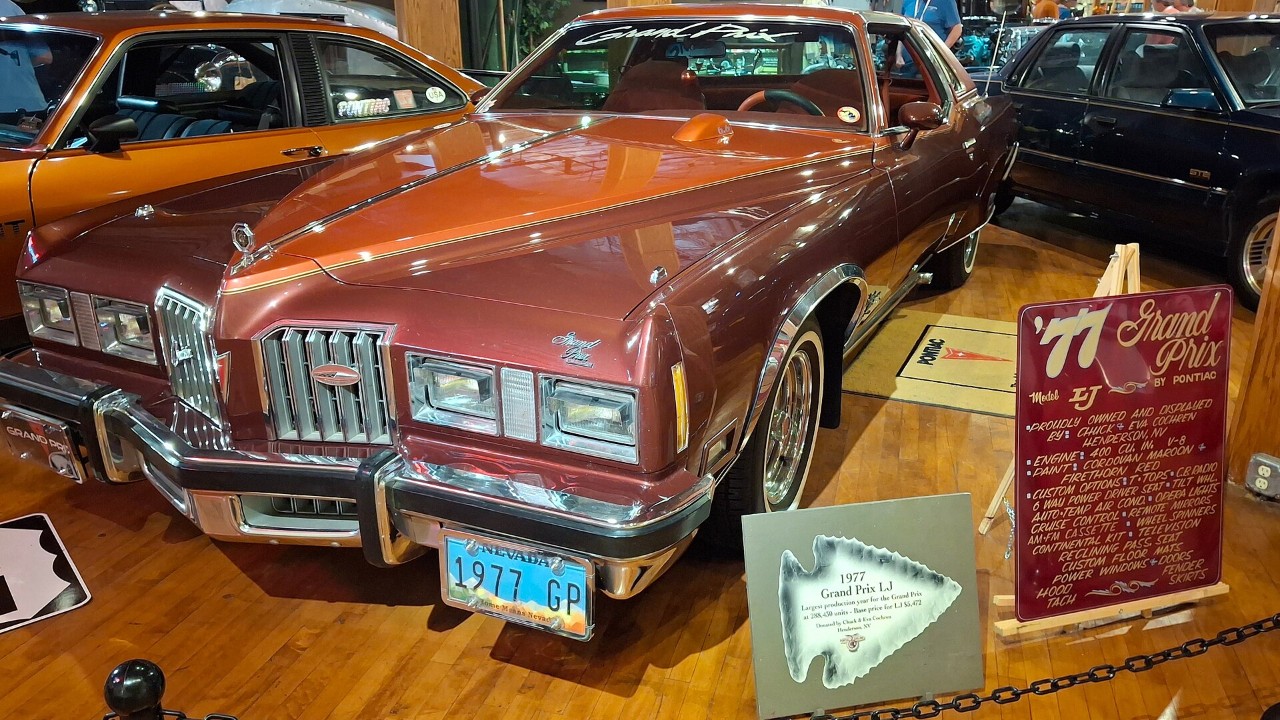
Pontiac added the LJ in 1975 as the top Grand Prix trim. It brought pinstriping and velour upholstery, and it came standard with a 160-horsepower 350 V8. By comparison, the base J used a 135-horsepower 301, with a 180-horsepower 400 available. In California, Pontiac used Oldsmobile-built engines instead.
Then the timing turned perfect. For 1977, Grand Prix sales hit an all-time high of more than 270,000 cars. Pontiac had already marked its 50th anniversary in 1976 with gold-painted Grand Prix editions, technically an LJ option, with removable Hurst T-tops. That year, the LJ alone accounted for 29,045 cars, and 4,807 Golden Anniversary editions were part of the 1976 total.
Here is the catch for the head-turning test. A car that sold in such numbers should be everywhere. Yet we suspect most LJs lived hard lives as everyday transport, and a plush, original one is a rare find now. Our take: the 1977 LJ is the definitive disco-era Grand Prix. It captures the moment when Pontiac sold comfort as hard as it once sold speed. In our view, finding one with its original interior intact would make anyone’s car show weekend.
5. 1976 Oldsmobile Cutlass Supreme Brougham coupe
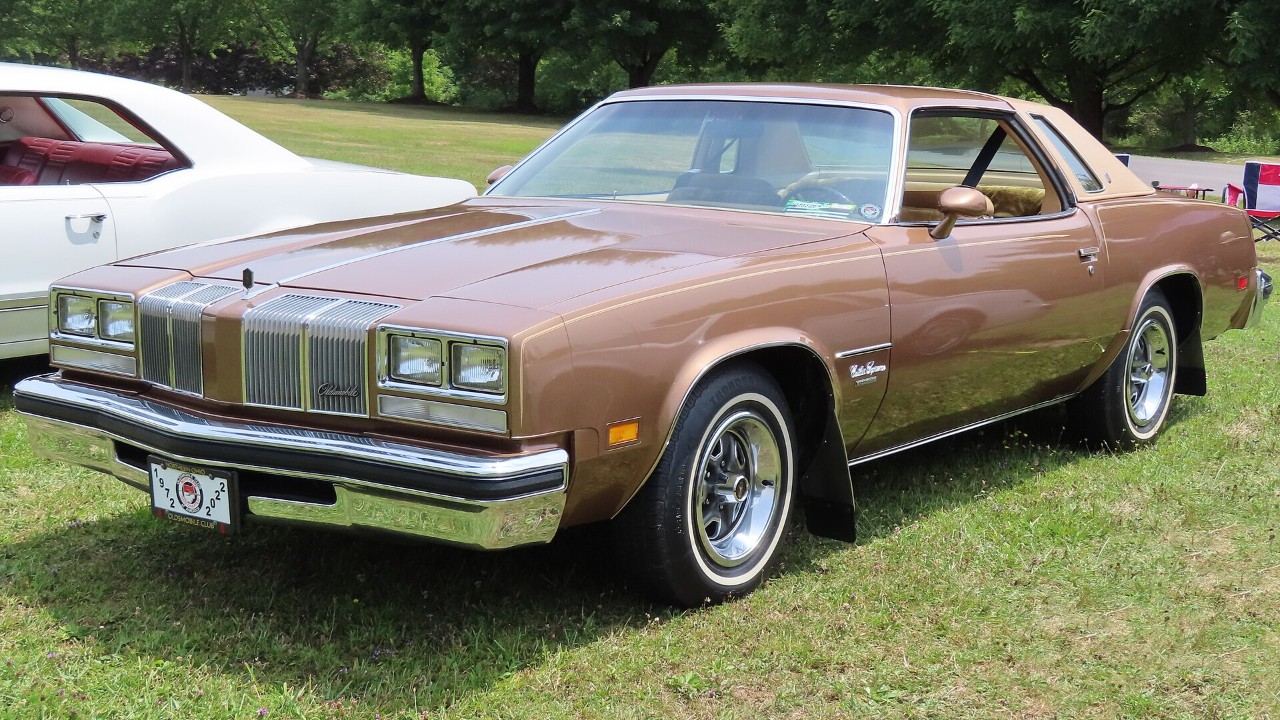
The Cutlass was a sales giant in the 1970s. In fact, the Cutlass line as a whole was America’s best-selling car in 1976. The Cutlass helped Oldsmobile become the only marque outside Ford and Chevrolet to sell more than one million units.
For 1976, Olds added the Supreme Brougham coupe at the top of the line. Its seats used pillowed crushed velour, and the 60/40 bench was similar to the one in the larger Ninety-Eight Regency. Quad square headlights also set the front apart. Most Supremes used the 350 Rocket V8, while an Olds-built 260 V8 was an option. For buyers who wanted more, the 455 stayed on the list through 1976. Back in 1973 and 1974, that big Rocket had been rated at 250 horsepower.
That last detail matters. A 1976 Brougham with the 455 is a combination worth hunting for. Our take: the Brougham coupe is the Cutlass at its most indulgent. It took America’s favorite car and dressed it in living-room fabric. We think a survivor with its original velour is worth more attention than another restored muscle Cutlass. Honestly, it says more about 1976 than any 442 ever could.
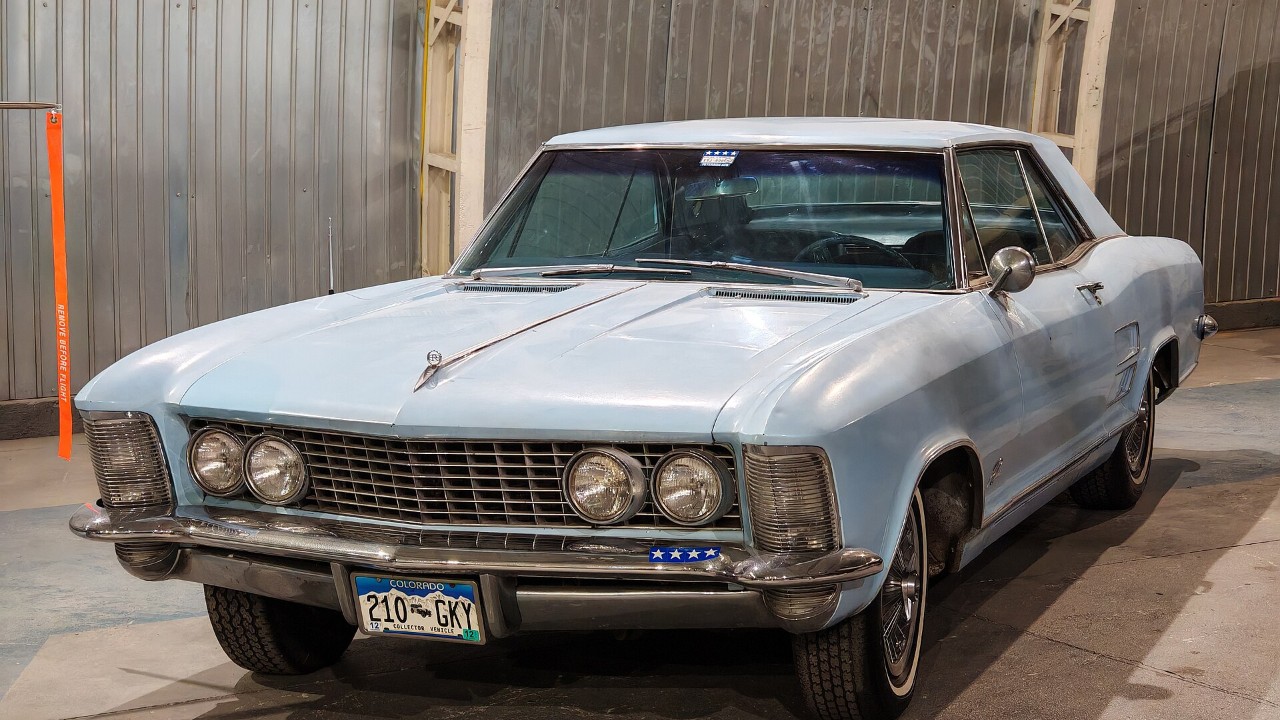
6. 1979 Buick Riviera S-Type
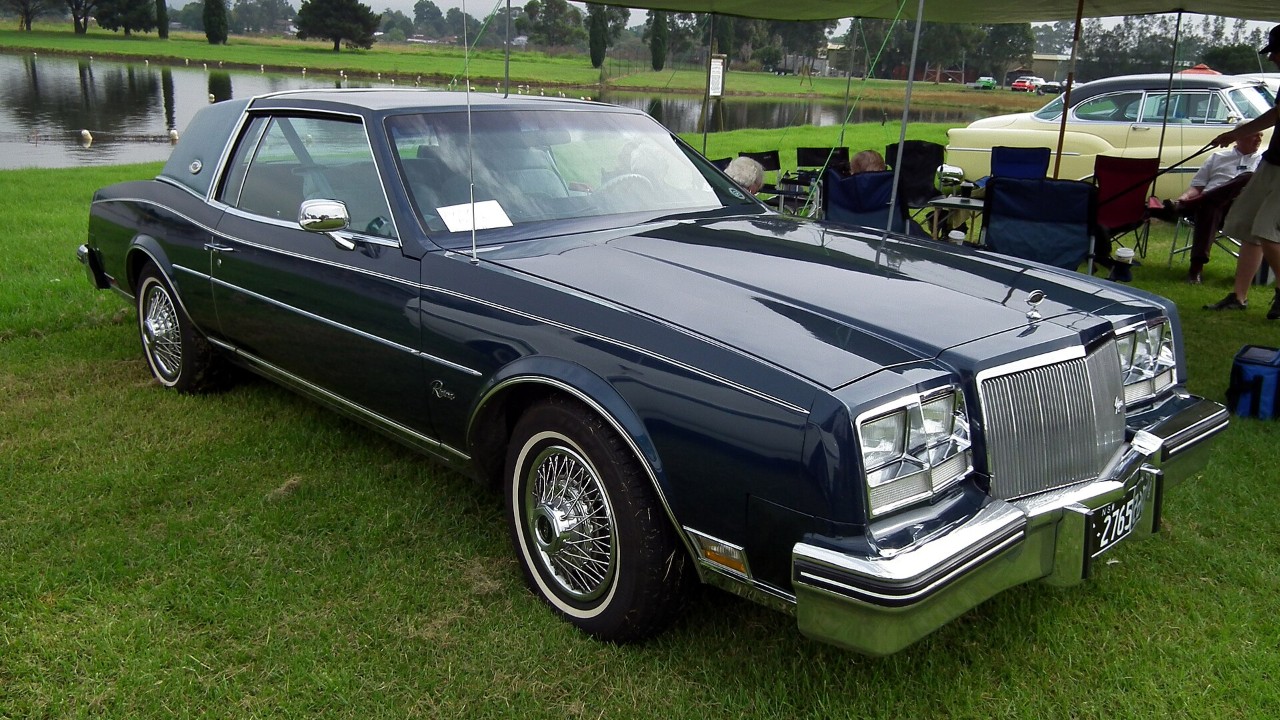
The 1979 Riviera was Buick’s first front-wheel-drive production car. It rode on a 114-inch wheelbase and shared its platform with the Cadillac Eldorado and Oldsmobile Toronado. Together, that trio made front-drive luxury feel normal.
The S-Type was the version with a surprise. It used a turbocharged 231-cubic-inch V6 rated at 185 horsepower. In our view, that was a bold choice for a luxury coupe at the end of the 1970s. Motor Trend agreed it was special, naming the Riviera its Car of the Year. Buick then sold 52,181 Rivieras for 1979.
So where are they? We can only say that a well-kept S-Type is a sight we would cross a parking lot to see. Our take: the 1979 S-Type is the thinking person’s Riviera. It showed that a smaller turbocharged engine could move a big luxury coupe, years before that idea became common. Picture pulling up to a country club in 1979 in a front-drive Buick with a turbocharger. That was a story very few luxury coupes could tell. We would buy one for the conversation alone. Then we would drive it, because a turbo Buick from 1979 deserves to be heard.
7. 1980 Ford Thunderbird Silver Anniversary
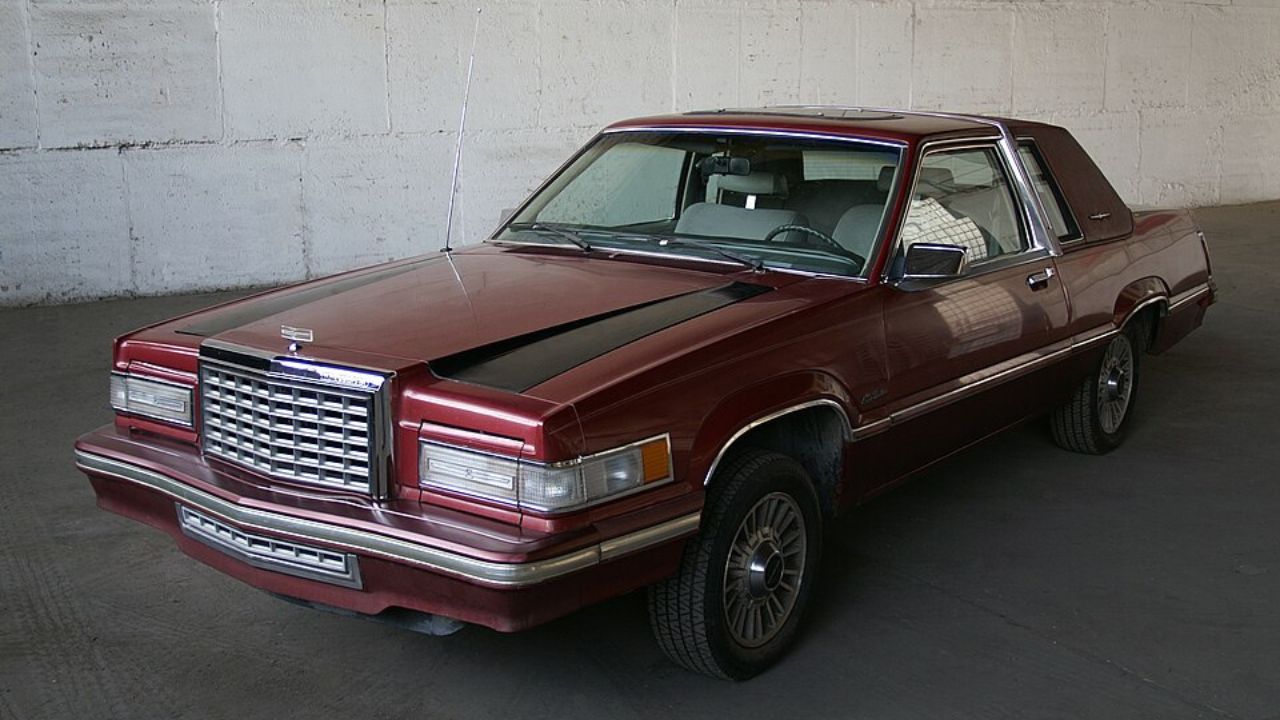
The 1980 Thunderbird marked the nameplate’s 25th year. To celebrate, Ford topped the range with the Silver Anniversary model. It wore an exclusive Anniversary Glow Silver paint and silver-gray velour or leather. A frenched rear window, rosewood interior trim and commemorative badges finished the job. It even came with an integrated garage door opener.
Underneath, the 1980 car was all new. Ford moved the Thunderbird onto a long-wheelbase version of its Fox platform, stretched to 108.4 inches, and returned it to unibody construction. The Silver Anniversary came only with the 4.9-liter V8, rated at 131 horsepower, and the AOD automatic. Ford built 156,803 Thunderbirds that year.
After that, sales fell hard, to 86,693 in 1981 and 45,142 in 1982. The anniversary package itself became the Heritage for those years. Our take: the Silver Anniversary is the Thunderbird of this generation we would save first, and also the one most people overlook. Because so many were built, we suspect few owners thought to save one. That is exactly why a clean one, in its special silver, would stop us in our tracks at a show.
8. 1981 Imperial Frank Sinatra Edition
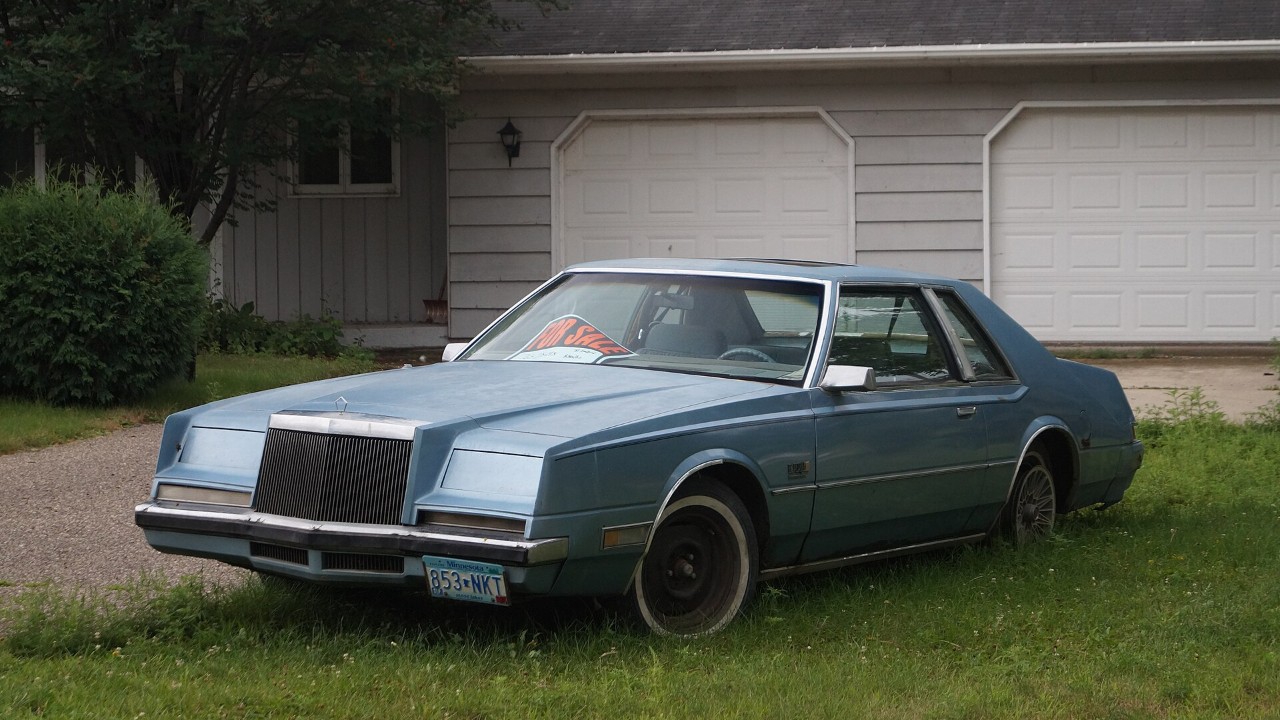
Chrysler revived the Imperial for 1981 as a bustle-back coupe. Its designers drew on the 1937 to 1939 Chrysler Imperial sedans. At launch, the list price was $18,311. Every car got a fuel-injected 318 V8 rated at 140 horsepower and a TorqueFlite automatic. Cartier crystals also decorated the opera lights and steering wheel.
Then came the Frank Sinatra Edition, offered for 1981 and 1982. It wore Glacier Blue paint, which Chrysler’s ads said matched Sinatra’s eyes. The Imperial Club’s factory records page notes light blue leather or Kimberly cloth inside. It also lists a special center console and Sinatra cassette tapes in a leather Mark Cross case. The full set included 16 tapes.
Production was tiny. Chrysler built 148 Sinatra cars in 1981 and 279 in 1982, for 427 in all. Our take: this is the smallest production run we could confirm on our list, and possibly the most charming car here. It is a luxury coupe sold with its own soundtrack. In our view, if you ever see one with the tape case intact, you have seen something very few people ever will.
9. 1985 Lincoln Continental Mark VII Bill Blass
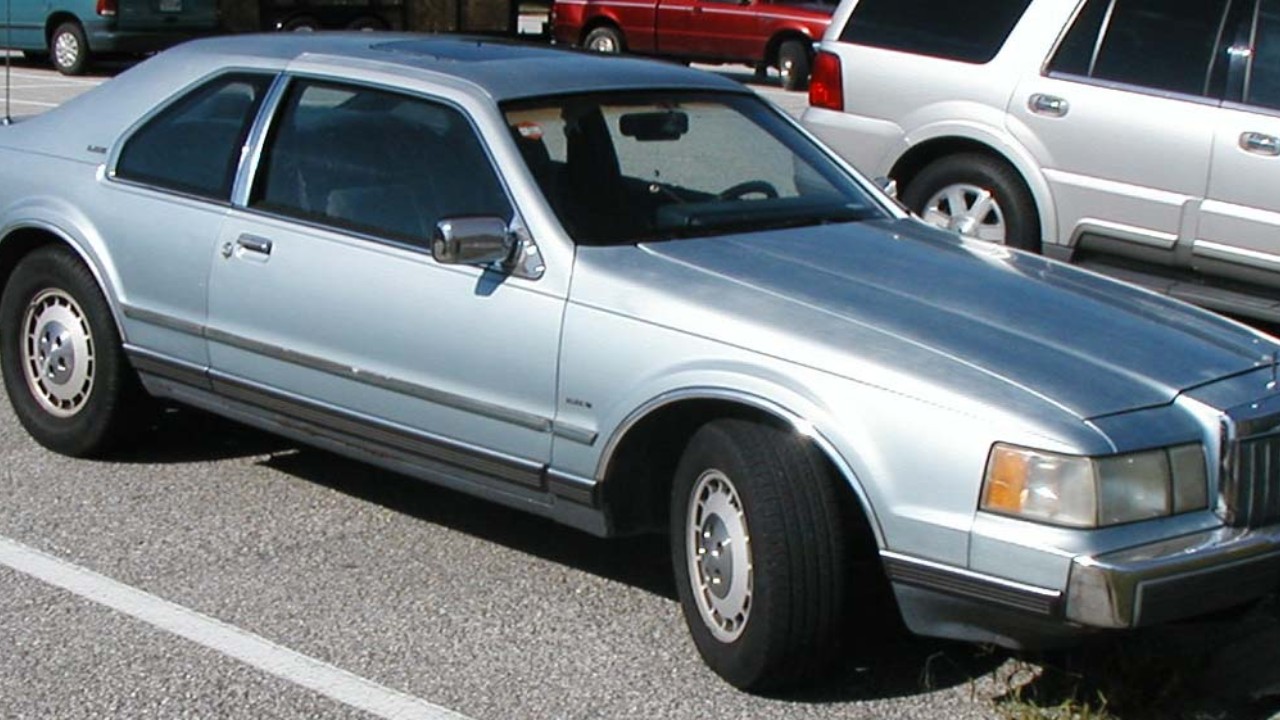
The Continental Mark VII debuted in August 1983 as a 1984 model. It shared Ford’s Fox platform with the Thunderbird and Mercury Cougar. Even so, it had real engineering of its own. For example, four-wheel air suspension came standard. It was also the first modern American car with replaceable-bulb headlamps.
Lincoln sold it in several flavors. Besides the base car and the sporty LSC, there were Designer Editions from Bill Blass and Versace. However, the Versace car was dropped for 1986. Later, for 1988, the base car went away too, leaving the Bill Blass Edition and the LSC. The standard engine was a 5.0-liter V8 that made 140 horsepower in early form, shared with the Mustang. Lincoln even offered a BMW-sourced 2.4-liter turbodiesel six in 1984 and 1985, and about 2,300 were built.
Lincoln built 190,832 Mark VIIs from 1984 to 1992, but the designer cars rarely get the spotlight. Our take: the Bill Blass is the Mark VII that tells the real story of 1980s luxury. It is plush and proud of it. We would take a 1985 Bill Blass with clean air springs over a tired LSC any day.
10. 1985 Cadillac Eldorado Touring Coupe
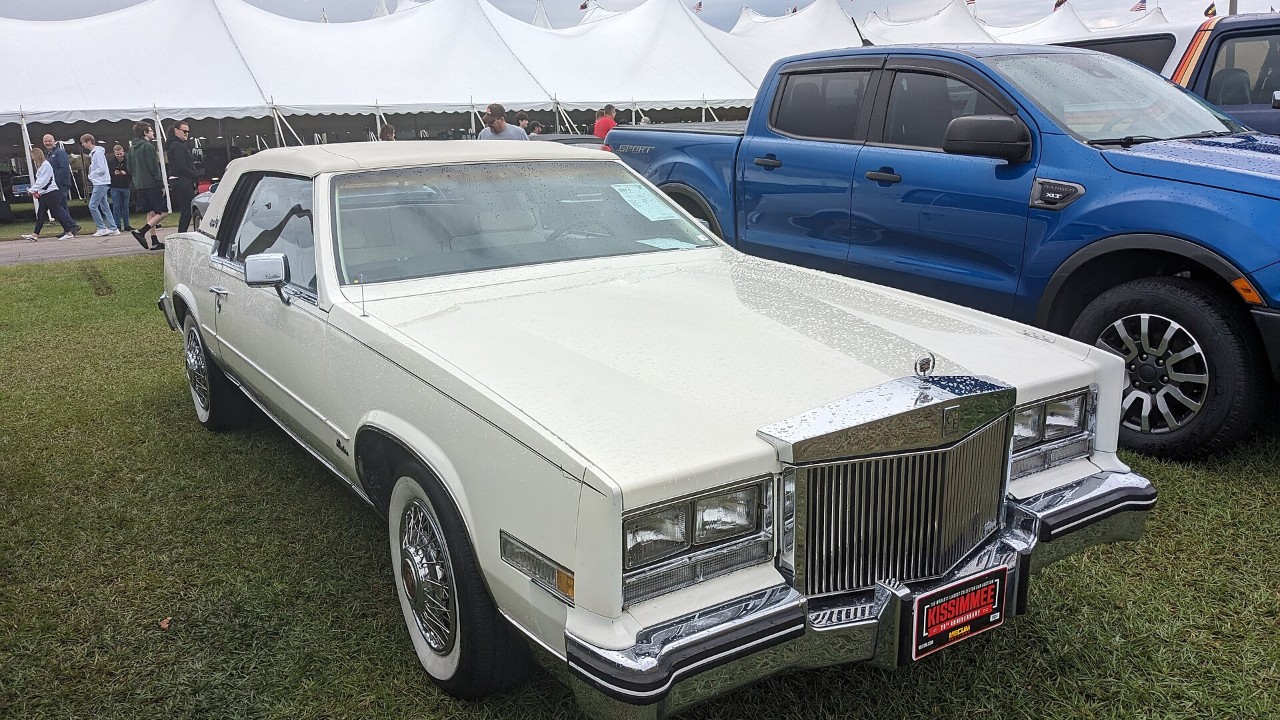
From 1982 through 1985, Cadillac offered the Eldorado Touring Coupe. It brought heavier-duty touring suspension, close-ratio steering and aluminum alloy wheels. It also came in a short list of colors. In our view, it was Cadillac’s answer to buyers who wanted their coupe to feel a little more like a driver’s car.
The Eldorado around it had changed for 1979. By then, it shared its front-drive platform with the Buick Riviera and Oldsmobile Toronado. Then, for 1982, Cadillac fitted its 4.1-liter HT-4100 V8, rated at 125 horsepower. That engine used an aluminum block with cast-iron heads. In period figures, it gave a 0 to 60 mph time of 13.8 seconds.
Plenty of Eldorados sold, including 74,101 coupes for 1985. Still, the Touring Coupe was a niche choice inside that big number. Our take: the Touring Coupe is the Eldorado for drivers, and it is the one we would want. Its firmer setup makes the most of a comfortable car. In our view, a well-kept 1985 example is a better buy than a Biarritz, because you will almost never meet another one.
11. 1987 Buick Riviera T Type
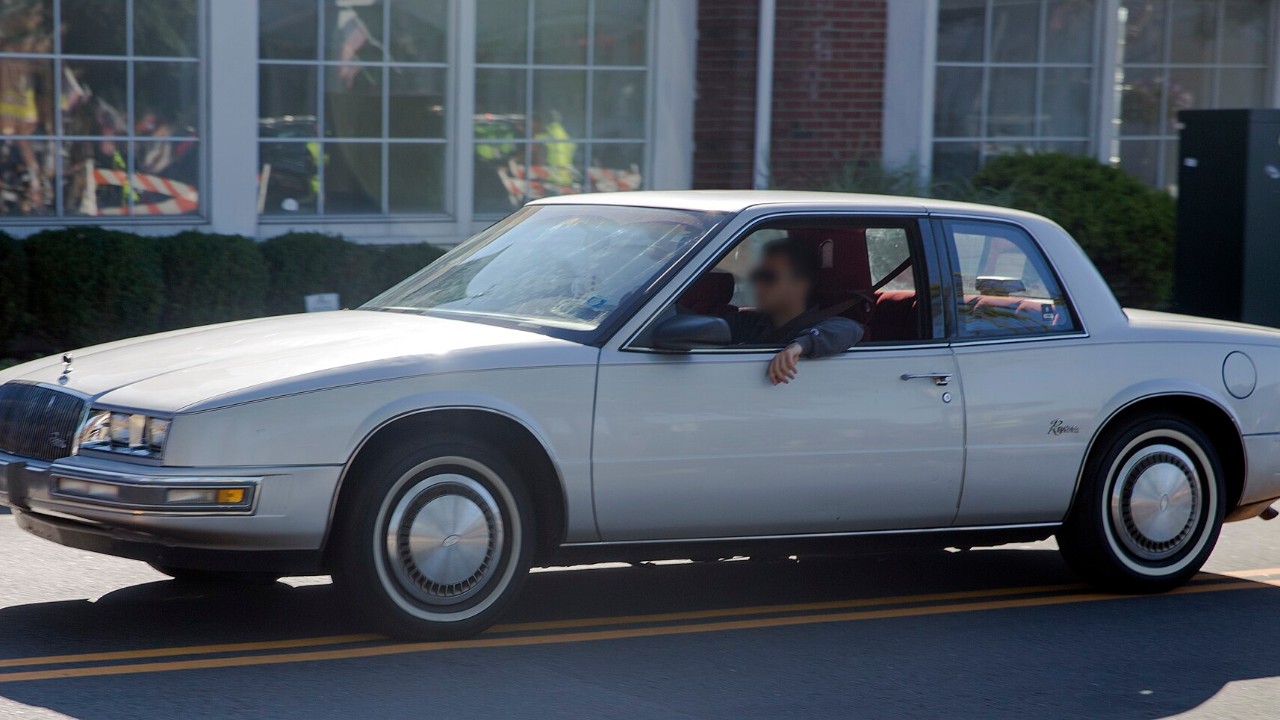
Buick shrank the Riviera for 1986. The new car moved to a 108-inch wheelbase, unibody construction and transverse front-wheel drive. At first, its only engine was a 3.8-liter V6, first rated at 140 horsepower. By the final years, that V6 reached 170 horsepower. On the dash sat the Graphic Control Center, a 9-inch monochrome touchscreen that ran the climate and stereo.
The sporty T Type sat at the top, priced at $21,577 for 1986. The Riviera placed fourth in Motor Trend’s 1986 Car of the Year contest. However, buyers did not warm to the smaller car. Riviera sales dropped from 65,305 in 1985 to 22,138 in 1986. Then they fell again, to 15,223 for 1987. When RM Sotheby’s offered a 1987 T-Type at Auburn in 2015, its listing noted four-wheel disc brakes, steering-wheel controls and the touchscreen.
Our take: the 1987 T Type is a time capsule of 1980s gadget optimism. A touchscreen in a Buick, decades before they became normal, is reason enough to save one. Because so few 1987 Rivieras were sold, a T Type in good order is one of the hardest cars on this list to find.
12. 1975 Chrysler Cordoba
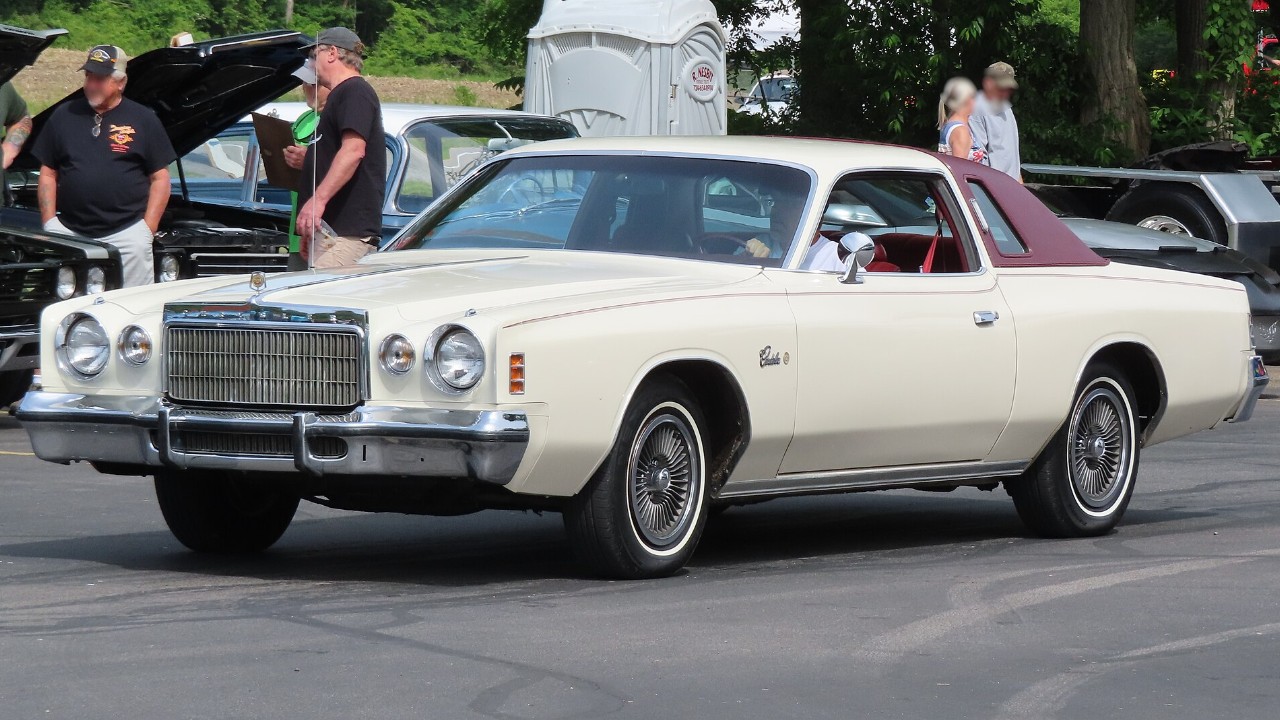
The Cordoba was a big gamble that paid off. It arrived for 1975 as the first Chrysler-branded car smaller than full size. It used the B-body platform, and Chrysler had first planned for it to share its body with the Dodge Charger SE. Chrysler also offered it with smaller, more economical engines than its other cars.
The ads made it famous. Ricardo Montalbán spoke for the Cordoba for its whole run, and he praised its “rich Corinthian leather.” Soon those words became part of American pop culture. If you like the later cars, we also looked at why the 1978 Chrysler Cordoba became such a success.
So why include such a popular car? Because, in our view, the first-year 1975 version is the one people forget. Ask most fans to picture a Cordoba, and they picture the ads rather than the car. Our take: the 1975 Cordoba is the original recipe, and it deserves to be remembered as more than a catchphrase. It gave Chrysler’s showrooms a hit when they needed one. In fact, Chrysler sold more than 150,000 Cordobas in 1975, a year the company otherwise found dismal.
More from Fast Lane Only